Guides · Propagation · Offsets
How do you separate an offset or a pup?
An offset is not a cutting. It is a complete plant the parent has already made, roots and all, which makes this the easiest propagation there is and the one most often rushed. Nearly every pup lost is lost to impatience rather than technique.
- Size
- About a third of the parent before you separate it
- Succulents
- Dry the wound for days before it touches compost
- The exception
- A dying bromeliad is still feeding its pups. Leave it
What an offset is
An offset is a complete new plant that the parent has made at its base. Not a cutting, not a seedling — a clone, already equipped with the beginnings of its own roots, waiting to be separated.
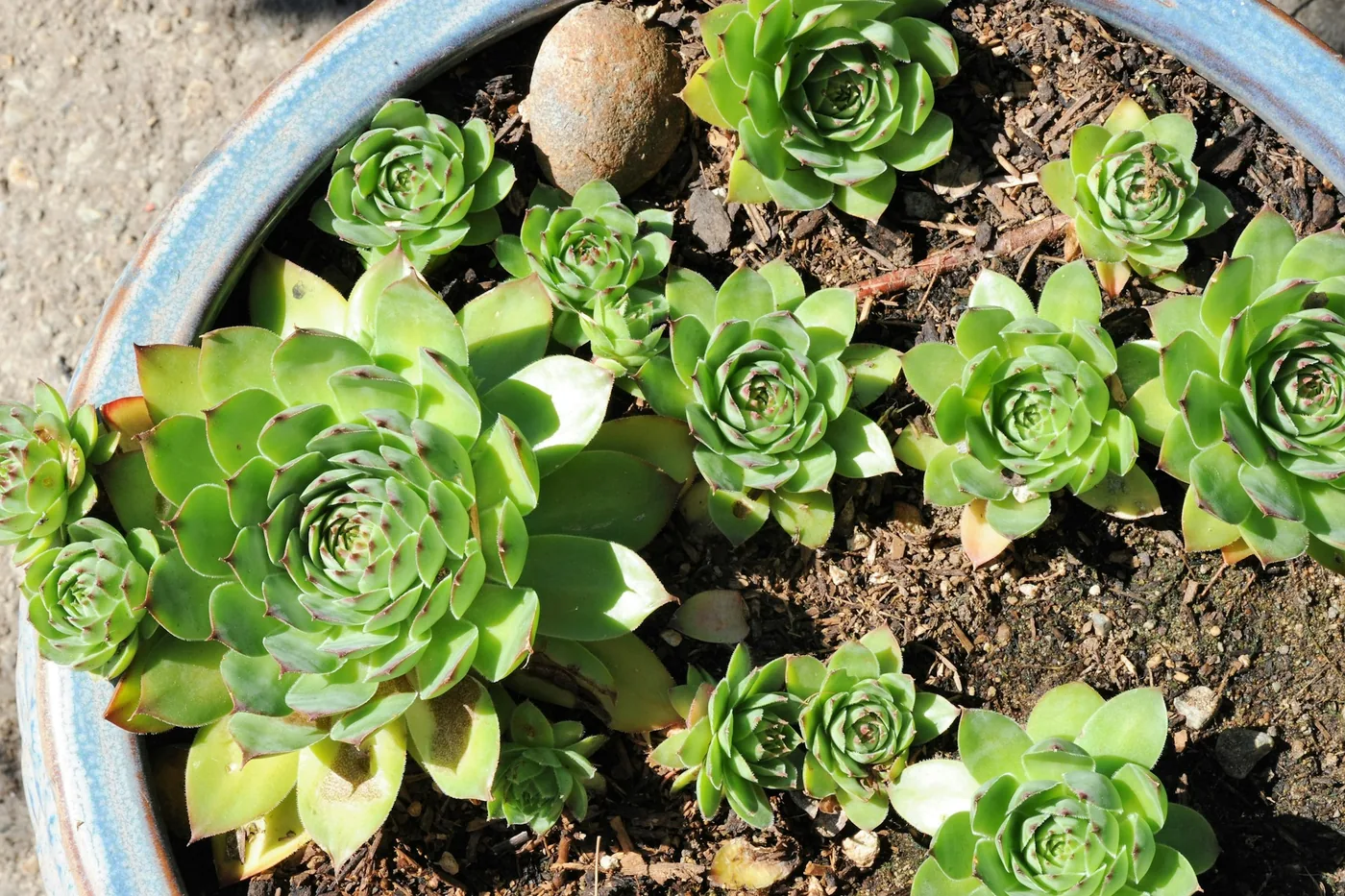
They go by several names depending on the plant and all of them mean the same thing. Pups on a bromeliad or an aloe. Suckers on a banana or a palm. Chicks on a houseleek. Offsets on a bulb. What they share is the thing that matters: the plant has already done the work, and your job is to take the new one away without wrecking either.
That makes this the easiest propagation there is, and also the one most often rushed.
Why plants make them
Two different reasons, and the difference decides how you treat the parent afterwards.
Most plants offset as a way of spreading sideways. The parent carries on, the offsets accumulate, and a single aloe becomes a congested pot of them in three or four years. Nothing is lost by taking one.
The second group offsets because it is about to die. A bromeliad, a houseleek or an air plant flowers once, and the flowering rosette does not recover — it makes pups and then goes over. The offsets are the plant's continuation, not a bonus, and the dying parent is still feeding them the whole time it fades. Cutting it away to tidy the pot takes food out of the pups' mouths.
When to take one
In spring or summer, when the plant is growing, and when the offset is about a third of the parent's size.
The size rule is really a root rule. Still attached, a pup is being supplied by the parent and does not need much root. Detached, it has to support itself from the moment the knife goes in. The usual way these are lost is impatience — a pup taken at thumbnail size, potted hopefully, watered to encourage it, and rotted within the month.
Repotting is the natural moment, because you can see what you are doing and because the parent is due a fresh pot anyway once it has filled the old one with its own children.
Separating it
Get the plant out of the pot. Almost every mistake made here is made by someone working blind at soil level with a pair of scissors.
- Succulent pupsTwist firmly where it joins the parent; most come away with roots
- Bromeliad pupsCut down close to the parent stem with a clean blade
- Palm and banana suckersCut away with a piece of the parent's corm and its own roots
- Bulb offsetsThey fall away by hand once the clump is lifted and dry
- Staghorn fern pupsCut off with a piece of the shield frond attached
Cut towards the parent rather than into the pup where you have a choice. The parent has the reserves to heal a wound; the pup does not.
The drying rule, and who it applies to
Succulents and cacti: let the wound dry before it touches compost. Two days for a small aloe or haworthia pup, a week for a cycad or a ponytail palm, and longer does no harm. These plants carry their own water and are in no hurry; what they cannot survive is a wet, open wound sitting in damp compost, which is the common way a perfectly good pup is lost.
Everything else: pot it straight away. A bromeliad pup, a fern division or a banana sucker has no water reserve to live on and will desiccate while you wait.
If you are unsure which group a plant is in, squeeze a leaf. If it is thick and gives slightly, it stores water and it waits.
Potting, and the first water
Small pot, gritty compost for anything succulent, and only just damp.
An offset in a large pot is sitting in more wet compost than its few roots can ever dry out, which is the same failure as overpotting any plant, concentrated. Pot so that the offset is barely held upright. It can go up a size in six months when it has earned it.
On a succulent, wait a week after potting before the first water. On everything else, water in and then keep it just damp and out of direct sun until it is visibly growing. Nothing offsets its way into needing feed — there are no roots to take it up and it will scorch the few there are.
Leave these alone
Three cases where the right action is to do nothing for a while yet.
- BromeliadsLeave the fading parent until it is thoroughly brown — the pups draw on it the whole time
- HouseleeksEach rosette flowers once and dies; the chicks are the plant, so there is nothing to rescue
- CliviaFlowers better pot-bound, so dividing it off every year costs you the flowers
The general principle behind all three: an offset that is still attached is not waiting for you. It is being fed.
Common questions
How big should a pup be before I take it off?
About a third of the parent's size is the usual rule, and it is a rule about roots rather than looks. A pup still attached is being fed by the parent; detached, it has to feed itself, and until it has made enough root to do that it is a cutting rather than a plant. Taking one at a quarter of the size often works. Taking one the size of a thumbnail usually does not.
Do offsets need to have roots already?
It helps enormously and it is not essential on succulents, which root readily from a dried wound. On a bromeliad, a palm sucker or a clivia offset it is close to essential, because those have no capacity to root from bare tissue. Look under the compost before you cut: most offsets have made some root of their own long before they look ready.
Should I let the cut dry before potting?
On anything succulent, yes, and for longer than feels sensible. Two days for a small aloe pup, a week for a cycad or a cactus. A wet wound on a water-storing plant is an open invitation to rot, and the plant has no urgency about it because it carries its own water. On a bromeliad or a fern, no: pot it straight away and keep it humid.
My plant flowered and now it is dying. Have I done something wrong?
Almost certainly not. Several plants flower once and then die by design, leaving their offsets behind. Bromeliads, houseleeks and air plants all do it. The dying rosette is not a failure to be rescued, and cutting it away early robs the pups, which are still drawing on it. Leave it until it is thoroughly brown.
Why has my offset not grown at all since I potted it?
It is probably making roots, which takes months on some plants and shows nothing above ground. A sago palm pup or a ponytail palm offset can sit unchanged for a season and then start away. The thing not to do is keep watering it in the hope of prompting growth: an unrooted offset in wet compost rots, and that is the common way these are lost.
Plants in the catalogue grown from offsets
Offsets are the primary method for 31 plants in the library. Each page gives the timing and the one thing that differs for it.
- Aloe Vera Aloe vera
- Pilea (Chinese Money Plant) Pilea peperomioides
- String of Hearts Ceropegia woodii
- Elephant Ear (Alocasia) Alocasia x amazonica
- Moth Orchid Phalaenopsis hybrid
- Haworthia Haworthia fasciata
- Sago Palm Cycas revoluta
- Amaryllis Hippeastrum hybrid
- Ponytail Palm Beaucarnea recurvata
- Staghorn Fern Platycerium bifurcatum
- Hens and Chicks Sempervivum tectorum
- Air Plant Tillandsia
- Tree Philodendron Philodendron bipinnatifidum
- Bromeliad Guzmania lingulata
- Pincushion Cactus Mammillaria fragilis
- Sea Urchin Cactus Echinopsis multiplex
- Leopard Orchid Dendrobium gracilicaule
- Easter Lily Lilium longiflorum
- Tiger Lily Lilium lancifolium
- Daffodil Narcissus
- Tulip Tulipa
- Hyacinth Hyacinthus orientalis
- Clivia Clivia miniata
- Pearl Plant Haworthia margaritifera
- Rainbow Orchid Epidendrum prismatocarpum
- Cushion Aloe Aloe retusa
- Garlic Allium sativum
- Autumn Crocus Colchicum autumnale
- Grape Hyacinth Muscari armeniacum
- Gladiolus Gladiolus species
- Banana Musa acuminata
The method is decided by how a plant grows, not by what you would prefer. If yours is not on this list, it will be on one of the others: cuttings, seed, division, layering, plantlets and runners, or ferns.
Still not sure?
The RHS's propagation advice is the general reference; this page is the houseplant and container case of it.
Sabz does not track a pup until it is a plant. It is built around recurring care, and an unrooted offset needs watching rather than a schedule. Once it is growing, add it and the watering interval for its species becomes a reminder. Several of the plants above are toxic to cats or dogs, and their pages say which, from that species' own ASPCA entry.
 Free to start. No account, no analytics.