Bromeliad
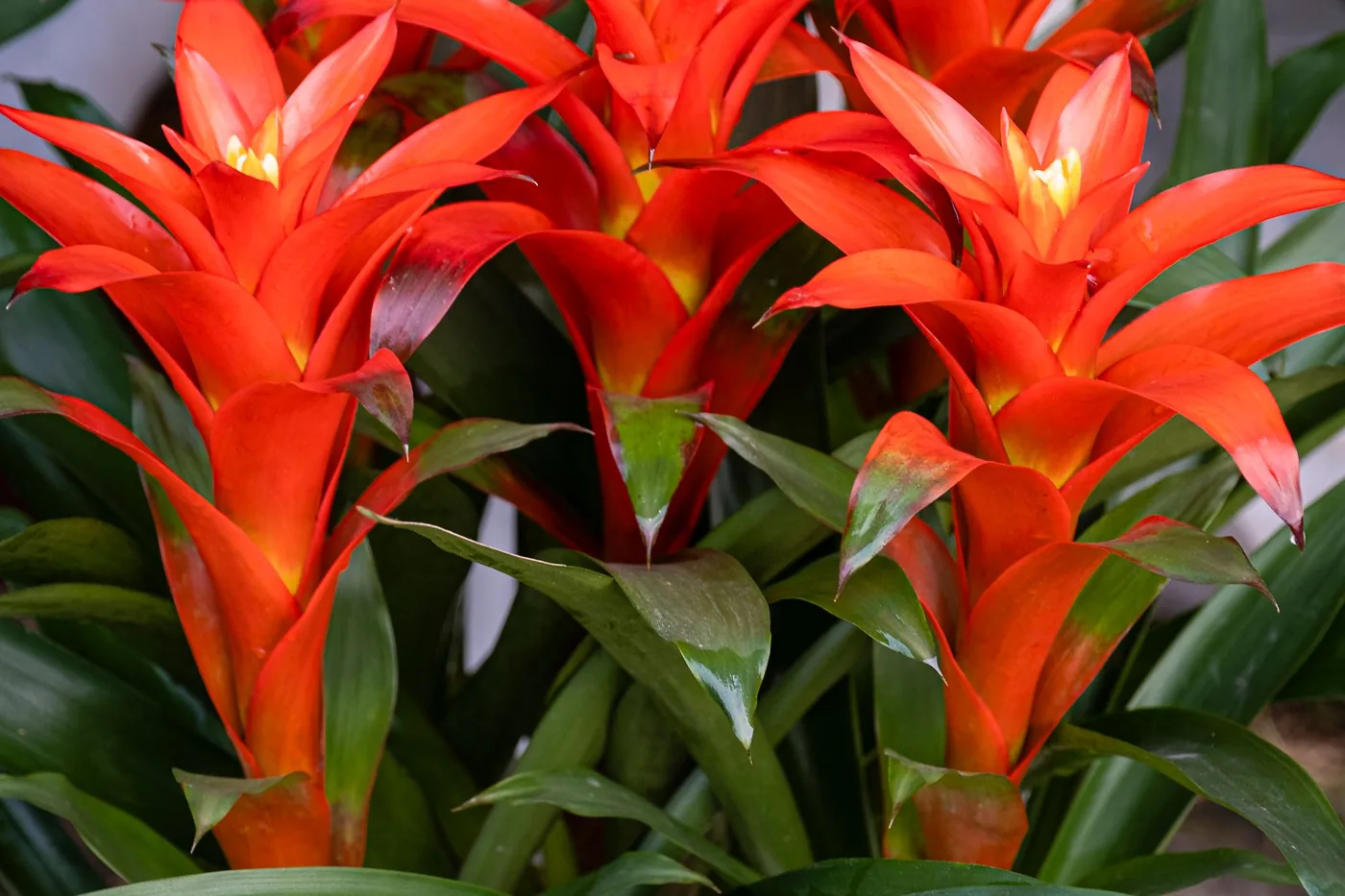
Guzmania lingulata
Non-toxic to cats and dogs
A bromeliad grown for its long-lasting coloured flower spike. Water into the central cup and keep it topped up; bright indirect light and humidity. Each rosette flowers once, then offsets take over.
Sabz turns the interval below into a reminder, and the Check-up reads your care history when a leaf turns. Free on the App Store →
Toxicity
Safe
Not known to be toxic to cats.
Safe
Not known to be toxic to dogs.
Caution
Based on general horticultural consensus, not a pet-poison database.
Is Bromeliad poisonous to cats?
No. Bromeliad (Guzmania lingulata) is not known to be toxic to cats. The ASPCA has no entry for this species, so this rests on general consensus rather than a poison-control listing.
Is Bromeliad safe for dogs?
Yes. Bromeliad (Guzmania lingulata) is not known to be toxic to dogs. The ASPCA has no entry for this species, so this rests on general consensus rather than a poison-control listing.
Is Bromeliad pet safe?
Yes, for both. Bromeliad is not known to be toxic to cats or to dogs. Sabz judges cats and dogs separately, and publishes the full list.
Pet-safety information is a general guide from the ASPCA's toxic-plant database and covers cats and dogs only. "If eaten" summarises the symptoms ASPCA lists for that plant; how an animal actually reacts depends on how much it ate and on the animal. It isn't exhaustive, isn't veterinary advice, and individual animals vary — never rely on it as the sole basis for a decision about your pet. If you think your pet has eaten a harmful plant, contact a vet immediately.
Care
- WaterEvery 7–10 days
- LightBright, indirect
- HumidityHigh humidity
- Temperature18–27 °C
The same interval the Sabz app schedules reminders from. In autumn and winter the app stretches it; see houseplants in autumn.
Common problems
- Browning flower spike — normal; it fades months after blooming
- Rotting centre — stagnant water in the cup; refresh it
- No pups after flowering — needs bright light and time
Propagation
- MethodOffsets
- Best timeAfter flowering
The flowering rosette dies, so the pups are the plant's future rather than a bonus. Leave them until they are half the parent's height.
Deadheading
Do not deadhead — leave the spent flowers on.
The pups draw on the dying rosette the whole time it is going over, so leave the fading bract until it is thoroughly brown.
Similar plants
- Flamingo Flower toxicAnthurium andraeanum
- Moth Orchid safePhalaenopsis hybrid
- Brazilian Orchid safeSophronitis species
- Ixora safeIxora javanica
In the app
Add a bromeliad to Sabz and the watering interval above becomes a reminder, the toxicity verdict sits on the plant's own page, and when a leaf turns, the Check-up reads what you have actually logged to say why.
 Free. No account, no analytics.