Plant library / Succulents & cacti
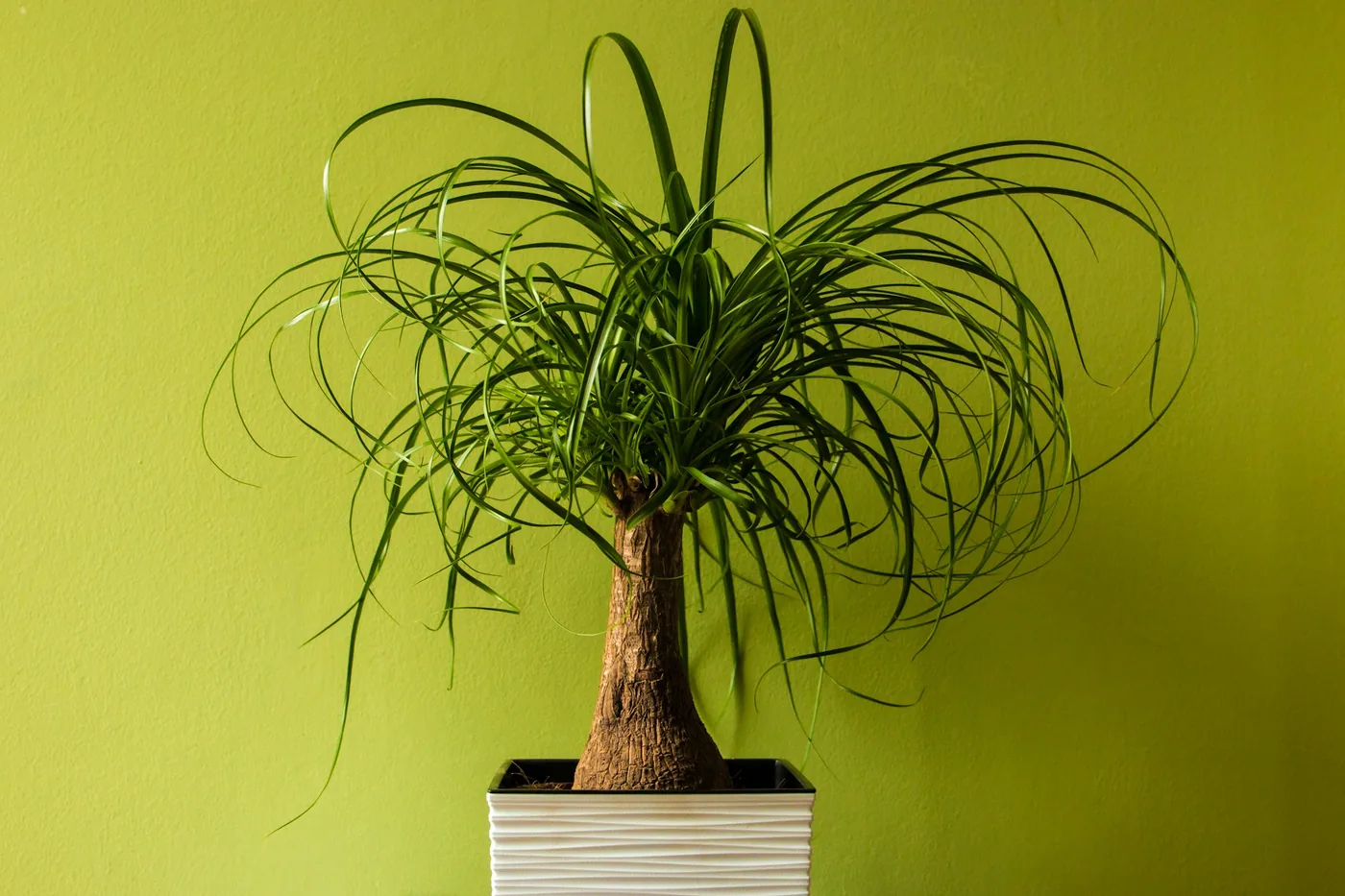
Ponytail Palm
Beaucarnea recurvata
Non-toxic to cats and dogs
Not a true palm — it stores water in its swollen base, so water thoroughly then let it dry out completely. Bright light, and far more likely to be killed by kindness than neglect. Pet-safe.
Toxicity
Safe
Not known to be toxic to cats.
Safe
Not known to be toxic to dogs.
Source — ASPCA Animal Poison Control Center, toxic and non-toxic plant list; read from this species' own page
Pet-safety information is a general guide from the ASPCA's toxic-plant database and covers cats and dogs only. "If eaten" summarises the symptoms ASPCA lists for that plant; how an animal actually reacts depends on how much it ate and on the animal. It isn't exhaustive, isn't veterinary advice, and individual animals vary — never rely on it as the sole basis for a decision about your pet. If you think your pet has eaten a harmful plant, contact a vet immediately.
Care
- WaterEvery 14–21 days
- LightBright, indirect
- HumidityLow humidity
- Temperature15–27 °C
The same interval the Sabz app schedules reminders from. In autumn and winter the app stretches it; see houseplants in autumn.
Common problems
Ponytail palm base soft
A soft, browning base is rot from overwatering — the swollen base stores water and wants a drink every two to three weeks in summer, monthly or less in winter, in gritty compost. Stop watering at once, cut away anything soft, let it dry, and repot dry. If the base is mush, the plant is usually lost.
Ponytail palm brown tips
Brown tips on the long leaves are dry air, or a plant that has gone genuinely dry for months. Trim them at an angle, keep it off the radiator, and water thoroughly when the compost is fully dry. It is cosmetic.
Ponytail palm yellow leaves
Yellow leaves are usually too much water. Lower leaves yellowing slowly is normal ageing; several at once with damp compost is overwatering. Let it dry right through, and check the base is still firm.
Similar plants
- Burro's Tail safeSedum morganianum
- Haworthia safeHaworthia fasciata
- Kalanchoe toxicKalanchoe blossfeldiana
- String of Pearls toxicSenecio rowleyanus
In the app
Add a ponytail palm to Sabz and the watering interval above becomes a reminder, the toxicity verdict sits on the plant's own page, and when a leaf turns, the Check-up reads what you have actually logged to say why.
 Free. No account, no analytics.