Guides · Propagation · Stem cuttings
How do you take a plant cutting?
Almost all of it turns on one detail. A stem with no node will never become a plant — it can root, sit there for a year, and never make a shoot. Get that right and the rest is housekeeping: a clean cut, not too much leaf, and warmth and light while it works.
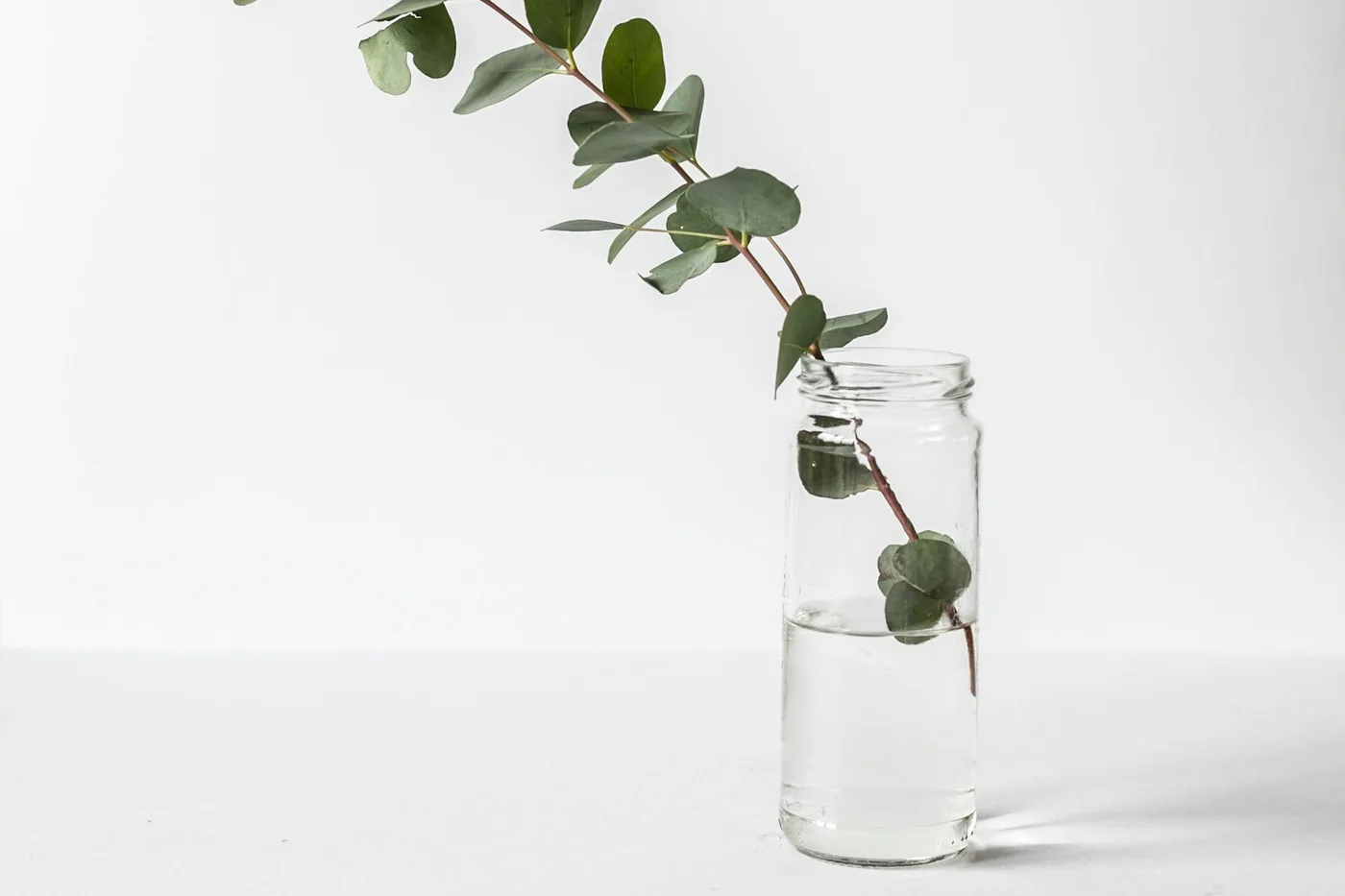
- The one rule
- Cut just below a node — the band where a leaf joins the stem
- When
- Late spring to midsummer, while the plant is growing
- How long
- One to two weeks for a pothos; three to six for a monstera; two months for anything woody
The node is the whole thing
A node is the slightly swollen band on a stem where a leaf joins it, and where an aerial root or a side shoot comes out. It is the only part of most stems that can make new roots and new growth. Everything else about taking a cutting is detail; this is the part that decides whether you get a plant or a stick.
A length of stem with no node will never become a plant. It can sit in water for months looking perfectly healthy. Occasionally it even puts out roots — and then stops, permanently, because there is no growth point to make a shoot from. This is the single most common reason a first cutting fails, and it fails slowly enough that most people blame the light or the water.
On a monstera the node is obvious: a brown nub, often with a stubby aerial root beside it. On a pothos or a philodendron it is a thin ring where each leaf stalk meets the vine. On a herb it is simply the point where a pair of leaves comes out.
Which plants this works for
Stem cuttings are the method for anything that grows along a stem with leaves spaced out on it — which is most trailing and climbing houseplants, most soft-stemmed herbs, and a good many garden perennials.
It is not the method for a plant that grows in a rosette from a single crown, or from a bulb, or as a clump of separate crowns at soil level. A snake plant, an African violet or a peace lily needs leaf cuttings or division instead, and a pot marigold needs seed. Trying to take a stem cutting from a plant with no visible stem is a common early mistake and it wastes a season.
When to take one
Late spring to midsummer is the window, and it matters more than any technique. A cutting has no roots, so it is living on what is in the stem and on what the light gives it. In May that is plenty; in November it is not.
A cutting taken in autumn or winter usually does not fail dramatically — it just sits. The stem stays green for weeks, nothing happens, and then it rots from the base because the compost or water stayed wet far longer than a dormant cutting could use it. If you want to propagate a plant you are worried about losing, take the cutting while it is growing well, not after it starts to struggle.
In a British house with the heating on, the limit is light rather than warmth. A windowsill in January is bright for about seven hours and dim for the rest.
How to take it
Use something sharp and clean — scissors, secateurs, a craft knife. A blunt cut crushes the stem and gives rot a head start.
- Where to cutJust below a node, a few millimetres under it
- How longOne node and one or two leaves is enough
- Lower leavesStrip anything that would sit in water or compost
- Big leavesHalve them to cut water loss
Cutting below the node rather than above it is deliberate: the tissue immediately beneath a node is where root initials form, so leaving a short stub under it gives the roots somewhere to come from. A cut made above the node leaves the node on the parent plant and gives you a nodeless stick.
Keep it small. A cutting with five big leaves is losing water through all of them with no roots to replace it, and it will wilt before it roots. One or two leaves is not a compromise — it is the better cutting.
Water or compost
Both work, and the choice is about what you want to watch.
Water lets you see the roots, which is genuinely useful the first few times because you learn what progress looks like. Use a glass you can see into, keep the node submerged and every leaf out, and change the water weekly — stale water is the commonest cause of a slimy stem.
Compost skips a step. Water-grown roots are softer and adapted to living in water; a proportion of them die when they first meet soil, and the plant stalls for a week or two while it grows replacements. Rooting straight into damp compost avoids that, at the cost of not being able to see anything until the cutting resists a gentle tug.
If you root in water, pot on when the roots are two to three centimetres long rather than waiting for a thick tangle. The shorter the water roots, the less there is to lose in the move.
Why cuttings rot
Rot is the usual failure, and it has a short list of causes. In rough order of how often it is the answer:
- A leaf in the waterIt breaks down and fouls everything
- Stale waterChange it weekly, not when it looks bad
- No nodeNothing to root from; it sits, then rots
- Too cold or too darkSlow cutting, wet medium, same result
- Too much leafWilts faster than it can root
If the base has gone soft or brown, cut back into firm green tissue — above the rot, below a node if you can — and start again in clean water. A cutting that has rotted halfway up is not worth saving.
Potting on
Pot into the smallest container the roots fit in comfortably. A new cutting in a large pot sits in compost it cannot dry out, which is the same problem as overwatering an established plant and is just as effective at killing it.
Keep it a little closer than usual for the first fortnight — slightly damper compost, out of direct midday sun — and then treat it as the species normally wants. The plant pages give the watering interval Sabz schedules from for each one.
New growth is the signal that the move worked. Roots can be alive and idle for a fortnight; a new leaf means the plant is running on them.
Common questions
Can you grow a cutting from just a leaf?
Not for most houseplants. A leaf with no node can make roots and then sit there for a year, because there is no growth point to make a stem from. It is a genuinely different method, and it works for African violets, snake plants and most succulents — but on a monstera or a pothos a leaf alone is a dead end, however good the roots look.
Water or compost — which roots better?
Both work. Water is easier to judge because you can see what is happening, which matters while you are learning what a healthy cutting looks like. Compost skips the move later: roots grown in water are softer and some of them die when they first meet soil, so the plant stalls for a fortnight. If you root in water, pot on while the roots are short rather than waiting for a big tangle.
How long does a cutting take to root?
A pothos or a tradescantia in summer will show roots in one to two weeks. A monstera takes three to six. Woody things like a rubber plant or rosemary take two months and sometimes longer. If nothing has happened after eight weeks and the stem is still firm and green, it is usually light or warmth that is missing, not time.
Do I need rooting hormone?
Not for soft green stems — pothos, tradescantia, coleus and the like root without help. It earns its place on semi-ripe and woody cuttings, where the success rate is genuinely lower. Follow the label rate; more is not better.
Why has my cutting gone slimy at the bottom?
That is rot, and it is nearly always one of four things: a leaf left below the waterline, water that has not been changed, a cut made in the middle of a stem rather than just below a node, or a cold dark spot. Cut back to firm tissue, start again with clean water, and move it somewhere brighter.
Plants in the catalogue this works for
Stem cuttings are the method for these, among others — each page gives the species-specific timing and the one thing that differs for it.
- Monstera (Swiss Cheese Plant) Monstera deliciosa
- Golden Pothos Epipremnum aureum
- Heartleaf Philodendron Philodendron hederaceum
- Inch Plant Tradescantia zebrina
- Rubber Plant Ficus elastica
- English Ivy Hedera helix
- Pilea (Chinese Money Plant) Pilea peperomioides
- Geranium (Pelargonium) Pelargonium hortorum
- Fuchsia Fuchsia hybrida
- Rosemary Salvia rosmarinus
- Mint Mentha spicata
- Basil Ocimum basilicum
The method is decided by how a plant grows, not by what you would prefer. If yours is not on this list, it will be on one of the others: seed, division, offsets and pups, layering, plantlets and runners, or ferns.
Still not sure?
The RHS's propagation advice is the general reference; this page is the houseplant case of it.
Sabz will not track a cutting for you. Propagation is a project with its own clock — take it, root it, pot it — and the app is built around recurring care, which is a different shape. What it does do is the part that comes afterwards: once the cutting is a plant in its own right, it carries that species' watering interval, its light and humidity, and its toxicity to cats and dogs, and the Check-up reads the care you have actually logged rather than guessing from a photo.
 Free to start. No account, no analytics.