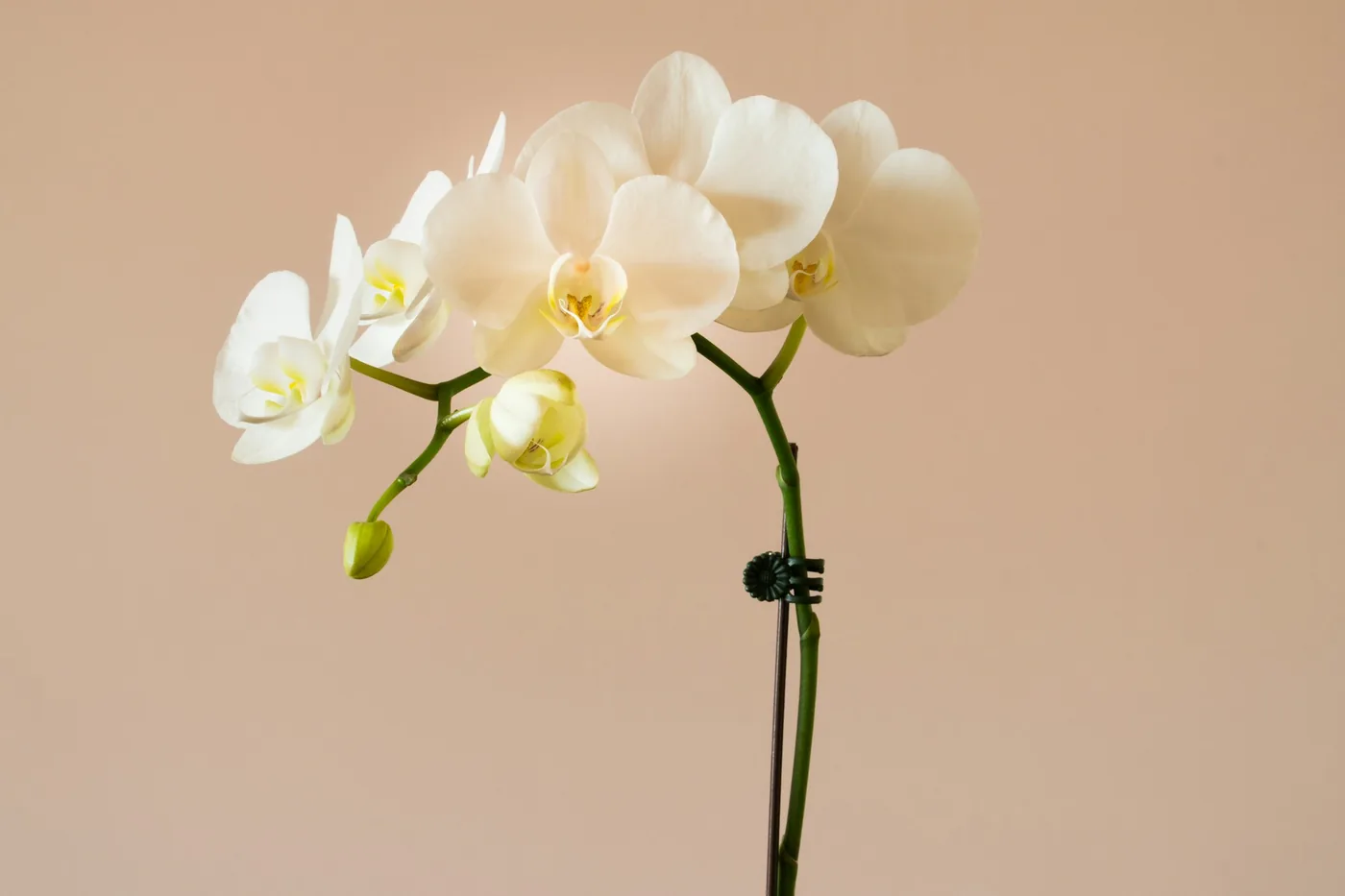
Moth Orchid
Phalaenopsis hybrid
Non-toxic to cats and dogs
Grows in bark, not soil — water by soaking, then draining fully, roughly weekly. Bright indirect light and a cool night trigger re-blooming.
Toxicity
Safe
Not known to be toxic to cats.
Safe
Not known to be toxic to dogs.
Source — ASPCA Animal Poison Control Center, toxic and non-toxic plant list; read from this species' own page
Pet-safety information is a general guide from the ASPCA's toxic-plant database and covers cats and dogs only. "If eaten" summarises the symptoms ASPCA lists for that plant; how an animal actually reacts depends on how much it ate and on the animal. It isn't exhaustive, isn't veterinary advice, and individual animals vary — never rely on it as the sole basis for a decision about your pet. If you think your pet has eaten a harmful plant, contact a vet immediately.
Care
- WaterEvery 7–10 days
- LightBright, indirect
- HumidityHigh humidity
- Temperature18–27 °C
The same interval the Sabz app schedules reminders from. In autumn and winter the app stretches it; see houseplants in autumn.
Common problems
Orchid leaves wrinkled and limp
Wrinkled, leathery leaves on a moth orchid mean the roots are not delivering water — either because they have dried out completely or because they have rotted in a pot that never drains. Look at the roots through the clear pot: firm and green or silver is healthy, brown and hollow is rot. Water by soaking the pot for ten minutes then draining fully, roughly weekly, never leaving it standing in water.
Orchid not flowering again
A moth orchid re-blooms when it gets bright indirect light and a few weeks of cooler nights — around fifteen degrees — in autumn, which is what sets the flower spike. Keep the old spike if it is green and cut it back to just above a node; if it has gone brown, cut it at the base. Then bright light, a light feed, and patience: months, not weeks.
Orchid yellow lower leaf
One lower leaf going yellow and dropping, with everything else firm, is normal ageing — an orchid sheds its oldest leaf from time to time. Several leaves yellowing together, or the newest leaf yellowing, is a root problem: check them, and if they are rotting, repot into fresh orchid bark.
Similar plants
- Bromeliad safeGuzmania lingulata
- Flamingo Flower toxicAnthurium andraeanum
- Brazilian Orchid safeSophronitis species
- Lace Orchid safeOdontoglossum crispum
In the app
Add a moth orchid to Sabz and the watering interval above becomes a reminder, the toxicity verdict sits on the plant's own page, and when a leaf turns, the Check-up reads what you have actually logged to say why.
 Free. No account, no analytics.