Guides · Propagation · Ferns
How do you propagate a fern?
Two absences decide everything here. Ferns do not flower, so there is no seed; and a frond has no bud anywhere along it, so there is no cutting to take. What is left is division, bulbils or spores — and which one you get is fixed by the plant, not by your preference.
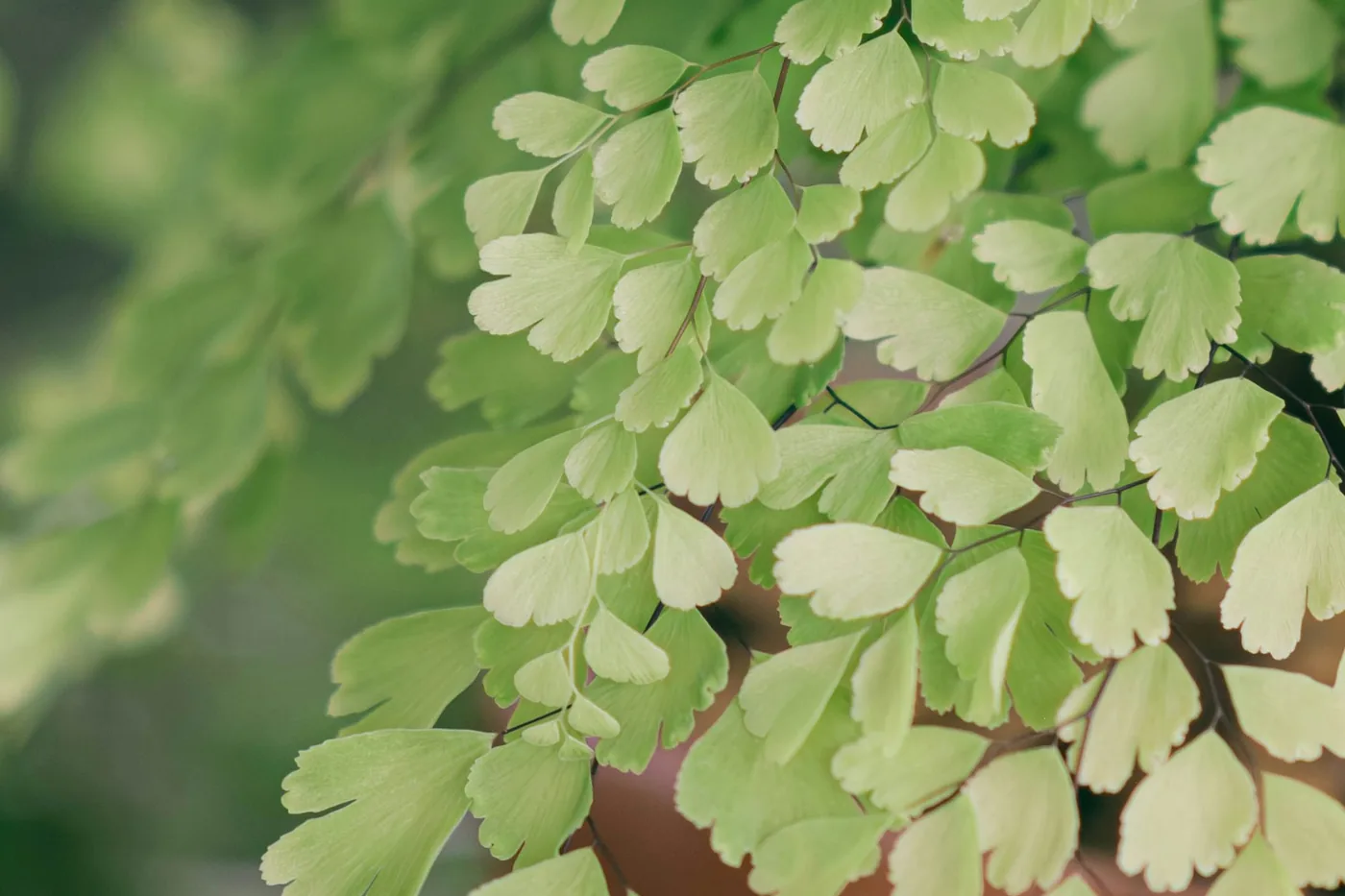
- No cuttings
- A piece of frond has no bud. It will rot, not root
- Most ferns
- Divide in spring as the croziers uncurl
- A single crown
- Spores, and about a year to a fern worth potting
Ferns have no seeds and no nodes
Two absences decide everything on this page.
Ferns do not flower, so there is no seed. And a frond is a leaf with no bud anywhere along it, so there is no cutting either — a piece of frond in water or compost will sit there and rot, however carefully it is treated. The two most familiar methods of making more plants are simply unavailable.
What is left is three routes, and which one a fern offers you is fixed by the plant rather than by your preference. Most ferns divide. A few make plantlets. The rest leave you spores.
Which route your fern offers
- A spreading clumpDivide it. Boston, button, holly, rabbit's foot, maidenhair
- A creeping rhizomeCut a length of it with fronds attached and pin it onto fresh compost
- Babies on the frondsBulbils. Pin the frond down and let them root themselves
- Pups beside the parentOffsets, as on a staghorn
- A single crownSpores, and nothing else. A bird's nest fern is the case
Tip the plant out and look. A fern that grows outward from a centre divides; a fern that grows from one point in the middle, like a shuttlecock, does not and never will.
Dividing a fern
In spring, as the new fronds — the croziers — start to uncurl.
Most ferns come apart in the hands once the compost is washed off, and the pieces want to be generous. A fist-sized piece of a Boston fern establishes in a fortnight; a thumb-sized one spends a season looking miserable.
Rhizomatous ferns are a slightly different job: a rabbit's foot fern creeps along the surface on furry rhizomes, and you cut a length with two or three fronds and pin it onto fresh compost rather than burying it. A buried rhizome rots, which is the one reliable way to kill one of these.
Maidenhair is the fern that will frighten you. It browns off almost completely after division and then reshoots from the base. See dividing a plant for what the first fortnight needs.
Collecting spores
Turn a frond over. The brown dots or stripes in regular rows are spore cases, and they are the plant reproducing — not scale insects, which is what they are sprayed for every year by somebody.
Wait until they are brown rather than green. Then cut the frond, lay it face down on clean white paper, cover it with a bowl, and leave it for a day or two somewhere still. The spores fall as a fine dust in the outline of the frond.
What drops first is often the husks of the spore cases, which are visible specks. The spores themselves are the fine powder underneath, barely more than a stain on the paper. That stain is what you sow.
Sowing them
The whole difficulty is that spores grow slowly and algae grows fast. Everything below is about giving the spores a clean start.
- 1Fill a small pot with fine, peat-free compost and firm it level
- 2Pour boiling water through it and let it cool completely
- 3Tap the spore dust thinly across the surface and do not cover it
- 4Cover the pot with a lid or a clear bag and seal it
- 5Warm, bright, out of direct sun, and never water from above
Stand the pot in a saucer and water into that. A watering can on the surface scatters the spores and invites exactly the algae you boiled the compost to avoid.
The strange bit in the middle
In a few weeks the surface turns green, but not into ferns. What appears is a film of flat green scales a few millimetres across, each shaped roughly like a heart.
That is a prothallus, and it is the fern's other generation — a separate, independent plant that produces the sex cells. It needs a film of surface water for them to swim across, which is the whole reason the pot stays covered and humid. Letting it dry out at this stage ends the attempt, and it is the commonest point of failure because by then the pot has been sitting around for two months and gets forgotten.
Only after fertilisation does the first real frond push up out of the prothallus. That is the fern proper beginning, and from there it behaves like an ordinary small plant.
How long all of this takes
- Spores germinateTwo to eight weeks, as a green film
- ProthalliTwo to three months, kept constantly humid
- First true frondFour to six months from sowing
- A fern worth pottingAbout a year
Which is why almost every fern in a shop was divided rather than sown, and why a bird's nest fern costs what it does. If you want a fern this season, divide one. If you want to watch something genuinely odd happen on a windowsill over a year, sow spores.
Common questions
Can you take a cutting from a fern?
No. A piece of frond will not root, because a frond is a leaf and nothing more — there is no node, no bud and no growing point anywhere along it. Every route to a new fern goes through division, a bulbil, or spores. A fern that does none of those three cannot be propagated at home at all, and a bird's nest fern is the example: one crown, no offsets, so spores or nothing.
What are the brown dots on the underside of my fern's leaves?
Spore cases, and they are the plant reproducing, not a pest or a disease. They appear in neat rows or patterns depending on the species, and they ripen from pale green through brown to almost black. People spray them for scale insects every year. The test is that scale can be scraped off and leaves a mark; spore cases are part of the leaf and sit in a regular pattern.
How do I collect fern spores?
Cut a frond with ripe, brown spore cases and lay it face down on a sheet of clean white paper. Cover it with a bowl so nothing disturbs it and leave it a day or two. The spores drop as a fine dust in the shape of the frond. Pale dust is usually the spore cases themselves rather than spores; what you want is the fine powder beneath.
How long does it take to grow a fern from spores?
A year to something that looks like a fern, and often longer. The spores germinate in a few weeks into a flat green scale that does not look like a fern at all, and that stage can last two or three months before the first proper frond appears. It is the slowest propagation in the catalogue and the most interesting to watch.
Why did my fern spores grow green slime instead of ferns?
That is usually algae or moss, which arrive on unsterilised compost and grow faster than anything you sowed. Fern spores need compost that has been poured over with boiling water and allowed to cool, a covered container, and patience. Once algae has the surface it will not be beaten, so start again rather than trying to rescue it.
The ferns in the catalogue
12 ferns in the library, and each page says which of the three routes that one offers. Only 2 of them leave you spores as the only option.
- Boston Fern Nephrolepis exaltata
- Bird's Nest Fern Asplenium nidus
- Staghorn Fern Platycerium bifurcatum
- Maidenhair Fern Adiantum raddianum
- Button Fern Pellaea rotundifolia
- Rabbit's Foot Fern Davallia fejeensis
- Holly Fern Cyrtomium falcatum
- Silver Table Fern Pteris cretica
- Mother Fern Asplenium bulbiferum
- Spikemoss Selaginella kraussiana
- Roosevelt Fern Nephrolepis biserrata
- Duffii Fern Nephrolepis cordifolia
Spikemoss is filed here with the ferns and is not one — it is a clubmoss, an older lineage altogether. It divides, which is all most people need from it.
The method is decided by how a plant grows, not by what you would prefer. If yours is not on this list, it will be on one of the others: cuttings, seed, division, offsets and pups, layering, or plantlets and runners.
Still not sure?
The RHS's propagation advice is the general reference; this page is the houseplant case of it.
Sabz cannot tell you whether a prothallus is doing anything. Nothing can, for weeks at a time. What the app does is keep the watering right for the ferns you already have — which for most of them is the whole problem, since a fern that dries out once does not forgive it. Several of the plants above are toxic to cats or dogs, and their pages say which, from that species' own ASPCA entry.
 Free to start. No account, no analytics.