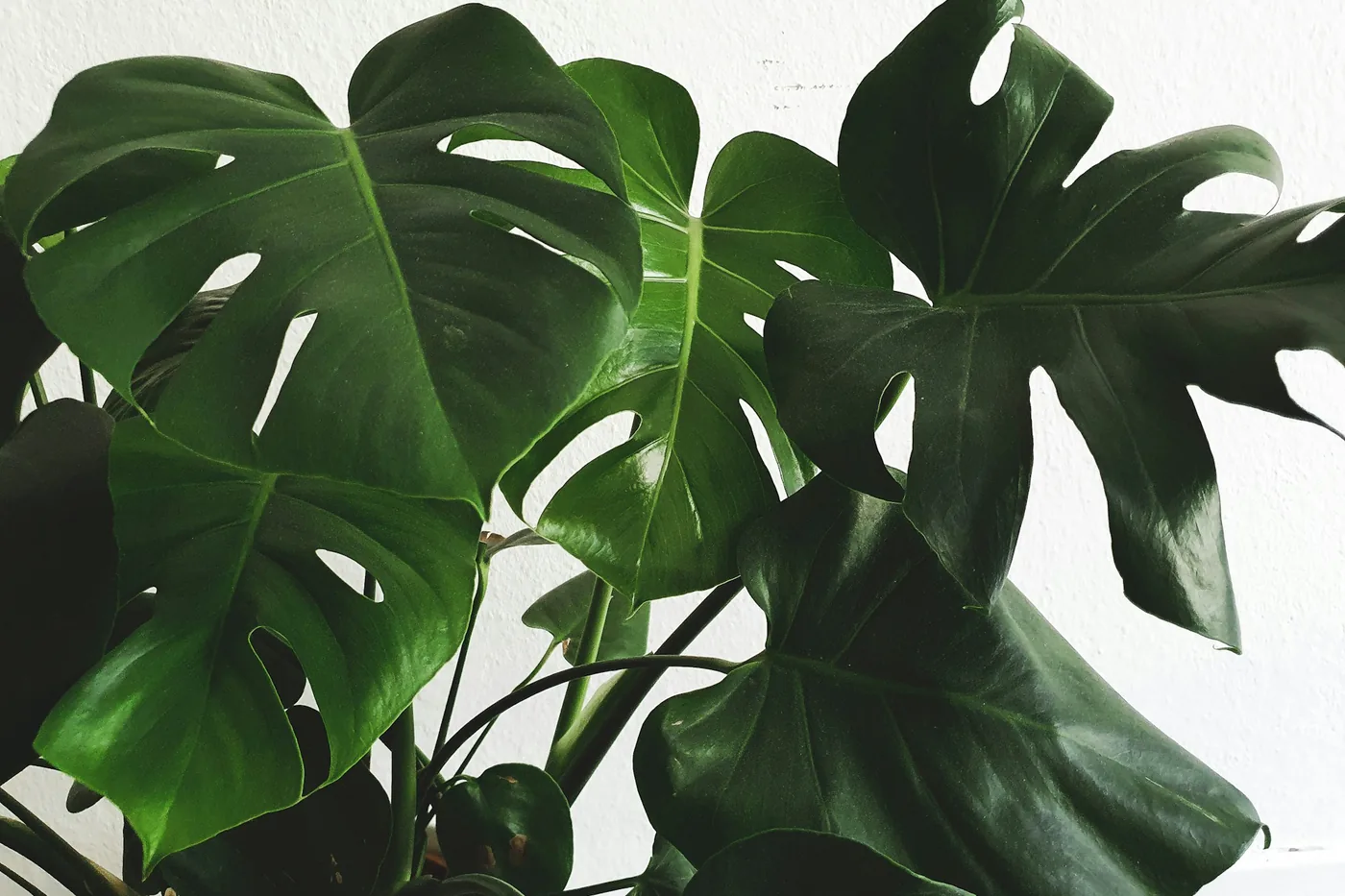
Monstera (Swiss Cheese Plant)
Monstera deliciosa
Toxic to cats and dogs
Let the top few centimetres of soil dry out between waterings. Rewards bright, indirect light with large fenestrated leaves.
Toxicity
Toxic Usually mild
Signs, in the ASPCA's words
Oral irritation, intense burning and irritation of mouth, tongue and lips, excessive drooling, vomiting, difficulty swallowing.
Toxic Usually mild
Signs, in the ASPCA's words
Oral irritation, intense burning and irritation of mouth, tongue and lips, excessive drooling, vomiting, difficulty swallowing.
Source — ASPCA Animal Poison Control Center, toxic and non-toxic plant list; read from this species' own page
Pet-safety information is a general guide from the ASPCA's toxic-plant database and covers cats and dogs only. "If eaten" summarises the symptoms ASPCA lists for that plant; how an animal actually reacts depends on how much it ate and on the animal. It isn't exhaustive, isn't veterinary advice, and individual animals vary — never rely on it as the sole basis for a decision about your pet. If you think your pet has eaten a harmful plant, contact a vet immediately.
Care
- WaterEvery 7–10 days
- LightBright, indirect
- HumidityHigh humidity
- Temperature18–27 °C
The same interval the Sabz app schedules reminders from. In autumn and winter the app stretches it; see houseplants in autumn.
Common problems
Monstera yellow leaves
On a monstera, yellow starts on the lowest, oldest leaves and nearly always means the compost is staying wet — a weekly routine is too much for a plant that wants to dry out between drinks, especially from September. Feel the compost two knuckles down before watering again. One old leaf yellowing a season is normal; several at once with damp compost is not.
Monstera brown crispy edges
Crisp brown edges and tips are the opposite signal: the compost has been drying out fully, or the air is dry from heating. Soak the pot from below for twenty minutes, then water when the top few centimetres are dry rather than by the calendar, and move it off the radiator. Edges that have gone brown stay brown; judge the fix by the next leaf.
Monstera leaves not splitting
New leaves coming in whole, without the holes and splits, means the plant is not getting enough light to justify them — the fenestrations are a light response, not an age one. Move it to within a metre of a bright window out of direct midday sun, and give it something to climb; a monstera splits sooner when it is going up rather than along.
Similar plants
- Swiss Cheese Vine toxicMonstera adansonii
- Areca Palm safeDypsis lutescens
- Croton toxicCodiaeum variegatum
- Polka Dot Plant safeHypoestes phyllostachya
In the app
Add a monstera (swiss cheese plant) to Sabz and the watering interval above becomes a reminder, the toxicity verdict sits on the plant's own page, and when a leaf turns, the Check-up reads what you have actually logged to say why.
 Free. No account, no analytics.