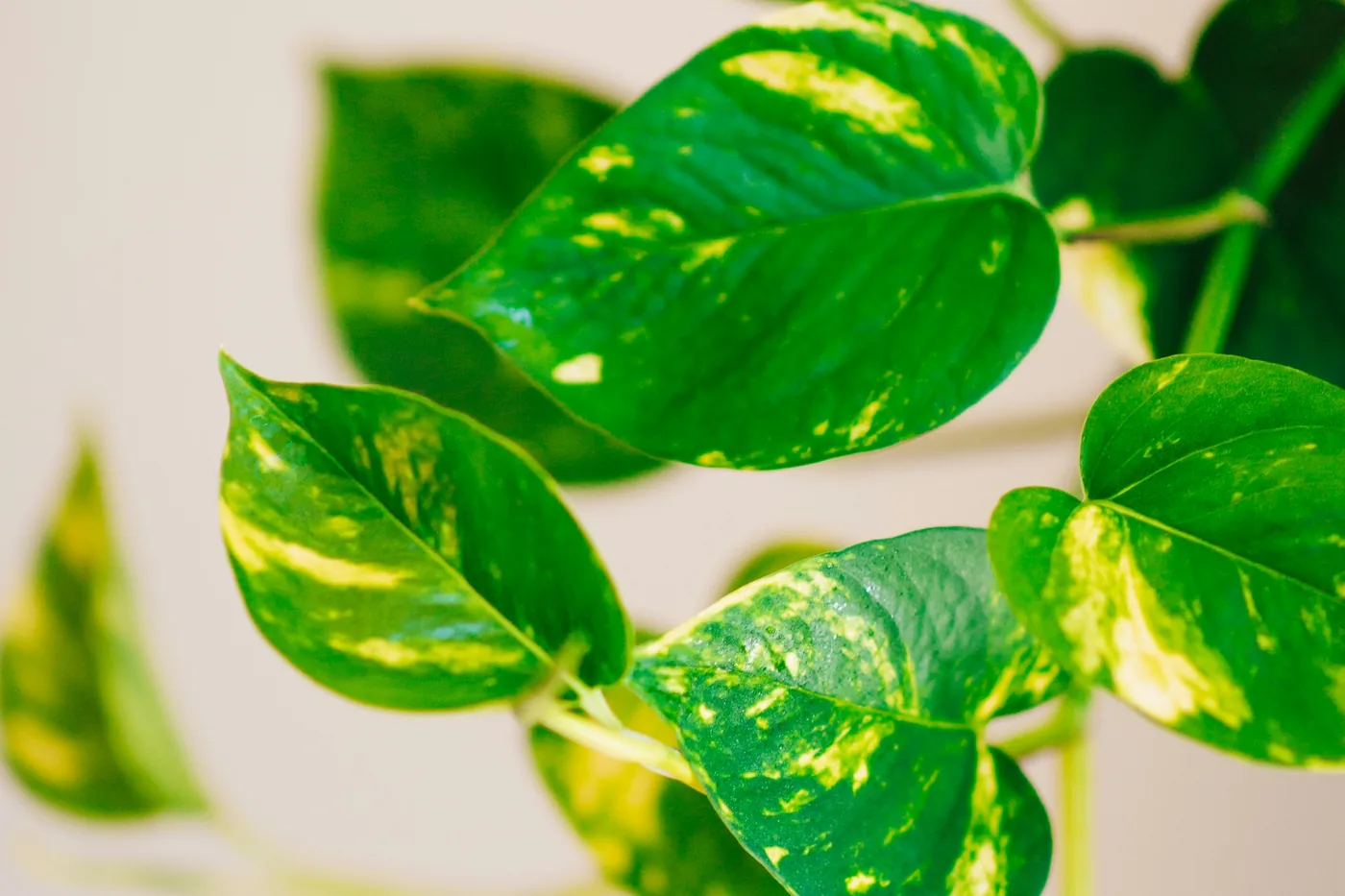
Golden Pothos
Epipremnum aureum
Toxic to cats and dogs
Nearly indestructible. Tolerates low light and irregular watering; let it dry out between drinks.
Sabz turns the interval below into a reminder, and the Check-up reads your care history when a leaf turns. Free on the App Store →
Toxicity
Toxic Usually mild
Signs, in the ASPCA's words
Oral irritation, intense burning and irritation of mouth, tongue and lips, excessive drooling, vomiting, difficulty swallowing.
Toxic Usually mild
Signs, in the ASPCA's words
Oral irritation, intense burning and irritation of mouth, tongue and lips, excessive drooling, vomiting, difficulty swallowing.
Source — ASPCA Animal Poison Control Center, toxic and non-toxic plant list; read from this species' own page
Safe alternatives to Golden Pothos →The 149 plants in this library recorded non-toxic to both cats and dogs.
Is Golden Pothos poisonous to cats?
Yes. Golden Pothos (Epipremnum aureum) is toxic to cats. That verdict is read from the ASPCA's own entry for this species.
Is Golden Pothos safe for dogs?
No. Golden Pothos (Epipremnum aureum) is toxic to dogs. That verdict is read from the ASPCA's own entry for this species.
Is Golden Pothos pet safe?
No. Toxic to cats and dogs. Sabz judges cats and dogs separately, and publishes the full list.
Pet-safety information is a general guide from the ASPCA's toxic-plant database and covers cats and dogs only. "If eaten" summarises the symptoms ASPCA lists for that plant; how an animal actually reacts depends on how much it ate and on the animal. It isn't exhaustive, isn't veterinary advice, and individual animals vary — never rely on it as the sole basis for a decision about your pet. If you think your pet has eaten a harmful plant, contact a vet immediately.
Care
- WaterEvery 7–10 days
- LightMedium light
- HumidityAverage humidity
- Temperature15–29 °C
The same interval the Sabz app schedules reminders from. In autumn and winter the app stretches it; see houseplants in autumn.
Common problems
Pothos yellow leaves
Yellow leaves on a pothos are overwatering until proven otherwise: the compost stays wet, the lower leaves go soft and yellow, and the vine stalls. Let it dry a good way down, check the pot drains, and water only when the top third of the compost is dry. Pothos will forgive weeks of neglect and not one week of sitting in water.
Pothos brown tips
Brown, papery tips point at inconsistent watering or dry air rather than too much of either — the plant went bone dry, then was flooded. Even it out: a proper soak when the compost is dry, nothing in between, and keep it away from radiators. The peace lily guide covers the tap-water side, which applies here too.
Pothos leggy with small leaves
Long bare stretches of vine with a few small, pale leaves is a pothos reaching for light it is not getting. Move it closer to the window, then cut the bare vines back to two or three leaves from the pot: it regrows bushier from the cuts, and the trimmings root in water in a few weeks and can go back in the pot to fill it.
Propagation
- MethodStem cutting
- Best timeSpring to late summer
A cutting with four or five leaves roots in water within a fortnight; pot it on before the water roots get long, because they adapt badly to compost.
Similar plants
- Baby Rubber Plant safePeperomia obtusifolia
- Corn Plant toxicDracaena fragrans
- Dragon Tree toxicDracaena marginata
- Japanese Maple unconfirmedAcer palmatum
In the app
Add a golden pothos to Sabz and the watering interval above becomes a reminder, the toxicity verdict sits on the plant's own page, and when a leaf turns, the Check-up reads what you have actually logged to say why.
 Free. No account, no analytics.