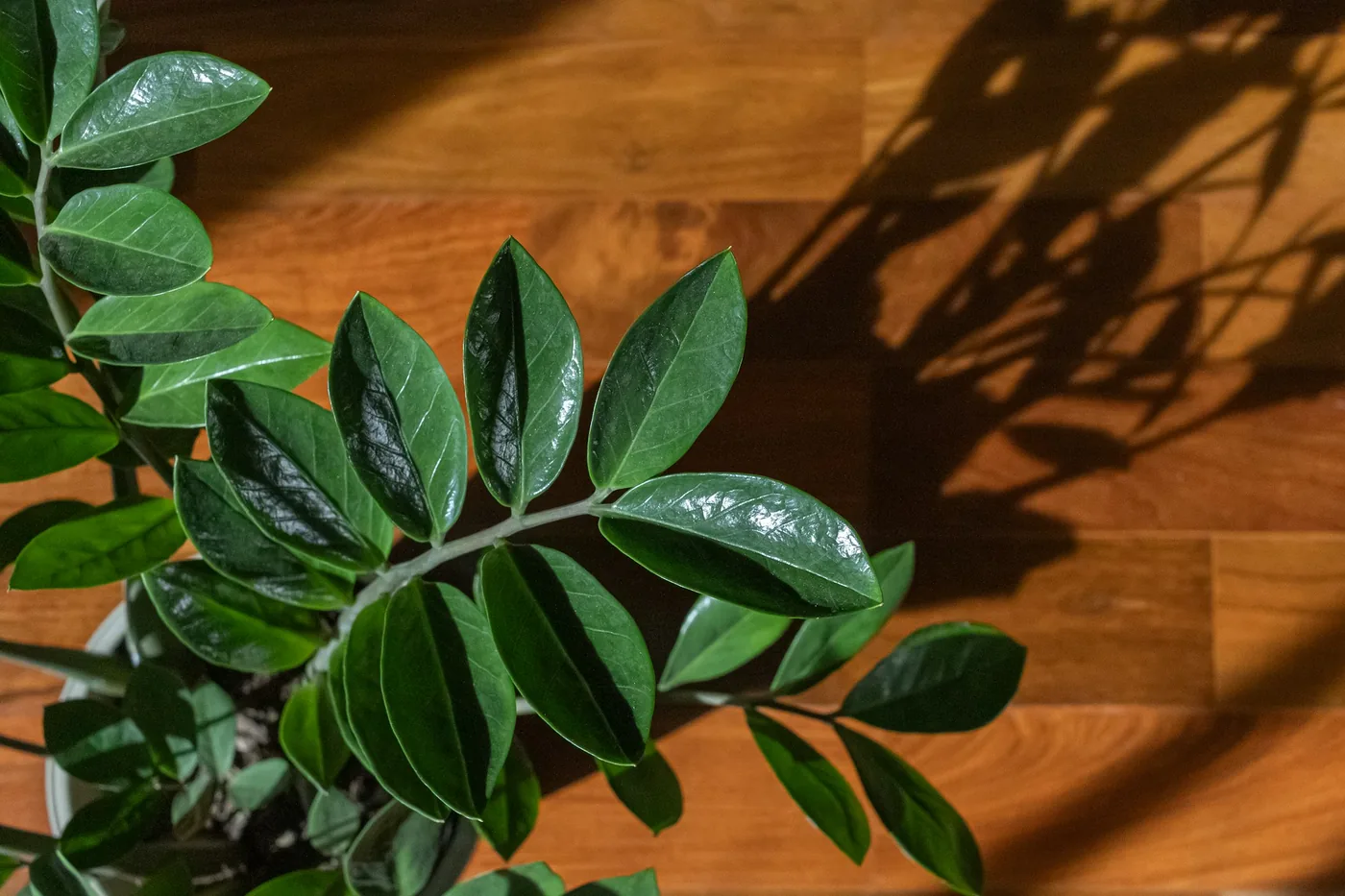
ZZ Plant
Zamioculcas zamiifolia
Toxic to cats and dogs
Stores water in its rhizomes, so it forgives forgetfulness. Let it dry out completely between waterings.
Toxicity
Toxic
Toxic
Caution
Based on general horticultural consensus, not a pet-poison database.
Pet-safety information is a general guide from the ASPCA's toxic-plant database and covers cats and dogs only. "If eaten" summarises the symptoms ASPCA lists for that plant; how an animal actually reacts depends on how much it ate and on the animal. It isn't exhaustive, isn't veterinary advice, and individual animals vary — never rely on it as the sole basis for a decision about your pet. If you think your pet has eaten a harmful plant, contact a vet immediately.
Care
- WaterEvery 14–21 days
- LightLow light
- HumidityLow humidity
- Temperature15–26 °C
The same interval the Sabz app schedules reminders from. In autumn and winter the app stretches it; see houseplants in autumn.
Common problems
ZZ plant yellow leaves
A ZZ plant going yellow is overwatered almost without exception: it stores water in fat rhizomes under the compost and wants a drink every two to three weeks, less in winter. Stop watering, let the compost dry right through, and check the rhizomes are firm — soft ones are rotting and need cutting away.
ZZ plant stems drooping
Stems that lean and droop, on a plant whose stems are normally rigid, usually mean the rhizomes have started to rot in wet compost and can no longer support them. Unpot it, remove anything soft, repot into dry gritty compost, and water only when the pot is fully dry. A stem that droops from thirst is rare and recovers with one soak.
ZZ plant brown tips
Brown tips on a ZZ plant are dry air or minerals in tap water, not a watering problem — the leaves are thick and slow to show anything. Use rainwater or cooled boiled water and keep it off the radiator. It is cosmetic; the plant is not in trouble.
Similar plants
- Cast Iron Plant safeAspidistra elatior
- Chinese Evergreen toxicAglaonema commutatum
- Parlour Palm safeChamaedorea elegans
- Yucca toxicYucca elephantipes
In the app
Add a zz plant to Sabz and the watering interval above becomes a reminder, the toxicity verdict sits on the plant's own page, and when a leaf turns, the Check-up reads what you have actually logged to say why.
 Free. No account, no analytics.