Guides · Autumn
Houseplants in autumn: what changes when the heating goes on
Nothing about your plants changes in October. Everything about the room does. The light drops by more than half, the heating dries the air, the windowsill goes cold at night, and the watering routine that was right in July is now wrong. Most houseplant trouble in a British winter starts in the six weeks after the heating goes on, and nearly all of it comes from carrying on as before. Here is what to change, what to stop, and what to watch for.
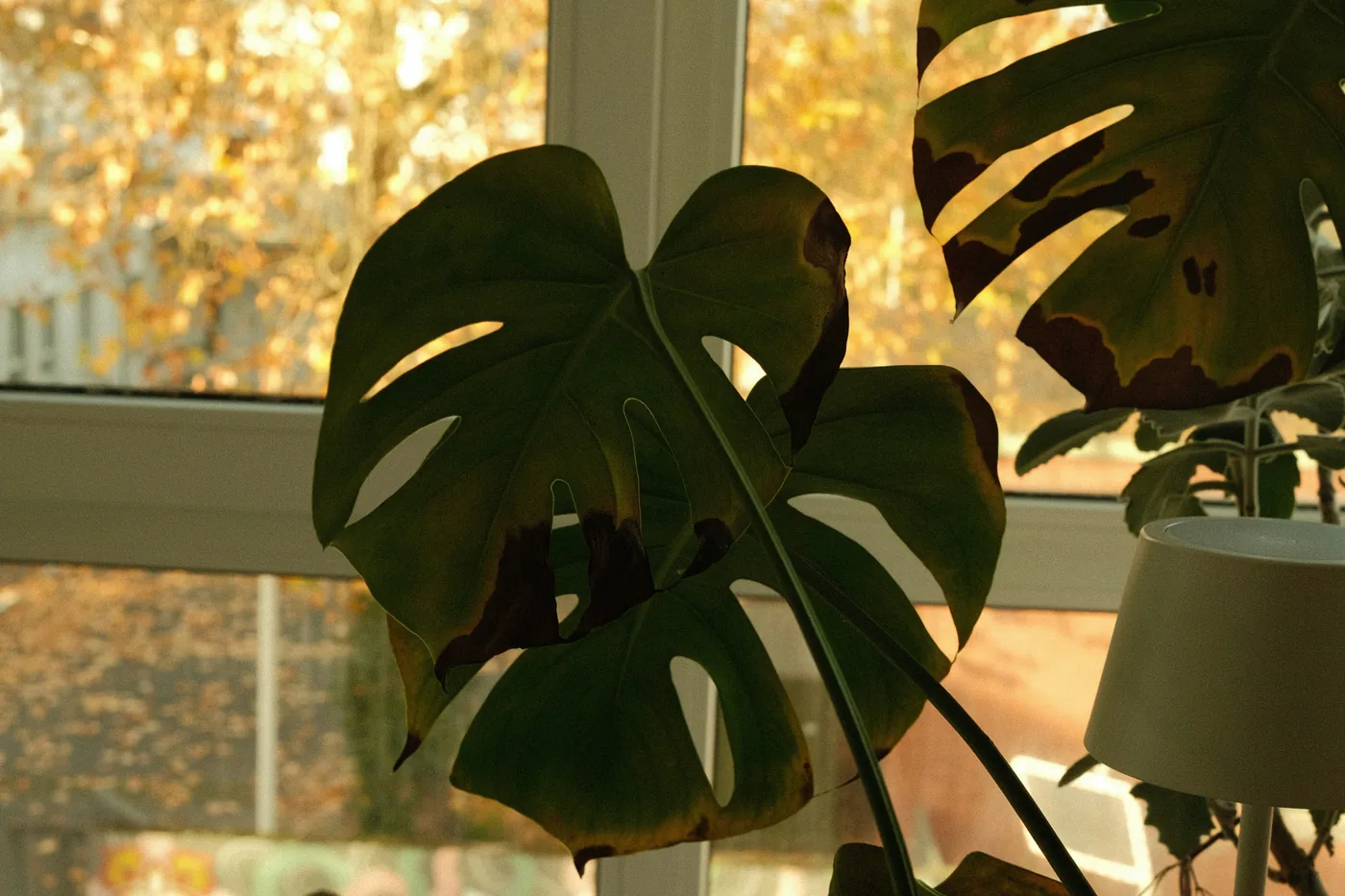
- Water
- Less, and by the soil, not the calendar. The interval roughly doubles for most plants
- Feed
- Stop, for most plants, until March. A plant that is not growing cannot use it
- Place
- Closer to the window, off the radiator, away from the door and the cold glass
What actually changes
Light. A south-facing room in June gets around sixteen hours of daylight and a high sun. In November it gets eight hours of a low one, often through cloud. For a plant a metre from the window that is not a little less light, it is a different climate, and the plant responds by growing slower or not at all.
Air. Central heating takes the humidity of a room from a comfortable fifty or sixty per cent to thirty or below. Leaf tips crisp, calatheas curl, ferns brown. The plants that mind are the ones from forest floors, which is most of them.
Temperature, in the wrong places. The room is warmer, but the windowsill is colder: single glazing can be ten degrees below the room at night, and the plant pressed against it feels the glass, not the thermostat. Meanwhile the radiator under that same sill blasts dry heat upward. The windowsill above a radiator is the worst spot in the house from October to March, and it is where most houseplants live.
What does not change: the watering can. A plant growing slowly in low light drinks a fraction of what it drank in July. The Saturday routine keeps arriving. That is the whole reason overwatering and fungus gnats are autumn problems.
What to change
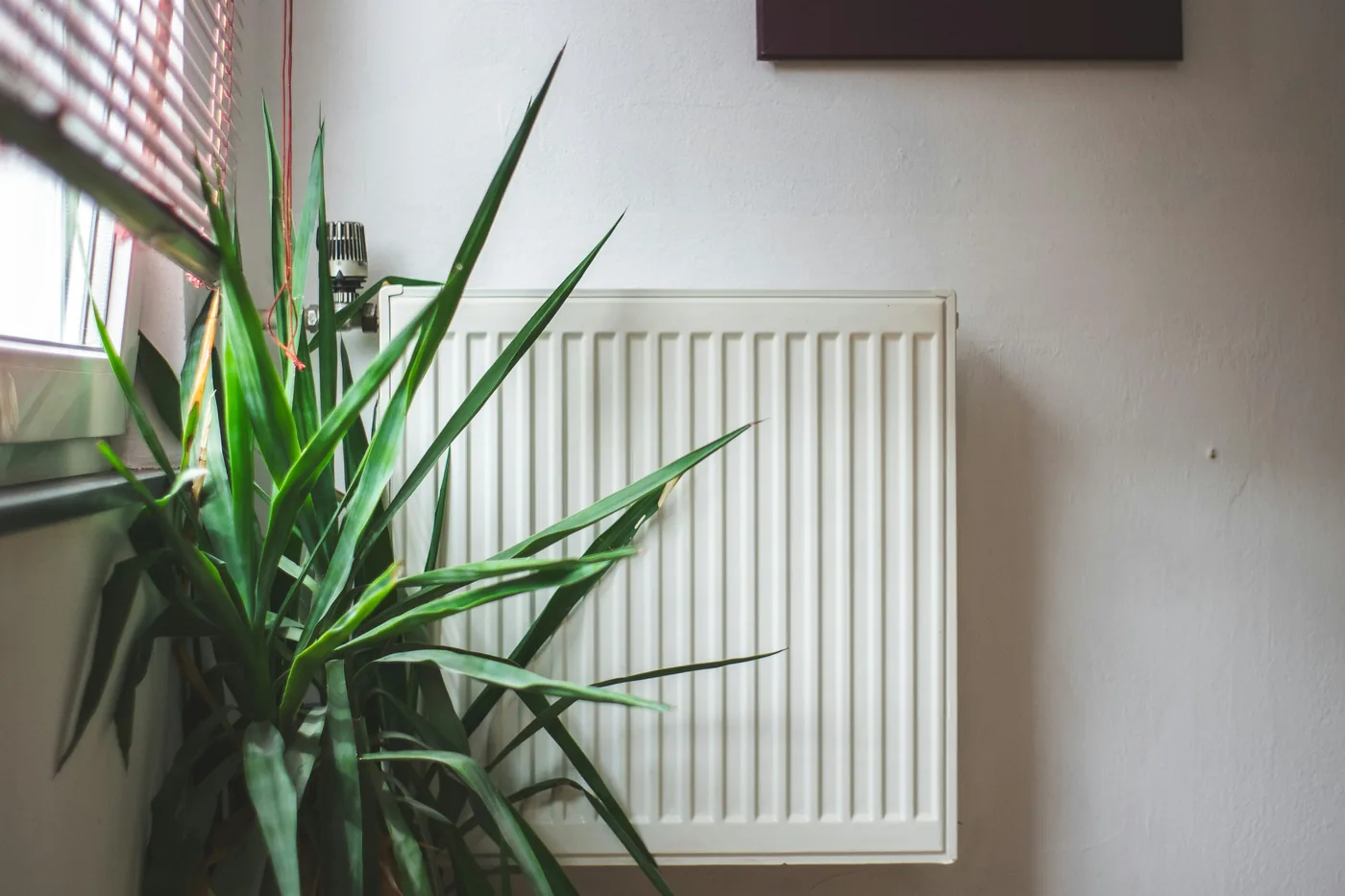
- Water by the soil, and expect the gap to double
- Push a finger in before every watering. Water thoroughly when the top few centimetres are dry, let it drain, and not before. A plant on a seven-day rhythm in summer is often on fourteen by November, and a succulent may go a month. If you use reminders, lengthen them now rather than after the first yellow leaf.
- Stop feeding most plants until March
- Fertiliser is for growth, and growth has stopped. Feeding a resting plant leaves salts in the compost that burn roots and show as brown tips. Foliage plants, ferns, succulents and cacti: nothing until spring. The exceptions are anything still actively growing or flowering under good light, such as herbs on a bright kitchen sill or a winter-flowering plant, which can take a weak feed monthly.
- Move the ones that need it
- Anything more than a couple of metres from a window comes closer. Anything on a sill above a radiator comes off it, or the radiator gets a shelf. Anything touching cold glass moves a hand's width back. Anything by the front door moves, full stop. Do the moving in October, in one go, and then leave them; a plant moved every week never settles.
- Raise the humidity honestly
- Grouping plants together helps a little. A tray of pebbles and water under the pot helps a little. A humidifier in the room helps a lot, and is the only one of the three that reaches a calathea. Misting does not: it wets the leaves for twenty minutes and does nothing for the air, and damp leaves in still air grow fungus.
- Turn the pot
- Low winter sun comes from one side. A quarter turn every week or two keeps the plant from leaning and dropping the leaves on its dark side.
- Clean the leaves and the glass
- A dusty leaf in November is a leaf getting perhaps half the light it could. A damp cloth on the leaves and a clean window are worth more than any grow light. If you do use a grow light, it is for the plants that must sit in a dark room, not a substitute for moving the others.
What to stop
- Watering to the summer schedule. The single biggest cause of winter decline.
- Feeding to help a plant that looks tired. It is resting, not starving.
- Repotting. Roots do not grow into fresh compost in the dark months, so the new compost stays wet. Repot in spring.
- Misting as a humidity fix. Wet leaves, dry air, and a leaf-spot fungus by December.
- Buying tropical plants in the cold and carrying them home unwrapped. Ten minutes at five degrees is enough to drop every leaf on a fittonia or a peace lily.
- Worrying about a lower leaf. Less light means less leaf. A plant trimming its own canopy for winter is doing the sensible thing; see the yellow leaves page for which yellowing matters.
The six autumn problems, and their pages
These arrive in roughly this order once the heating is on. Each has a page.
| What you see | Why it is autumn | Page |
|---|---|---|
| Brown, crispy leaf tips | Dry heated air, and hard water building up in the compost | Brown tips |
| Small flies around the pot | Compost that no longer dries between waterings | Fungus gnats |
| Yellow lower leaves, drooping in wet soil | The July watering meeting November light | Overwatering |
| Yellowing, generally | Old leaves shed for the dark months, or the above | Yellow leaves |
| Leaves dropped overnight, plant otherwise fine | Cold glass, a draught by the door, or a shock after a move | Dying, or sulking? |
| Everything at once | Usually several of the above; start from the soil | Sick houseplant |
Plant by plant
Peace lilies, calatheas, ferns, fittonias
The humidity plants. Off the radiator, into the bathroom or kitchen if there is light there, or next to a humidifier. Watered when the top of the compost dries, which is still fairly often for these, but not on a schedule.
Monsteras, philodendrons, pothos, rubber plants
The tolerant ones. They stop growing and want very little: water when the top few centimetres are dry, no feed, a wipe of the leaves. Most winter trouble here is overwatering.
Succulents and cacti
Nearly dormant. Water once a month or less, in the morning, and not at all if the room is cold. A cactus on a cold sill in wet compost rots from the base; a dry one is fine at five degrees.
Herbs on the kitchen sill
The ones still growing. Basil gives up below about ten degrees and is not worth fighting for; parsley, chives, mint and thyme carry on in a bright spot with the occasional weak feed.
Citrus, olives, and anything that summered outside
In before the first frost, into the coolest bright room in the house, not the warmest. A citrus in a heated sitting room drops its leaves; in a cold conservatory or porch it sits happily until April.
A short autumn routine
One afternoon in early October, once, and the winter mostly takes care of itself.
- Move every plant that is above a radiator, against the glass, or by the door.
- Bring the outdoor ones in before the first frost.
- Lengthen every watering reminder, or switch to checking the soil.
- Put the fertiliser away until March, except for the herbs.
- Wipe the leaves, clean the windows, turn the pots.
- Then leave them alone, and judge by new growth in spring.
This page names categories, not products, on purpose. Availability and approval change; what works does not.
Common questions
How often should I water houseplants in autumn and winter?
Roughly half as often as in summer for most plants, but by the compost, not the calendar: water when the top few centimetres are dry. Light drops by more than half from late August, the plant slows, and the weekly routine that was right in July is the commonest cause of winter root rot. Plants that store water — snake plant, ZZ, succulents — may want a drink every three or four weeks.
Should I stop feeding houseplants in winter?
For most, yes, from October until March. A plant that is not growing cannot use the feed, and it sits in the compost as salts that scorch roots. The exceptions are plants in active growth or flower over winter — a Christmas cactus, a cyclamen, a plant under a grow light — which can carry on at half strength.
Why are my houseplants dropping leaves in autumn?
Less light. The plant lets go of leaves it can no longer support and keeps the ones nearest the window; a few yellow lower leaves in October are normal. It becomes a problem when the drop is heavy or the new growth is affected, which usually means the watering did not change with the season, or the plant is sitting in a cold draught.
Should I move my plants closer to the window in winter?
Yes, most of them, and it is the single most useful autumn change: a metre from the glass in November is a different climate from the sill. Keep them off the radiator underneath, and away from the cold glass at night — a few centimetres back from the pane is enough. Plants that scorched in a south window in July can take it now.
Is central heating bad for houseplants?
It is the dry air, not the warmth. Heating takes a room from fifty or sixty per cent humidity to thirty or below, and the plants from humid places — calathea, ferns, peace lily — show it first as brown tips and edges. Group plants together, use a gravel tray, and keep them away from radiators; a room kept at a steady eighteen to twenty-one degrees suits nearly everything.
Still not sure?
The RHS's winter houseplant care page covers the same season from the other end of it.
Sabz’s reminders are set per plant, and the Check-up reads the care you have actually logged, so when a plant that was fine in August starts to struggle in October it can say whether the watering is the reason, and by how much. Lengthen the intervals in the app as the light drops, and let it tell you when the routine and the room have drifted apart.
 Free to start. No account, no analytics.