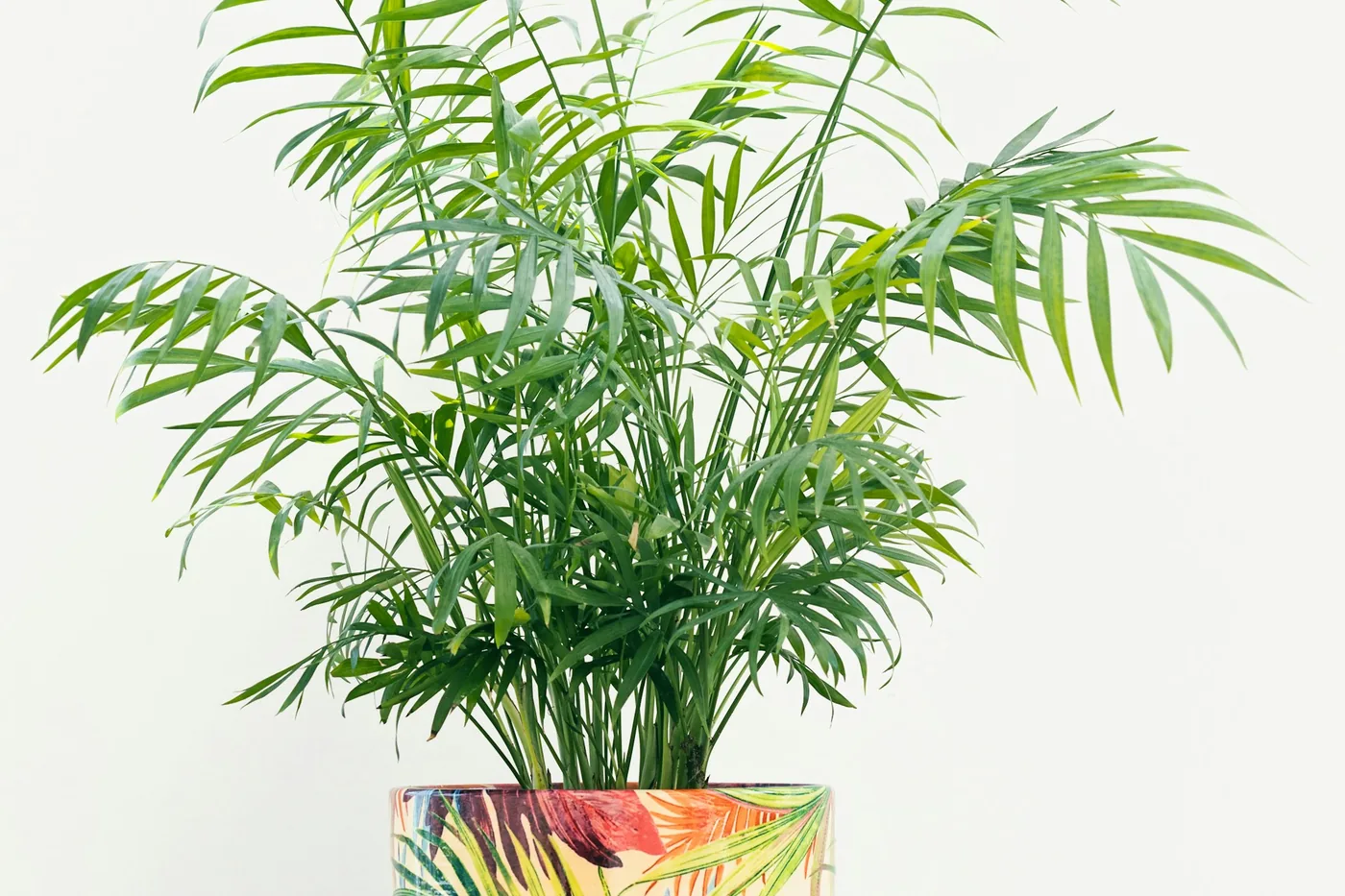
Parlour Palm
Chamaedorea elegans
Non-toxic to cats and dogs
One of the few palms happy in lower light. Let the top of the soil dry before watering; avoid cold, wet feet.
Toxicity
Safe
Not known to be toxic to cats.
Safe
Not known to be toxic to dogs.
Source — ASPCA Animal Poison Control Center, toxic and non-toxic plant list; read from this species' own page
Pet-safety information is a general guide from the ASPCA's toxic-plant database and covers cats and dogs only. "If eaten" summarises the symptoms ASPCA lists for that plant; how an animal actually reacts depends on how much it ate and on the animal. It isn't exhaustive, isn't veterinary advice, and individual animals vary — never rely on it as the sole basis for a decision about your pet. If you think your pet has eaten a harmful plant, contact a vet immediately.
Care
- WaterEvery 7–10 days
- LightLow light
- HumidityAverage humidity
- Temperature16–24 °C
The same interval the Sabz app schedules reminders from. In autumn and winter the app stretches it; see houseplants in autumn.
Common problems
Parlour palm brown tips
Brown tips on a parlour palm come from dry air and, less often, from overwatering — it is one of the few palms that tolerates a dim room but not a radiator beside it. Keep it out of the heating's path, water when the top few centimetres are dry, and trim the tips just inside the brown.
Parlour palm yellowing fronds
Yellowing fronds, especially the lower ones, mean the compost is staying soggy. A parlour palm in low light uses very little water; a weekly routine is usually double what it needs. Let it dry a good way down before the next drink and make sure the pot drains.
Parlour palm spider mites
Fine webbing at the leaf joints and a speckled, dusty look to the fronds is spider mite, which thrives in the dry air of a heated room. Check the undersides with a torch, wash the fronds under the shower, raise the humidity, and repeat weekly until the speckling stops. Dry air is the cause; the mites are the symptom.
Similar plants
- Bamboo Palm safeChamaedorea seifrizii
- Cast Iron Plant safeAspidistra elatior
- Chinese Evergreen toxicAglaonema commutatum
- Hosta toxicHosta plantaginea
In the app
Add a parlour palm to Sabz and the watering interval above becomes a reminder, the toxicity verdict sits on the plant's own page, and when a leaf turns, the Check-up reads what you have actually logged to say why.
 Free. No account, no analytics.