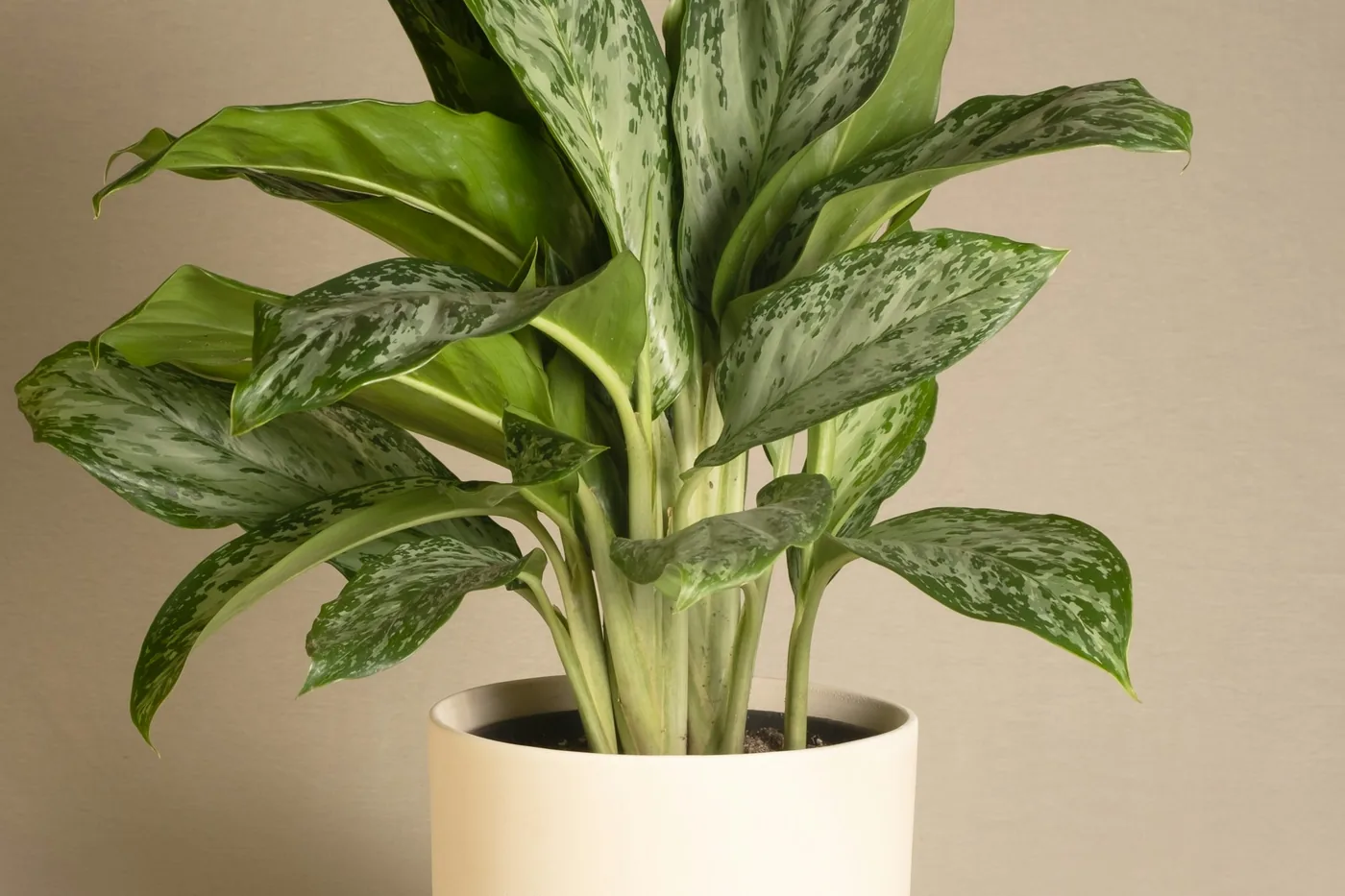
Chinese Evergreen
Aglaonema commutatum
Toxic to cats and dogs
Tolerant and colourful. Handles low light well; let the top third of the soil dry between waterings.
Toxicity
Toxic Usually mild
Signs, in the ASPCA's words
Oral irritation, pain and swelling of mouth, tongue and lips, excessive drooling, vomiting (not horses), difficulty swallowing
Toxic Usually mild
Signs, in the ASPCA's words
Oral irritation, pain and swelling of mouth, tongue and lips, excessive drooling, vomiting (not horses), difficulty swallowing
Source — ASPCA Animal Poison Control Center, toxic and non-toxic plant list; read from this species' own page
Pet-safety information is a general guide from the ASPCA's toxic-plant database and covers cats and dogs only. "If eaten" summarises the symptoms ASPCA lists for that plant; how an animal actually reacts depends on how much it ate and on the animal. It isn't exhaustive, isn't veterinary advice, and individual animals vary — never rely on it as the sole basis for a decision about your pet. If you think your pet has eaten a harmful plant, contact a vet immediately.
Care
- WaterEvery 7–10 days
- LightLow light
- HumidityAverage humidity
- Temperature16–27 °C
The same interval the Sabz app schedules reminders from. In autumn and winter the app stretches it; see houseplants in autumn.
Common problems
Chinese evergreen yellow leaves
Yellow leaves are overwatering or cold. It tolerates low light, so it uses little water — every seven to ten days in summer, less in winter — and it hates a cold draught or a spot below fifteen degrees. Let the compost dry a good way down and move it away from a cold window or door.
Chinese evergreen leaves curling with brown edges
Curling leaves with brown edges are dry air, especially once the heating comes on. Move it off the radiator, group it with other plants or stand it on a wet gravel tray, and keep the compost lightly moist. Trim the edges for looks.
Chinese evergreen losing its colour
New leaves coming in plain green on a pink, red or silver variety mean too little light — the colour needs it. Move it to bright, indirect light, out of direct sun. The plain leaves stay plain; the next ones colour up.
Similar plants
- Cast Iron Plant safeAspidistra elatior
- Parlour Palm safeChamaedorea elegans
- Hosta toxicHosta plantaginea
- ZZ Plant toxicZamioculcas zamiifolia
In the app
Add a chinese evergreen to Sabz and the watering interval above becomes a reminder, the toxicity verdict sits on the plant's own page, and when a leaf turns, the Check-up reads what you have actually logged to say why.
 Free. No account, no analytics.