Guides · Flowering · Deadheading
What is deadheading, and which plants need it?
Deadheading is usually explained as tidying up. What it actually does is stop the plant setting seed, which is the only reason it keeps flowering. That is also why it is the wrong thing to do to a holly, and why it must never cost a bulb its leaves.
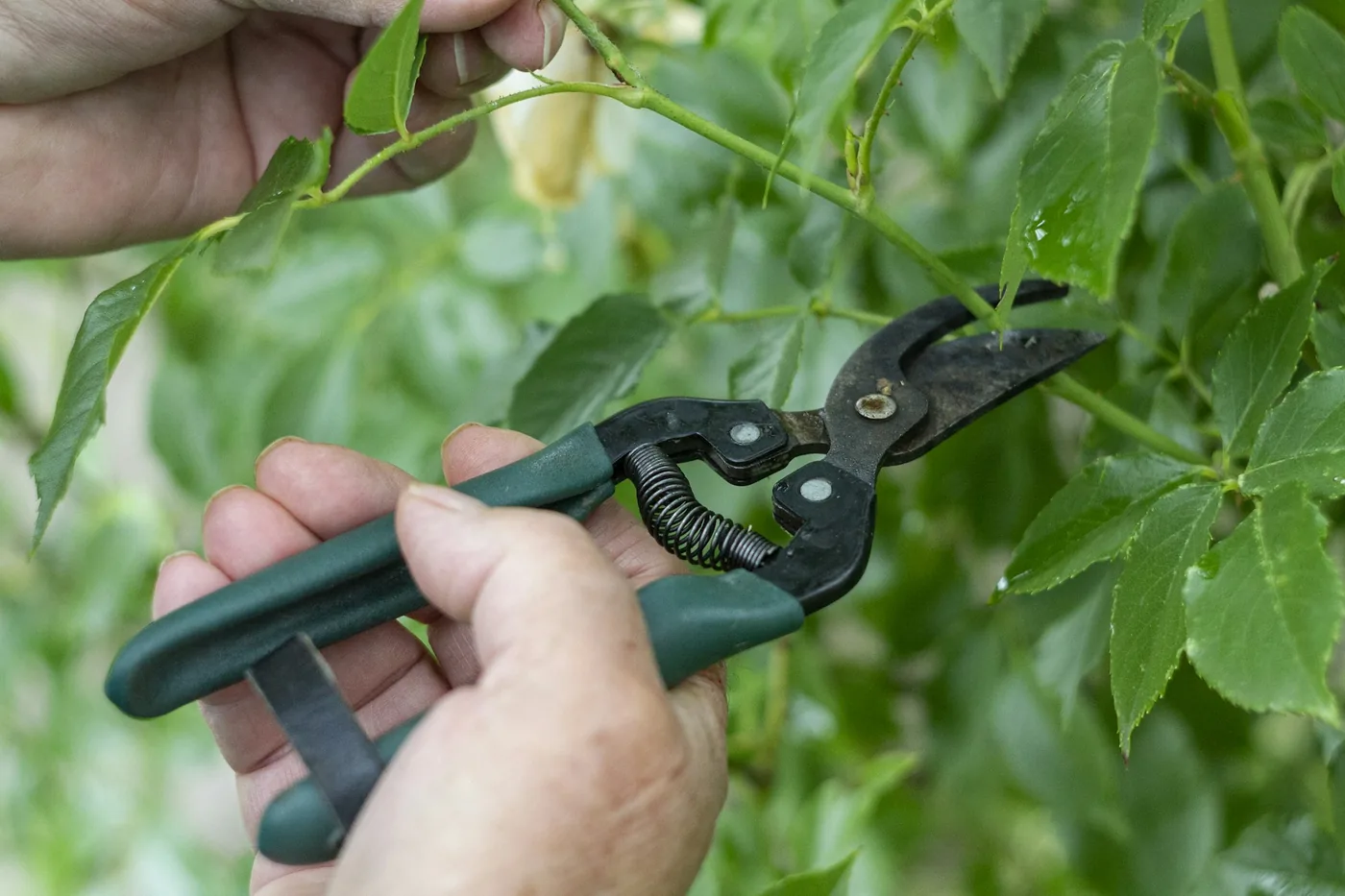
- What it does
- Stops seed forming, so the plant carries on flowering
- Where to cut
- Back to the next bud or leaf, not just under the flower head
- Do not
- Deadhead anything grown for berries, or cut a bulb's leaves while green
What deadheading actually does
Deadheading is removing a flower once it is over. It is usually explained as tidying, which is the least interesting thing about it. A flower is not the plant's goal; seed is. The flower is the means. Once a flower has been pollinated and seed starts to form, the plant has done what the season was for, and it stops spending on new flowers.
Cutting the spent flower off before the seed forms interrupts that. The plant reads it as a failure, and tries again. That is the whole mechanism, and it explains both of the things people find confusing about deadheading: why it works so dramatically on some plants and does nothing at all on others, and why it has to be done before the seed sets rather than whenever you get round to it.
So the question is never "should I deadhead this plant". It is "does this plant flower again if I ask it to, and do I want what the flower turns into".
Which plants it is for
Deadheading pays on plants that flower repeatedly across a season and are capable of another flush. That is most bedding and most annuals, and a good many perennials.
It does almost nothing on plants that flower once, set seed and are finished — a tulip, a snowdrop, a peony. Removing the dead flower still looks better and still saves the plant a little effort, but nobody gets a second display out of it.
And it is actively the wrong thing on a third group, which gets its own section below, because those are the plants where the advice people repeat without thinking costs you the thing you were growing the plant for.
Deadheading keeps one plant flowering. If what you want is more plants, that is a different job: stem cuttings or seed.
Where to cut
Back to the next bud, leaf or side shoot — not just under the head.
This is the part most often done wrong, and it matters for the reason in section 01. The seed forms in the swelling directly behind the petals. Pulling the petals off by hand leaves that swelling on the plant, the seed sets anyway, and the plant stops flowering on schedule while you wonder why deadheading did not work. Follow the flower stem down with finger and thumb, or snips, until you reach a leaf joint or a bud, and take it off there.
- RosesTo the first outward-facing leaf below the head
- Dahlias, marigolds, cosmosDown the bare stem to the first pair of leaves
- PelargoniumsSnap the whole flower stalk off at its base — it comes away cleanly
- Pansies, violasPinch the head and its little stalk together
- Lupins, delphiniumsThe whole spike, to a leaf, once two thirds of it is over
How often, and with what
Every few days through the flowering season, for the plants that repeat. It is not a job you do once. The useful habit is to do it while you water rather than as a separate task, because the two have the same rhythm and you are already looking at the plant.
Finger and thumb is enough for anything soft — pansies, pelargoniums, marigolds. Use snips or secateurs on anything woody, and on roses, where a torn stem is an opening for disease. There is no need to disinfect anything between plants for ordinary deadheading; that advice belongs to pruning diseased wood, which is a different job.
One thing worth saying plainly: deadheading is not a treatment. If flowers are browning before they open, or buds are dropping unopened, that is not a plant asking to be deadheaded — it is usually water, light or cold, and it is worth reading overwatering or not enough light instead.
The plants to leave alone
Every berry was a flower first. Deadhead a berrying shrub and you remove the autumn and winter display in May, months before you would have noticed what you had done.
Holly is the clearest case. Its flowers are small, white and easy to miss, and taking them off costs the entire berry crop. It catches people out twice over, because holly is also male or female and only a female plant berries at all — so a holly that does not fruit is usually a lone or male plant rather than one that was deadheaded.
The others are left for their own reasons. Lavender and heather keep their faded flowers through winter as frost protection for the growth beneath, and are cut back in spring. Hellebore seedheads are how a good clump becomes a better one. Hawthorn feeds birds through the hungry end of the year.
- Holly Ilex aquifolium
- Hawthorn Crataegus species
- Winter Cherry Solanum pseudocapsicum
- American Bittersweet Celastrus scandens
- Christmas Rose Helleborus niger
- Heather Calluna vulgaris
- English Lavender Lavandula angustifolia
Several of these are toxic to cats or dogs, and the plant pages say so from that species' own ASPCA entry. The full list is here →
Bulbs are their own case
With a bulb, deadhead the flower and leave the leaves completely alone.
The weeks after a daffodil or tulip finishes flowering are the weeks it builds next year's flower, and it does that through its foliage. Removing the spent flower is worth doing, because a bulb that sets seed spends on seed instead. But cutting, knotting, plaiting or tying the leaves back while they are still green takes away the only means the bulb has of feeding itself.
Leave the foliage until it has yellowed and comes away with a gentle pull, which is usually about six weeks. A clump that flowers beautifully in its first year and sparsely in its second has almost always been tidied too early.
- Daffodil Narcissus
- Tulip Tulipa
- Snowdrop Galanthus nivalis
- Grape Hyacinth Muscari armeniacum
When to stop
Stop deadheading in the last few weeks of the season if you want the plant to seed itself.
This is a choice rather than a rule. Pot marigold, nasturtium, poppies and sweet alyssum all self-seed readily, and letting the final flush run to seed is how you get them back next year without sowing, and collecting the seed instead is the deliberate version of the same thing. Carry on deadheading to the frosts and you get a longer display this year and an empty bed next.
For anything you are overwintering rather than replacing, stop once growth slows in autumn. A plant going into its resting season does not need to be pushed into flowering, and the cut surfaces heal slowly in cold, damp weather. What changes in autumn →
Common questions
Does deadheading really make a plant flower for longer?
For plants that flower repeatedly over a season, yes, and the reason is not cosmetic. A plant's purpose in flowering is seed. Once seed is set it has done what it set out to do and it stops spending energy on new flowers. Removing the spent flower before the seed forms keeps it trying. For plants that flower once and then stop, deadheading tidies the plant but does not buy another flush.
Where exactly do I cut?
Back to the next bud, leaf or side shoot below the dead flower, not just under the head. Snapping the petals off leaves the developing seed pod behind, which is the part that signals the plant to stop. On a rose, cut to the first outward-facing leaf; on a dahlia or a marigold, follow the flower stem down to where it meets a pair of leaves.
How do I tell a spent bud from a new one?
A new bud is plump, firm and usually rounded. A spent one is slimmer, softer, and often slightly pointed where the petals have dropped. Dahlias catch people out because the two look alike: the fading one is conical, the new one is a ball. When you are unsure, leave it — removing a bud costs you a flower, and leaving a dead head for another week costs almost nothing.
Which plants should I not deadhead?
Anything grown for what comes after the flower. Holly, hawthorn and winter cherry all carry berries that were flowers first, so taking the flowers off removes the display you were waiting for. Lavender, heather and hellebores are left with their faded flowers on through winter and cut back in spring instead. And anything you want to self-seed must be allowed to finish.
Do I deadhead bulbs?
Deadhead the flower, never the leaves. A daffodil or tulip spends the weeks after flowering putting next year's flower into the bulb, and it does that through its leaves. Removing the spent flower stops it wasting effort on seed; cutting, knotting or tying the foliage before it has yellowed off is the reason a clump flowers well one year and poorly the next.
Plants in the catalogue worth deadheading
Each page gives the plant's own watering interval and, where it matters, what differs for it.
- Pot Marigold Calendula officinalis
- Marigold Tagetes
- Zinnia Zinnia species
- Cosmos Cosmos bipinnatus
- Snapdragon Antirrhinum majus
- Pansy Viola tricolor
- Geranium (Pelargonium) Pelargonium hortorum
- Petunia Petunia hybrida
- Dahlia Dahlia
- Rose Rosa
- Sweet Pea Lathyrus latifolius
- Lupin Lupinus polyphyllus
Still not sure?
The RHS's propagation advice covers what to do with the seed if you decide to let a plant set it instead.
Sabz does not remind you to deadhead. It is a job with the rhythm of a season rather than an interval, and the app is built around recurring care. What it does do is keep the watering right for the species while the plant is flowering, and read your own care history back to you when something goes wrong. Several of the plants on this page are toxic to cats or dogs, and their pages say which, from that species' own ASPCA entry.
 Free to start. No account, no analytics.