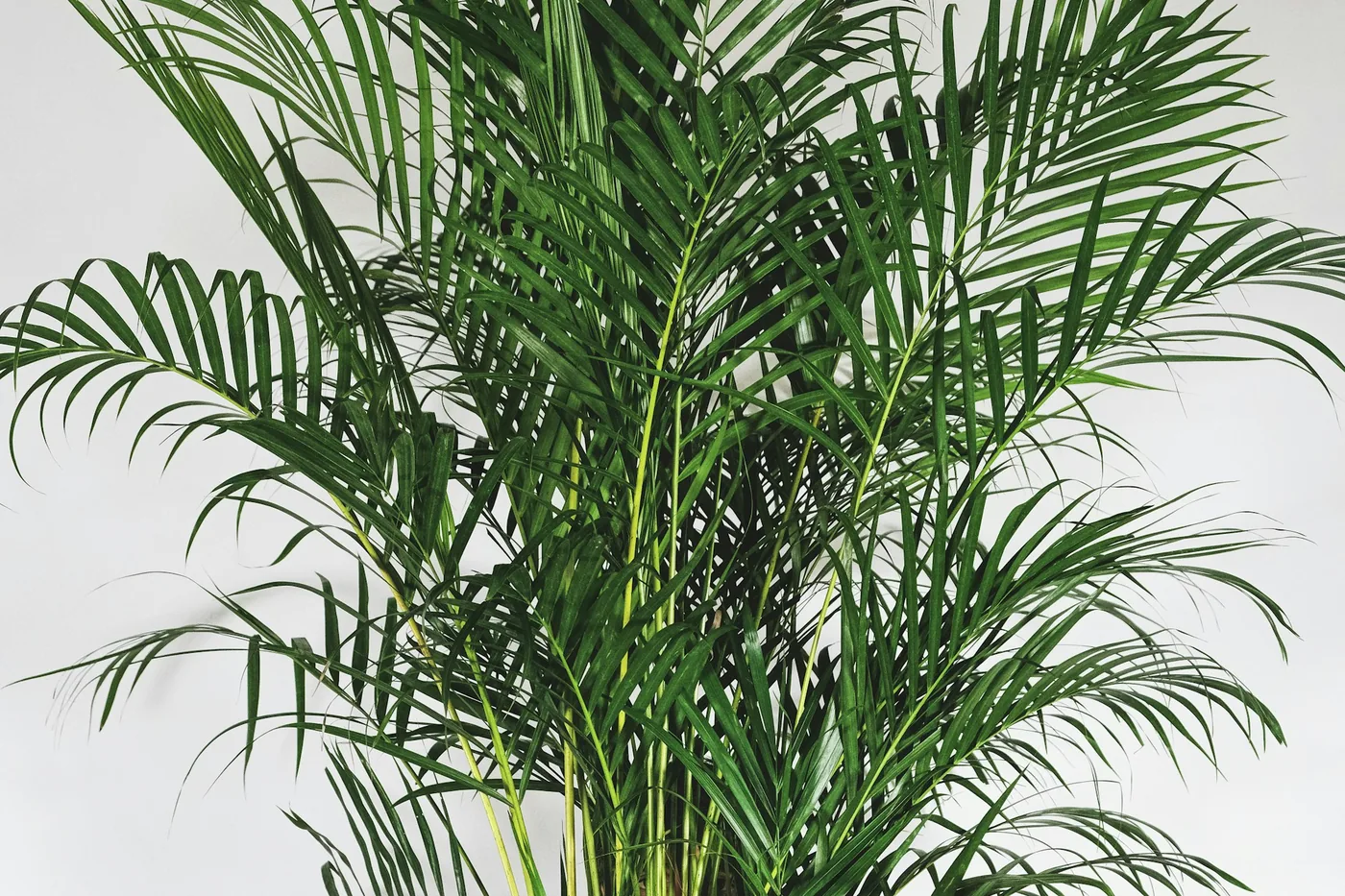
Areca Palm
Dypsis lutescens
Non-toxic to cats and dogs
Likes to stay lightly moist and humid — never bone dry, never waterlogged. Bright indirect light keeps the fronds full.
Toxicity
Safe
Not known to be toxic to cats.
Safe
Not known to be toxic to dogs.
Source — ASPCA Animal Poison Control Center, toxic and non-toxic plant list; read from this species' own page
Pet-safety information is a general guide from the ASPCA's toxic-plant database and covers cats and dogs only. "If eaten" summarises the symptoms ASPCA lists for that plant; how an animal actually reacts depends on how much it ate and on the animal. It isn't exhaustive, isn't veterinary advice, and individual animals vary — never rely on it as the sole basis for a decision about your pet. If you think your pet has eaten a harmful plant, contact a vet immediately.
Care
- WaterEvery 5–7 days
- LightBright, indirect
- HumidityHigh humidity
- Temperature18–27 °C
The same interval the Sabz app schedules reminders from. In autumn and winter the app stretches it; see houseplants in autumn.
Common problems
Areca palm brown tips
Brown frond tips on an areca are the room's dry air, made worse by letting the compost dry out fully between drinks. It wants to stay lightly moist — every five to seven days in summer — and away from radiators; group it with other plants or stand it on a wet gravel tray. Trim the tips for looks; they will not recover.
Areca palm yellowing fronds
Whole fronds yellowing is either wet compost — a palm in a pot without drainage, or watered on a schedule through winter — or too much direct sun through glass. Feel the compost: damp days after watering means ease off; dry and the plant in a south window means move it back into bright, indirect light.
Areca palm not growing
Slow, sparse growth with few new fronds is too little light. An areca survives in a dim corner but only grows within a couple of metres of a bright window. Move it, feed lightly through spring and summer, and expect it to sulk for a few weeks before it responds.
Similar plants
- Croton toxicCodiaeum variegatum
- Elephant Ear (Alocasia) toxicAlocasia x amazonica
- Monstera (Swiss Cheese Plant) toxicMonstera deliciosa
- Asparagus Fern toxicAsparagus setaceus
In the app
Add a areca palm to Sabz and the watering interval above becomes a reminder, the toxicity verdict sits on the plant's own page, and when a leaf turns, the Check-up reads what you have actually logged to say why.
 Free. No account, no analytics.