Emerald Feather Fern
Asparagus densiflorus
Toxic to cats and dogs
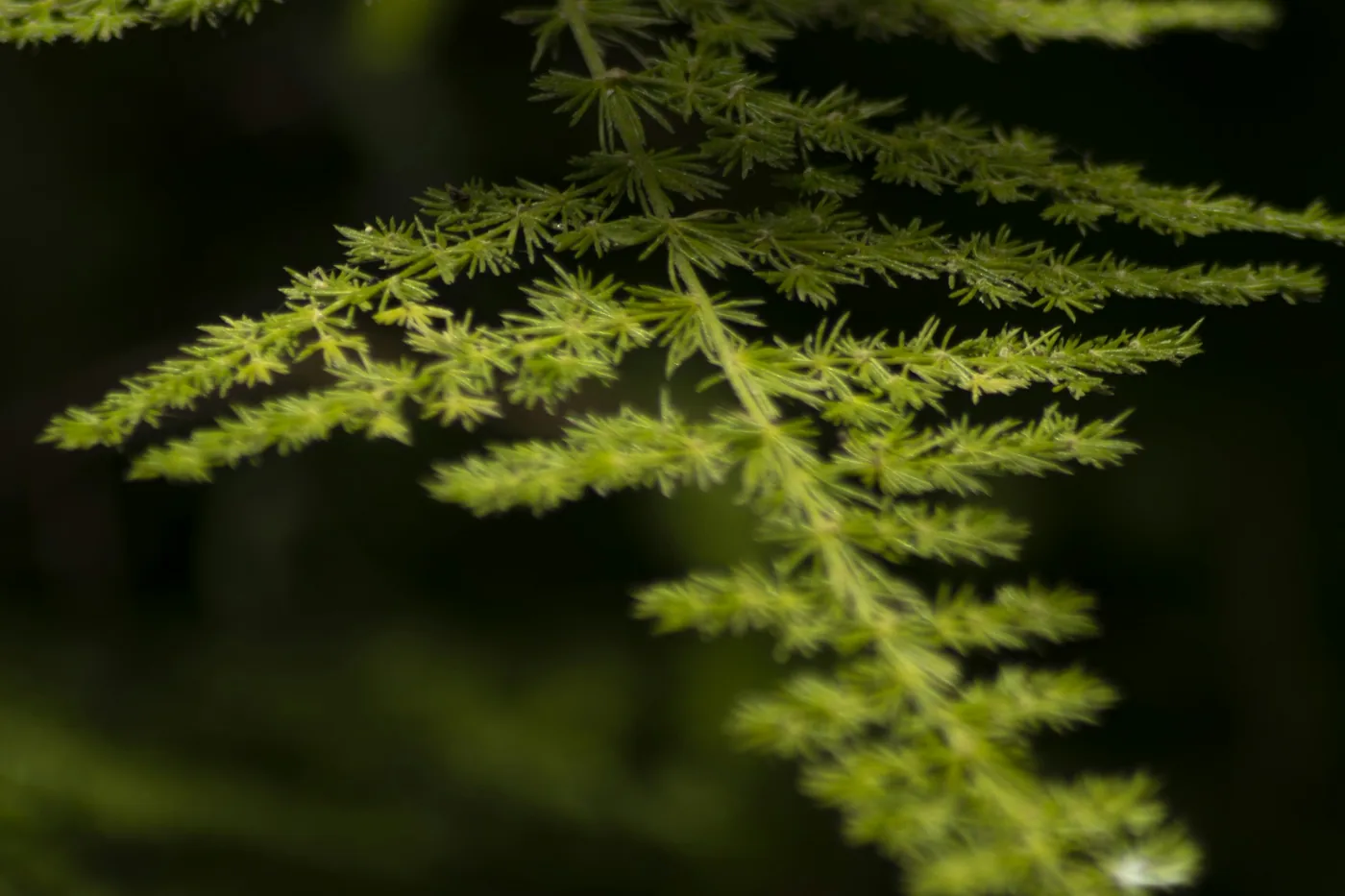
Not a fern at all but an asparagus, which is why it makes a tuberous root ball that will crack a pot it has outgrown. Handle it with gloves; the stems carry small sharp spines and the sap can raise a rash.
Sabz turns the interval below into a reminder, and the Check-up reads your care history when a leaf turns. Free on the App Store →
Toxicity
Toxic Usually mild
Signs, in the ASPCA's words
Allergic dermatitis with repeated dermal exposure. Berry ingestion could result in gastric upset (vomiting, abdominal pain, or diarrhea).
Toxic Usually mild
Signs, in the ASPCA's words
Allergic dermatitis with repeated dermal exposure. Berry ingestion could result in gastric upset (vomiting, abdominal pain, or diarrhea).
Source — ASPCA Animal Poison Control Center, toxic and non-toxic plant list; read from this species' own page
Safe alternatives to Emerald Feather Fern →The 149 plants in this library recorded non-toxic to both cats and dogs.
Is Emerald Feather Fern poisonous to cats?
Yes. Emerald Feather Fern (Asparagus densiflorus) is toxic to cats. That verdict is read from the ASPCA's own entry for this species.
Is Emerald Feather Fern safe for dogs?
No. Emerald Feather Fern (Asparagus densiflorus) is toxic to dogs. That verdict is read from the ASPCA's own entry for this species.
Is Emerald Feather Fern pet safe?
No. Toxic to cats and dogs. Sabz judges cats and dogs separately, and publishes the full list.
Pet-safety information is a general guide from the ASPCA's toxic-plant database and covers cats and dogs only. "If eaten" summarises the symptoms ASPCA lists for that plant; how an animal actually reacts depends on how much it ate and on the animal. It isn't exhaustive, isn't veterinary advice, and individual animals vary — never rely on it as the sole basis for a decision about your pet. If you think your pet has eaten a harmful plant, contact a vet immediately.
Care
- WaterEvery 5–7 days
- LightBright, indirect
- HumidityHigh humidity
- Temperature13–24 °C
The same interval the Sabz app schedules reminders from. In autumn and winter the app stretches it; see houseplants in autumn.
Common problems
- Needles yellowing and dropping in a shower — too dry at the root, or air too dry — Yellow leaves →
- Pot bulging or cracked — the tuberous roots have filled it; divide in spring
- Pale, bleached fronds — direct sun; it wants bright shade
Propagation
- MethodDivision
- Best timeSpring
Cut the tuberous rootball apart with a knife; it takes the damage without complaint.
Similar plants
- Areca Palm safeDypsis lutescens
- Asparagus Fern toxicAsparagus setaceus
- Croton toxicCodiaeum variegatum
- Geranium Aralia toxicPolyscias guilfoylei
In the app
Add a emerald feather fern to Sabz and the watering interval above becomes a reminder, the toxicity verdict sits on the plant's own page, and when a leaf turns, the Check-up reads what you have actually logged to say why.
 Free. No account, no analytics.