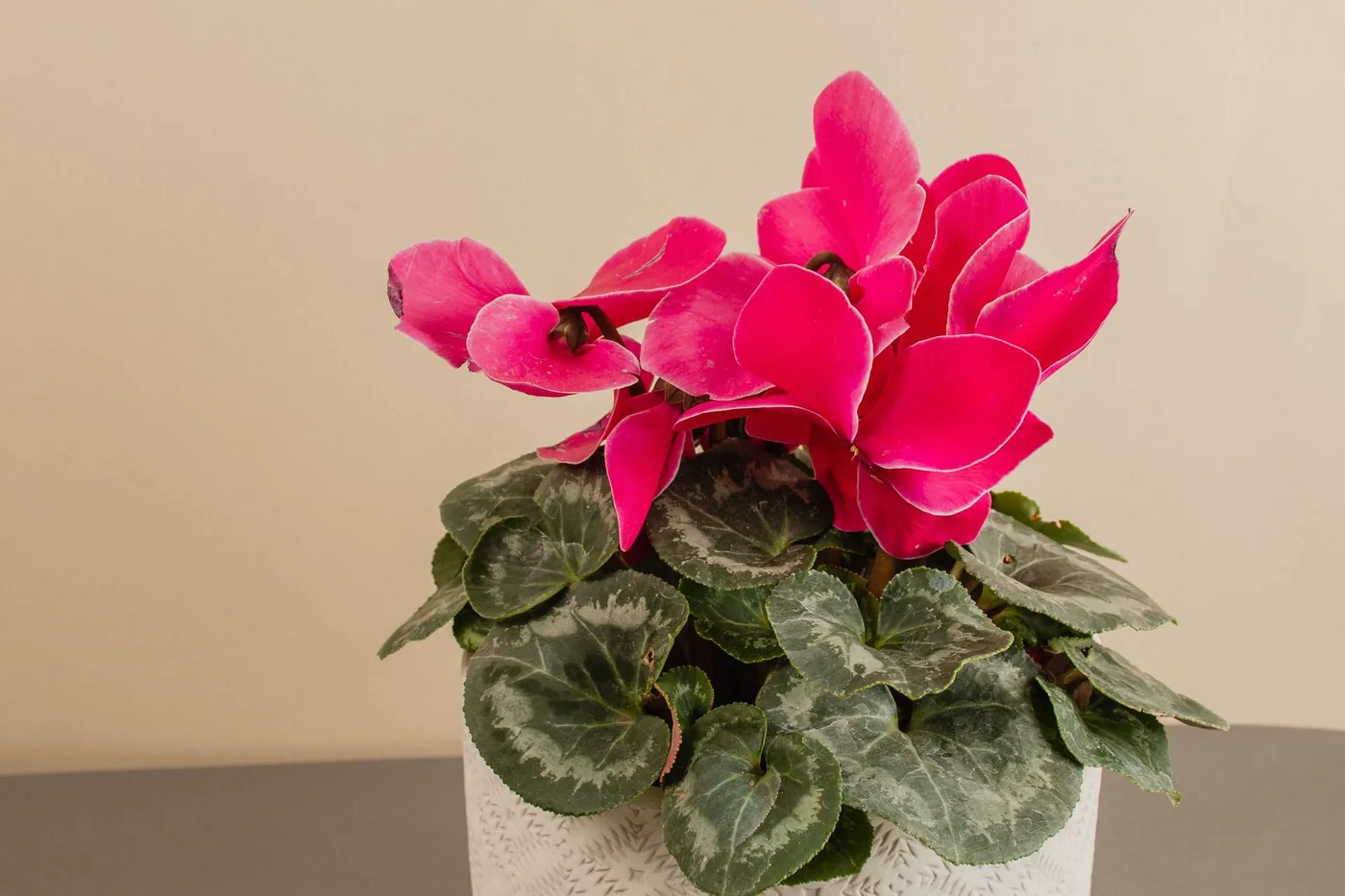
Cyclamen
Cyclamen persicum
Toxic to cats and dogs
A cool-loving winter bloomer — keep it out of warm rooms. Water from below to keep the crown dry, and let it rest in summer. The tuber is especially toxic to pets.
Sabz turns the interval below into a reminder, and the Check-up reads your care history when a leaf turns. Free on the App Store →
Toxicity
Toxic Can be serious
Signs, in the ASPCA's words
Salivation, vomiting, diarrhea. Following large ingestions of tubers: heart rhythm abnormalities, seizures, death
Toxic Can be serious
Signs, in the ASPCA's words
Salivation, vomiting, diarrhea. Following large ingestions of tubers: heart rhythm abnormalities, seizures, death
Source — ASPCA Animal Poison Control Center, toxic and non-toxic plant list; read from this species' own page
Safe alternatives to Cyclamen →The 149 plants in this library recorded non-toxic to both cats and dogs.
Is Cyclamen poisonous to cats?
Yes. Cyclamen (Cyclamen persicum) is toxic to cats. That verdict is read from the ASPCA's own entry for this species.
Is Cyclamen safe for dogs?
No. Cyclamen (Cyclamen persicum) is toxic to dogs. That verdict is read from the ASPCA's own entry for this species.
Is Cyclamen pet safe?
No. Toxic to cats and dogs. Sabz judges cats and dogs separately, and publishes the full list.
Pet-safety information is a general guide from the ASPCA's toxic-plant database and covers cats and dogs only. "If eaten" summarises the symptoms ASPCA lists for that plant; how an animal actually reacts depends on how much it ate and on the animal. It isn't exhaustive, isn't veterinary advice, and individual animals vary — never rely on it as the sole basis for a decision about your pet. If you think your pet has eaten a harmful plant, contact a vet immediately.
Care
- WaterEvery 5–7 days
- LightBright, indirect
- HumidityAverage humidity
- Temperature10–18 °C
The same interval the Sabz app schedules reminders from. In autumn and winter the app stretches it; see houseplants in autumn.
Common problems
- Yellowing leaves — too warm, or natural summer dormancy — Yellow leaves →
- Rotting crown — water sitting in the centre
- Collapse — usually overwatering or heat — Overwatering →
Propagation
- MethodSeed
- Best timeLate summer
The tuber does not divide. Sow in the dark and expect about a year to the first flower.
Deadheading
Pull the spent flower stalk out with a sharp twist at the tuber. Cutting leaves a stub that rots back into the crown.
Similar plants
- Pansy safeViola tricolor
- Chrysanthemum toxicChrysanthemum morifolium
- Easter Lily toxicLilium longiflorum
- Gloriosa Lily toxicGloriosa superba
In the app
Add a cyclamen to Sabz and the watering interval above becomes a reminder, the toxicity verdict sits on the plant's own page, and when a leaf turns, the Check-up reads what you have actually logged to say why.
 Free. No account, no analytics.