African Violet
Saintpaulia ionantha
Non-toxic to cats and dogs
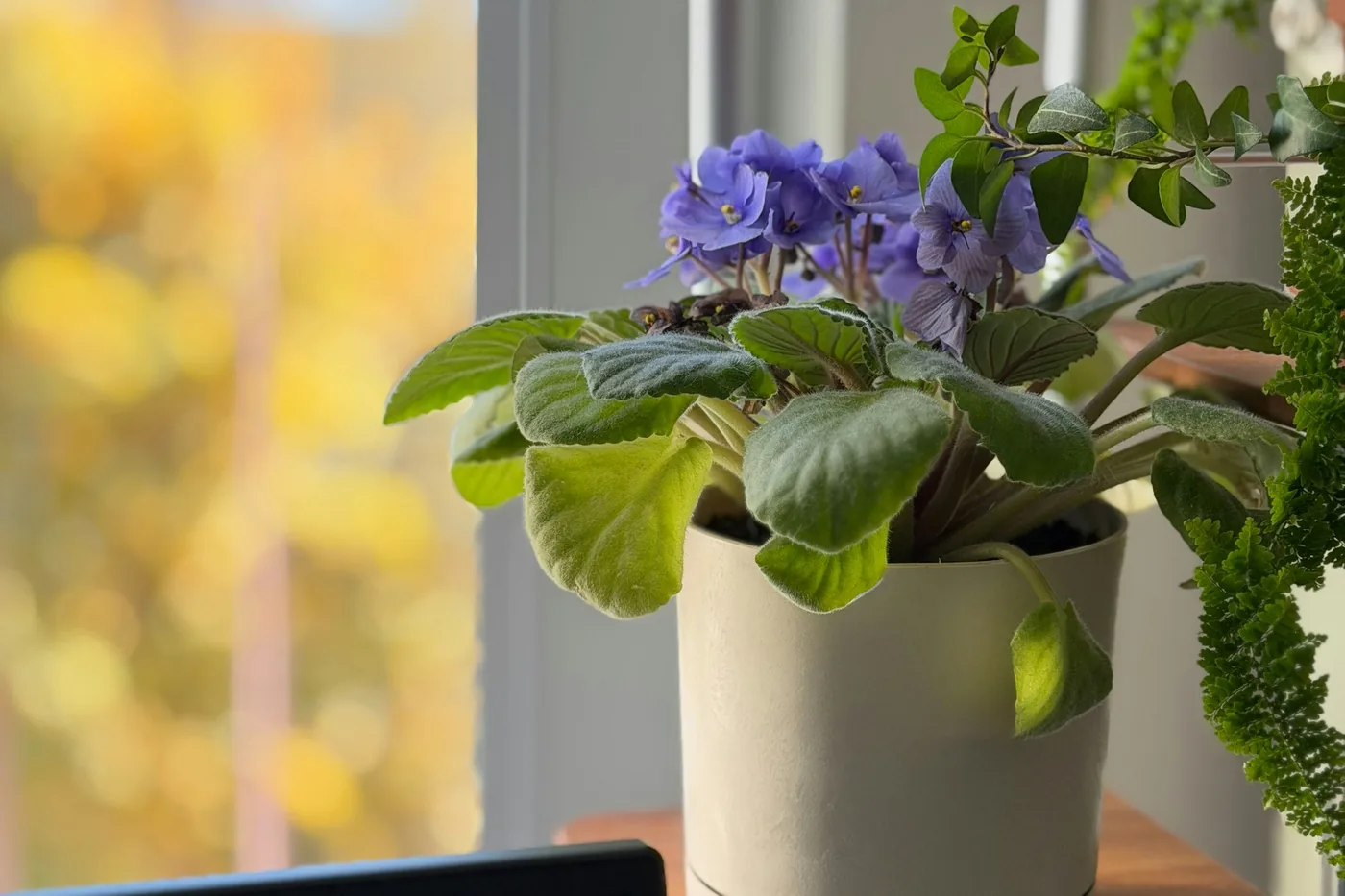
A compact, near-constant bloomer. Water from below with room-temperature water and keep it off the leaves, which mark easily. Bright indirect light drives the flowers. Pet-safe.
Toxicity
Safe
Not known to be toxic to cats.
Safe
Not known to be toxic to dogs.
Source — ASPCA Animal Poison Control Center, toxic and non-toxic plant list; read from this species' own page
Pet-safety information is a general guide from the ASPCA's toxic-plant database and covers cats and dogs only. "If eaten" summarises the symptoms ASPCA lists for that plant; how an animal actually reacts depends on how much it ate and on the animal. It isn't exhaustive, isn't veterinary advice, and individual animals vary — never rely on it as the sole basis for a decision about your pet. If you think your pet has eaten a harmful plant, contact a vet immediately.
Care
- WaterEvery 5–7 days
- LightBright, indirect
- HumidityAverage humidity
- Temperature18–24 °C
The same interval the Sabz app schedules reminders from. In autumn and winter the app stretches it; see houseplants in autumn.
Common problems
African violet not flowering
No flowers means too little light. An African violet wants bright, indirect light for most of the day — an east window, or a metre back from a south one — and flowers almost continuously when it has it. Feed lightly every few weeks through the growing season, and keep it slightly pot-bound.
African violet spots on leaves
Pale rings and spots on the leaves are cold water splashed on them — the leaves mark wherever a cold drop lands. Water from below, or with room-temperature water kept off the foliage, and the new leaves come in clean. The marked leaves stay marked.
African violet crown rot
A soft, brown centre and a mushy base is crown rot, from water sitting in the crown or compost kept wet. Water from below so the crown stays dry, every five to seven days when the surface is dry, and never let it stand in water. A plant with a rotten crown is usually lost; take leaf cuttings from the healthy outer leaves.
Similar plants
- Kenya Violet safeSaintpaulia confusa
- Amaryllis toxicHippeastrum hybrid
- Clivia toxicClivia miniata
- Christmas Cactus safeSchlumbergera bridgesii
In the app
Add a african violet to Sabz and the watering interval above becomes a reminder, the toxicity verdict sits on the plant's own page, and when a leaf turns, the Check-up reads what you have actually logged to say why.
 Free. No account, no analytics.