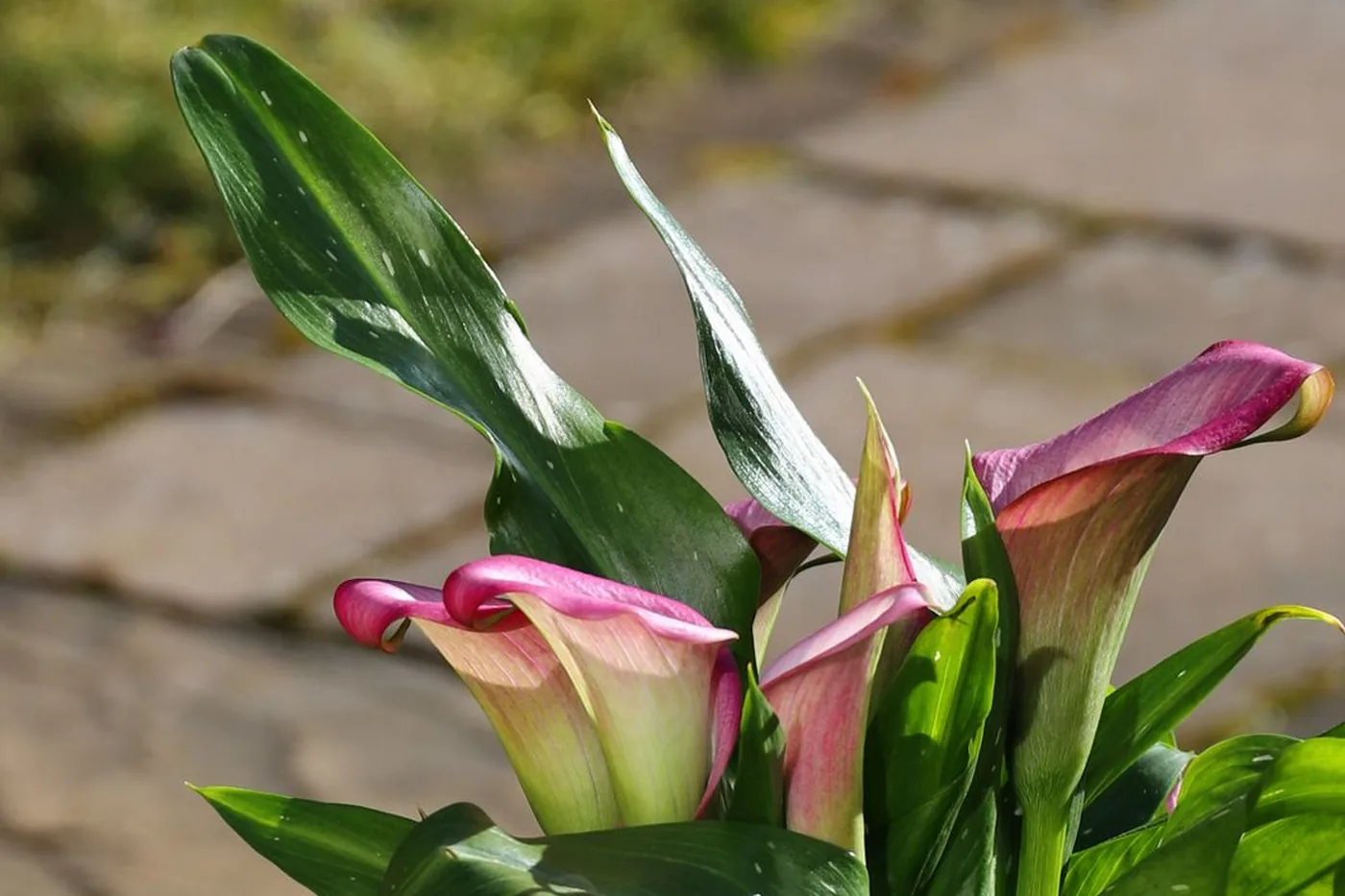
Calla Lily
Zantedeschia aethiopica
Toxic to cats and dogs
Not a true lily. A marginal water plant, so it likes far more moisture than most houseplants — keep the compost consistently damp while it's in growth.
Toxicity
Toxic Usually mild
Signs, in the ASPCA's words
Oral irritation, intense burning and irritation of mouth, tongue and lips, excessive drooling, vomiting, difficulty swallowing
Toxic Usually mild
Signs, in the ASPCA's words
Oral irritation, intense burning and irritation of mouth, tongue and lips, excessive drooling, vomiting, difficulty swallowing
Source — ASPCA Animal Poison Control Center, toxic and non-toxic plant list; read from this species' own page
Pet-safety information is a general guide from the ASPCA's toxic-plant database and covers cats and dogs only. "If eaten" summarises the symptoms ASPCA lists for that plant; how an animal actually reacts depends on how much it ate and on the animal. It isn't exhaustive, isn't veterinary advice, and individual animals vary — never rely on it as the sole basis for a decision about your pet. If you think your pet has eaten a harmful plant, contact a vet immediately.
Care
- WaterEvery 3–5 days
- LightBright, indirect
- HumidityHigh humidity
- Temperature15–24 °C
The same interval the Sabz app schedules reminders from. In autumn and winter the app stretches it; see houseplants in autumn.
Common problems
- Leaf edges browning — compost allowed to dry out
- No flowers — needs a dry, dormant rest after flowering
- Mushy base — kept wet and cold at the same time — Root rot →
Similar plants
- Azalea toxicRhododendron simsii
- Gardenia toxicGardenia jasminoides
- Bromeliad safeGuzmania lingulata
- Flamingo Flower toxicAnthurium andraeanum
In the app
Add a calla lily to Sabz and the watering interval above becomes a reminder, the toxicity verdict sits on the plant's own page, and when a leaf turns, the Check-up reads what you have actually logged to say why.
 Free. No account, no analytics.