Plant library / Succulents & cacti
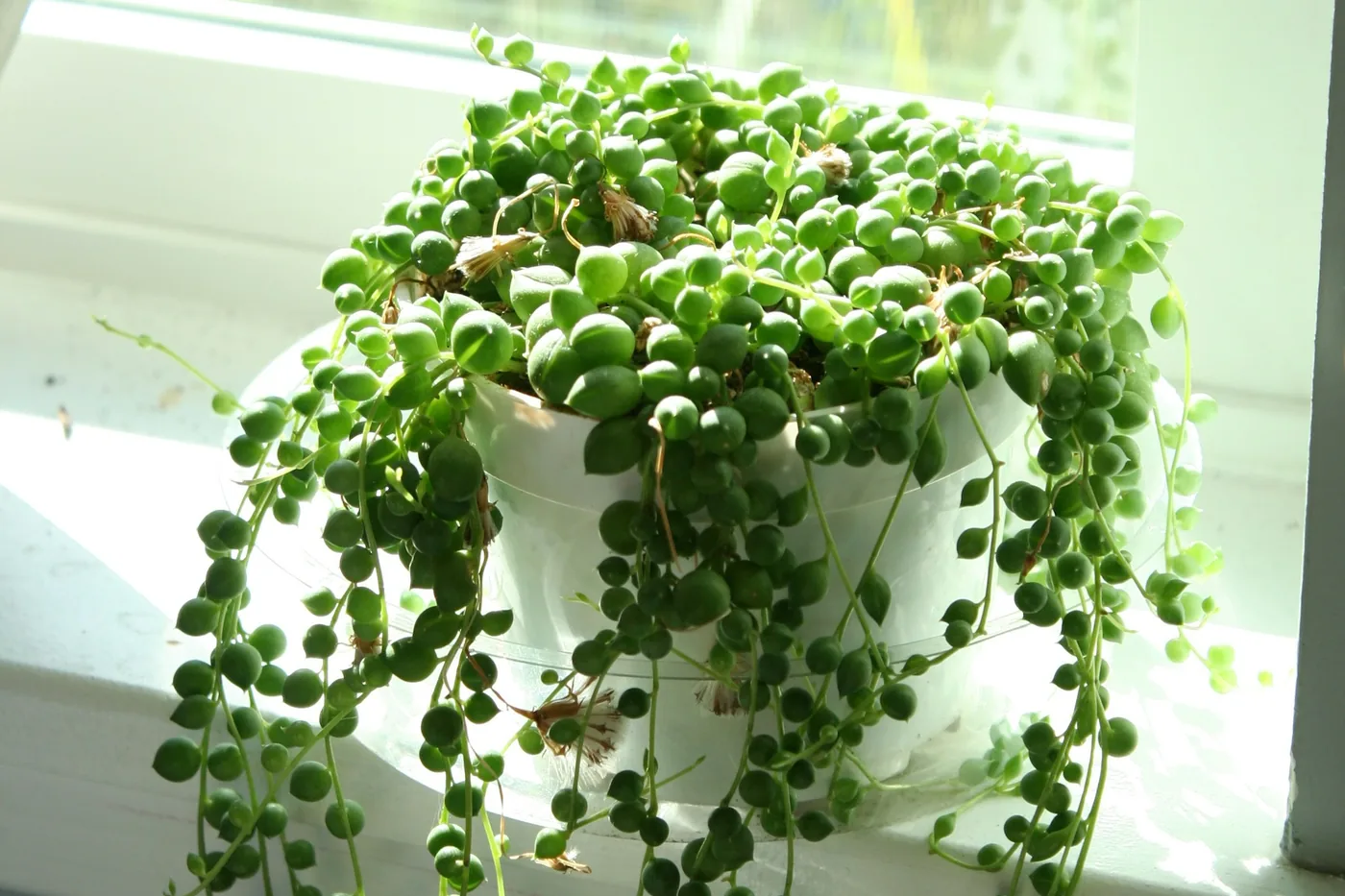
String of Pearls
Senecio rowleyanus
Toxic to cats and dogs
A trailing succulent — water thoroughly, then let it dry completely. Bright light keeps the beads plump and close-spaced.
Toxicity
Toxic
Toxic
Caution
Based on general horticultural consensus, not a pet-poison database.
Pet-safety information is a general guide from the ASPCA's toxic-plant database and covers cats and dogs only. "If eaten" summarises the symptoms ASPCA lists for that plant; how an animal actually reacts depends on how much it ate and on the animal. It isn't exhaustive, isn't veterinary advice, and individual animals vary — never rely on it as the sole basis for a decision about your pet. If you think your pet has eaten a harmful plant, contact a vet immediately.
Care
- WaterEvery 14–21 days
- LightBright, indirect
- HumidityLow humidity
- Temperature18–26 °C
The same interval the Sabz app schedules reminders from. In autumn and winter the app stretches it; see houseplants in autumn.
Common problems
String of pearls shrivelled beads
Shrivelled, flattened beads are thirst — the plant stores water in them and has used it up. Soak the pot thoroughly, let it drain, and the beads fill out within a week. It wants a drink every two to three weeks in summer and barely at all in winter; the shrivel is the sign to water, not a schedule.
String of pearls mushy beads
Beads going soft, translucent and bursting, and strands going brown at the soil, is overwatering — the commonest way a string of pearls dies. Stop watering, cut away the soft strands, and let the pot dry fully; if the crown is mushy, take the healthy strands, lay them on dry gritty compost and start again.
String of pearls sparse and stretched
Long strands with few, small beads and big gaps are too little light. It wants a bright window with some direct sun — a south or east sill — and grows dense and full when it has it. Move it, and pin the thin strands back onto the compost so they root and thicken the top.
Similar plants
- Burro's Tail safeSedum morganianum
- Haworthia safeHaworthia fasciata
- Kalanchoe toxicKalanchoe blossfeldiana
- Sweetheart Hoya safeHoya kerrii
In the app
Add a string of pearls to Sabz and the watering interval above becomes a reminder, the toxicity verdict sits on the plant's own page, and when a leaf turns, the Check-up reads what you have actually logged to say why.
 Free. No account, no analytics.