Yew
Taxus spp.
Toxic to cats and dogs
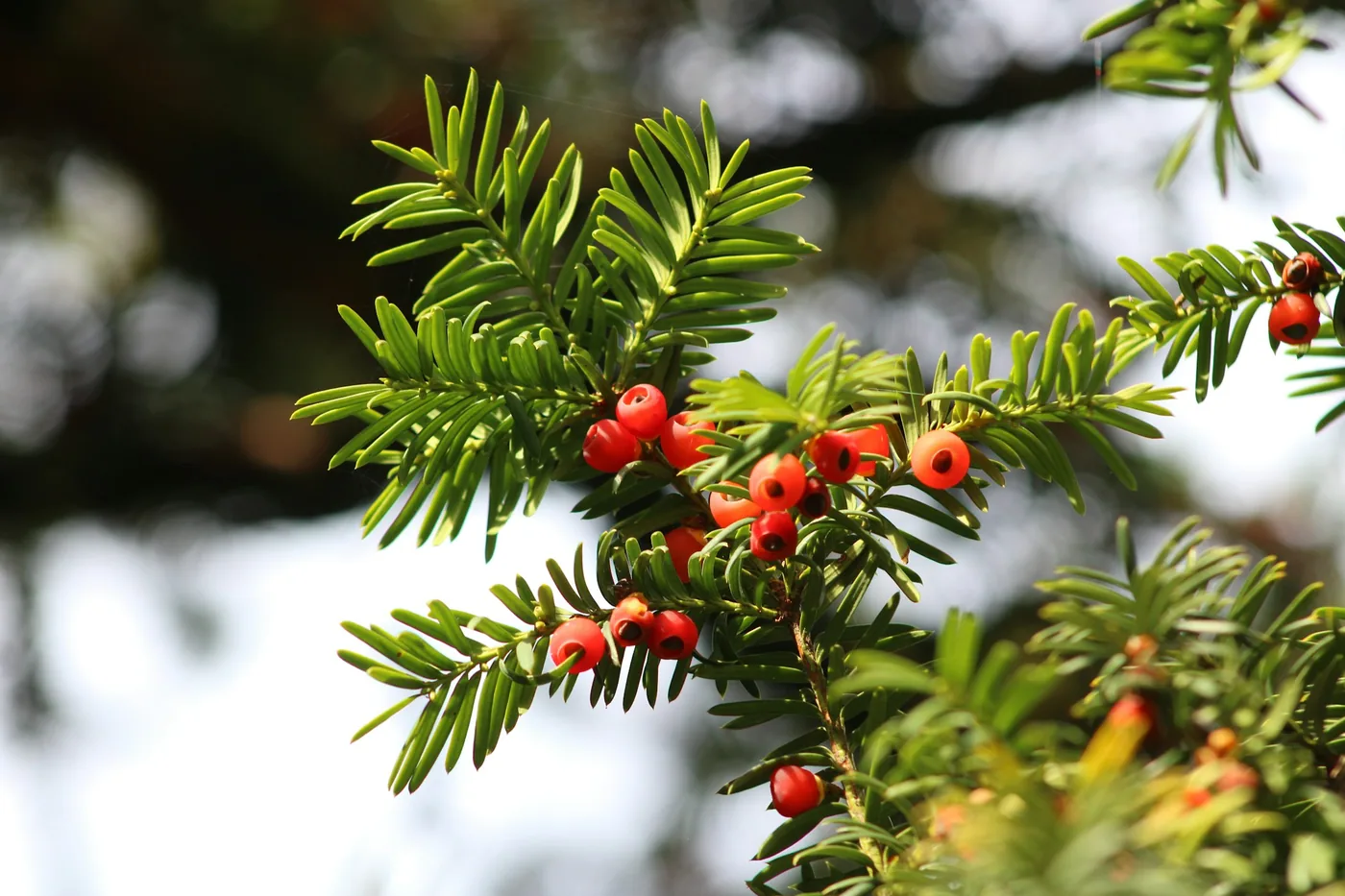
The one hedge that takes being cut back into bare old wood and still regrows, which is why it outlives every other formal hedge. Slow, and it will not tolerate standing water at the root. Every part except the red aril flesh carries taxine, and it is among the most dangerous plants in any British garden.
Sabz turns the interval below into a reminder, and the Check-up reads your care history when a leaf turns. Free on the App Store →
Toxicity
Toxic Can be serious
Signs, in the ASPCA's words
Sudden death from acute cardiac failure, early signs -- muscular tremors, dyspnea, seizures in dogs
Toxic Can be serious
Signs, in the ASPCA's words
Sudden death from acute cardiac failure, early signs -- muscular tremors, dyspnea, seizures in dogs
Source — ASPCA Animal Poison Control Center, toxic and non-toxic plant list; read from this species' own page
Safe alternatives to Yew →The 149 plants in this library recorded non-toxic to both cats and dogs.
Is Yew poisonous to cats?
Yes. Yew (Taxus spp.) is toxic to cats. That verdict is read from the ASPCA's own entry for this species.
Is Yew safe for dogs?
No. Yew (Taxus spp.) is toxic to dogs. That verdict is read from the ASPCA's own entry for this species.
Is Yew pet safe?
No. Toxic to cats and dogs. Sabz judges cats and dogs separately, and publishes the full list.
Pet-safety information is a general guide from the ASPCA's toxic-plant database and covers cats and dogs only. "If eaten" summarises the symptoms ASPCA lists for that plant; how an animal actually reacts depends on how much it ate and on the animal. It isn't exhaustive, isn't veterinary advice, and individual animals vary — never rely on it as the sole basis for a decision about your pet. If you think your pet has eaten a harmful plant, contact a vet immediately.
Care
- WaterEvery 10–14 days
- LightMedium light
- HumidityAverage humidity
- Temperature-10–26 °C
The same interval the Sabz app schedules reminders from. In autumn and winter the app stretches it; see houseplants in autumn.
Common problems
- Browning patches inside the hedge — waterlogged roots rather than drought — Overwatering →
- Bare brown after a hard cut — normal on yew; it breaks from old wood within a season
- Yellowing on a young plant — poor drainage; yew will not sit in wet — Yellow leaves →
Propagation
- MethodStem cutting
- Best timeAutumn, semi-ripe
Cuttings root slowly but reliably. Every part except the red aril is poisonous, so gloves and clean hands afterwards.
Similar plants
- Mahonia safeMahonia aquifolium
- Coral Bells safeHeuchera sanguinea
- Boxwood toxicBuxus
- Holly toxicIlex aquifolium
In the app
Add a yew to Sabz and the watering interval above becomes a reminder, the toxicity verdict sits on the plant's own page, and when a leaf turns, the Check-up reads what you have actually logged to say why.
 Free. No account, no analytics.