Plum
Prunus domestica
Toxic to cats and dogs
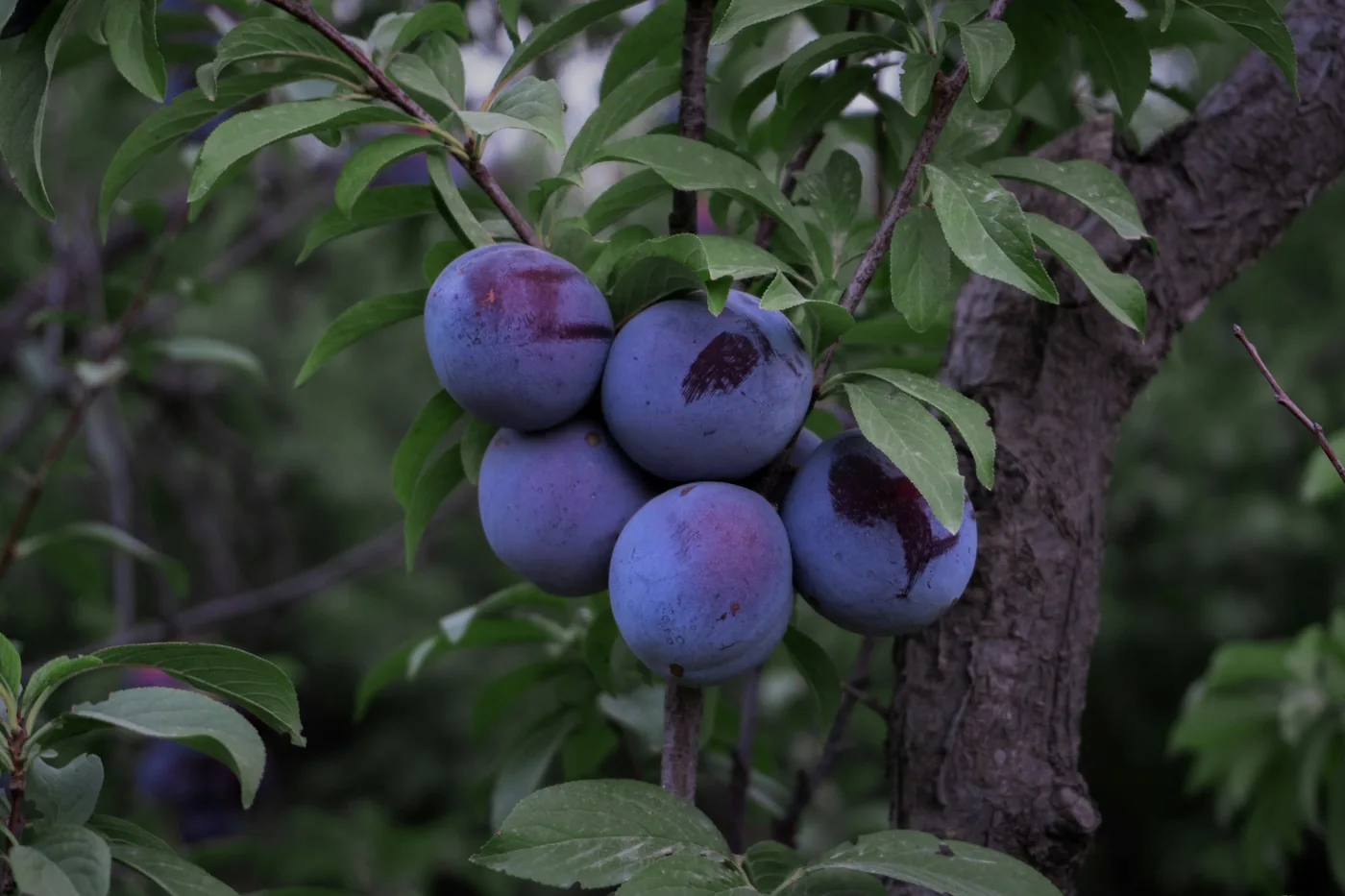
Crops so heavily in a good year that unthinned branches tear off the tree — thin the fruit in June to a hand's width apart. Prune only in summer; winter pruning invites silver leaf. Stems, leaves and seeds carry cyanogenic glycosides, not the ripe flesh.
Sabz turns the interval below into a reminder, and the Check-up reads your care history when a leaf turns. Free on the App Store →
Toxicity
Toxic Can be serious
Signs, in the ASPCA's words
Stems, leaves, seeds contain cyanide, particularly toxic in the process of wilting: brick red mucous membranes, dilated pupils, difficulty breathing, panting, shock.
Toxic Can be serious
Signs, in the ASPCA's words
Stems, leaves, seeds contain cyanide, particularly toxic in the process of wilting: brick red mucous membranes, dilated pupils, difficulty breathing, panting, shock.
Source — ASPCA Animal Poison Control Center, toxic and non-toxic plant list; read from this species' own page
Safe alternatives to Plum →The 149 plants in this library recorded non-toxic to both cats and dogs.
Is Plum poisonous to cats?
Yes. Plum (Prunus domestica) is toxic to cats. That verdict is read from the ASPCA's own entry for this species.
Is Plum safe for dogs?
No. Plum (Prunus domestica) is toxic to dogs. That verdict is read from the ASPCA's own entry for this species.
Is Plum pet safe?
No. Toxic to cats and dogs. Sabz judges cats and dogs separately, and publishes the full list.
Pet-safety information is a general guide from the ASPCA's toxic-plant database and covers cats and dogs only. "If eaten" summarises the symptoms ASPCA lists for that plant; how an animal actually reacts depends on how much it ate and on the animal. It isn't exhaustive, isn't veterinary advice, and individual animals vary — never rely on it as the sole basis for a decision about your pet. If you think your pet has eaten a harmful plant, contact a vet immediately.
Care
- WaterEvery 7–14 days
- LightDirect sun
- HumidityAverage humidity
- Temperature4–26 °C
The same interval the Sabz app schedules reminders from. In autumn and winter the app stretches it; see houseplants in autumn.
Common problems
- Branches splitting under the crop — fruit not thinned in June
- Silvery sheen on the leaves of one branch — silver leaf, usually after winter pruning
- Sticky leaves and distorted shoot tips — plum aphid
Propagation
- MethodLayering
- Best timeWinter, or graft in spring
Grown on rootstocks that fix the tree's size; suckers from the rootstock are not the variety above the graft.
Similar plants
- Apricot toxicPrunus armeniaca
- Peach toxicPrunus persica
- Apple toxicMalus sylvestris
- Patio Tomato toxicSolanum lycopersicum
In the app
Add a plum to Sabz and the watering interval above becomes a reminder, the toxicity verdict sits on the plant's own page, and when a leaf turns, the Check-up reads what you have actually logged to say why.
 Free. No account, no analytics.