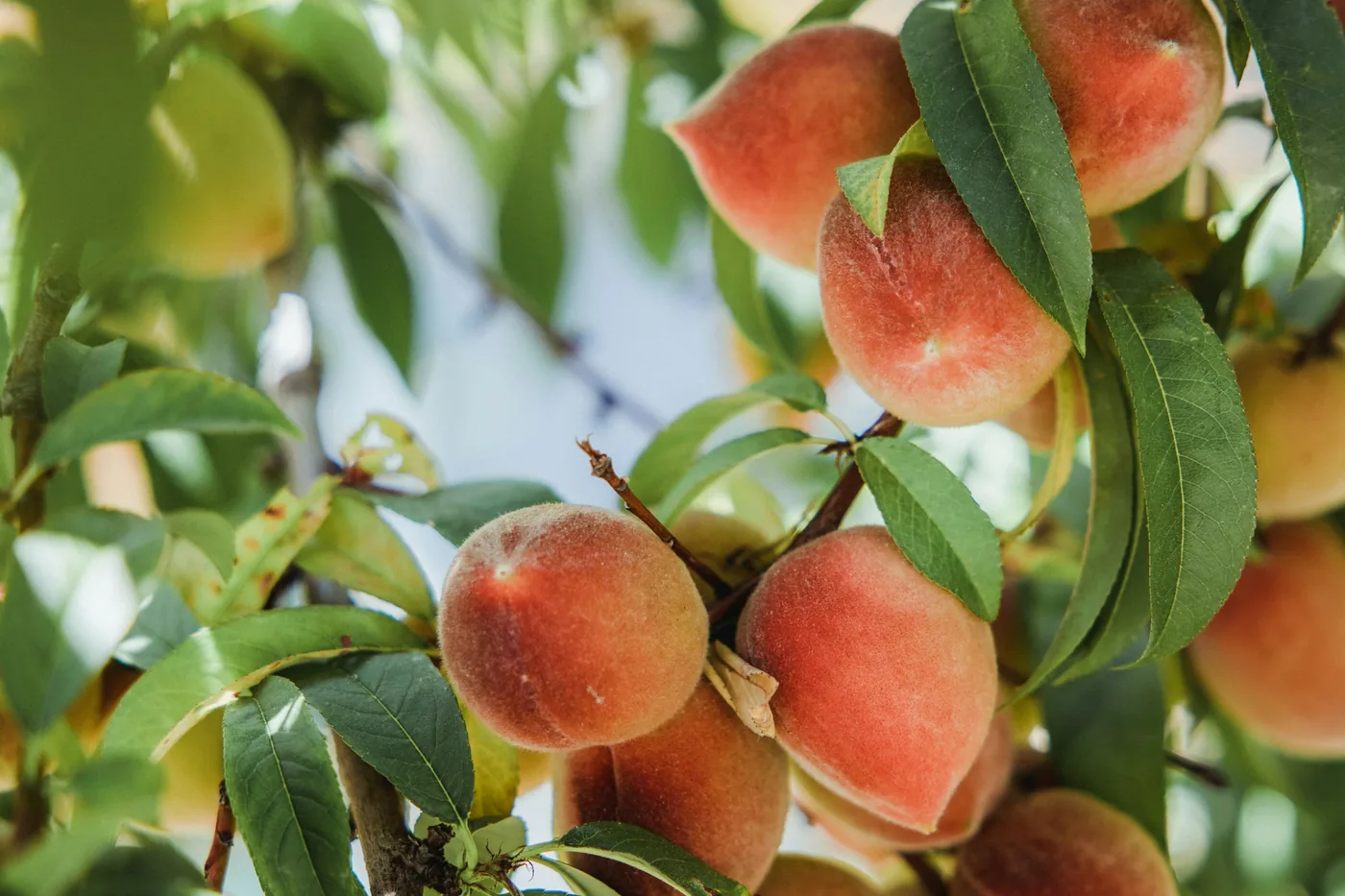
Peach
Prunus persica
Toxic to cats and dogs
Flowers early enough that frost is the usual reason for no crop, so a south wall and a fleece over the blossom matter more than anything else you do. Stems, leaves and seeds carry cyanogenic glycosides; the ripe flesh does not.
Sabz turns the interval below into a reminder, and the Check-up reads your care history when a leaf turns. Free on the App Store →
Toxicity
Toxic Can be serious
Signs, in the ASPCA's words
Stems, leaves, seeds contain cyanide, particularly toxic in the process of wilting: brick red mucous membranes, dilated pupils, difficulty breathing, panting, shock.
Toxic Can be serious
Signs, in the ASPCA's words
Stems, leaves, seeds contain cyanide, particularly toxic in the process of wilting: brick red mucous membranes, dilated pupils, difficulty breathing, panting, shock.
Source — ASPCA Animal Poison Control Center, toxic and non-toxic plant list; read from this species' own page
Safe alternatives to Peach →The 149 plants in this library recorded non-toxic to both cats and dogs.
Is Peach poisonous to cats?
Yes. Peach (Prunus persica) is toxic to cats. That verdict is read from the ASPCA's own entry for this species.
Is Peach safe for dogs?
No. Peach (Prunus persica) is toxic to dogs. That verdict is read from the ASPCA's own entry for this species.
Is Peach pet safe?
No. Toxic to cats and dogs. Sabz judges cats and dogs separately, and publishes the full list.
Pet-safety information is a general guide from the ASPCA's toxic-plant database and covers cats and dogs only. "If eaten" summarises the symptoms ASPCA lists for that plant; how an animal actually reacts depends on how much it ate and on the animal. It isn't exhaustive, isn't veterinary advice, and individual animals vary — never rely on it as the sole basis for a decision about your pet. If you think your pet has eaten a harmful plant, contact a vet immediately.
Care
- WaterEvery 7–12 days
- LightDirect sun
- HumidityAverage humidity
- Temperature4–28 °C
The same interval the Sabz app schedules reminders from. In autumn and winter the app stretches it; see houseplants in autumn.
Common problems
- Leaves puckered red and blistered in spring — peach leaf curl; keep rain off the buds
- Blossom but no fruit — frost, or no insects flying that early; pollinate by hand
- Clear gum on the trunk — bacterial canker after a wet winter
Propagation
- MethodSeed
- Best timeAutumn, after chilling
Usually budded onto a rootstock. A stone will grow after a cold winter, but the fruit is unpredictable.
Similar plants
In the app
Add a peach to Sabz and the watering interval above becomes a reminder, the toxicity verdict sits on the plant's own page, and when a leaf turns, the Check-up reads what you have actually logged to say why.
 Free. No account, no analytics.