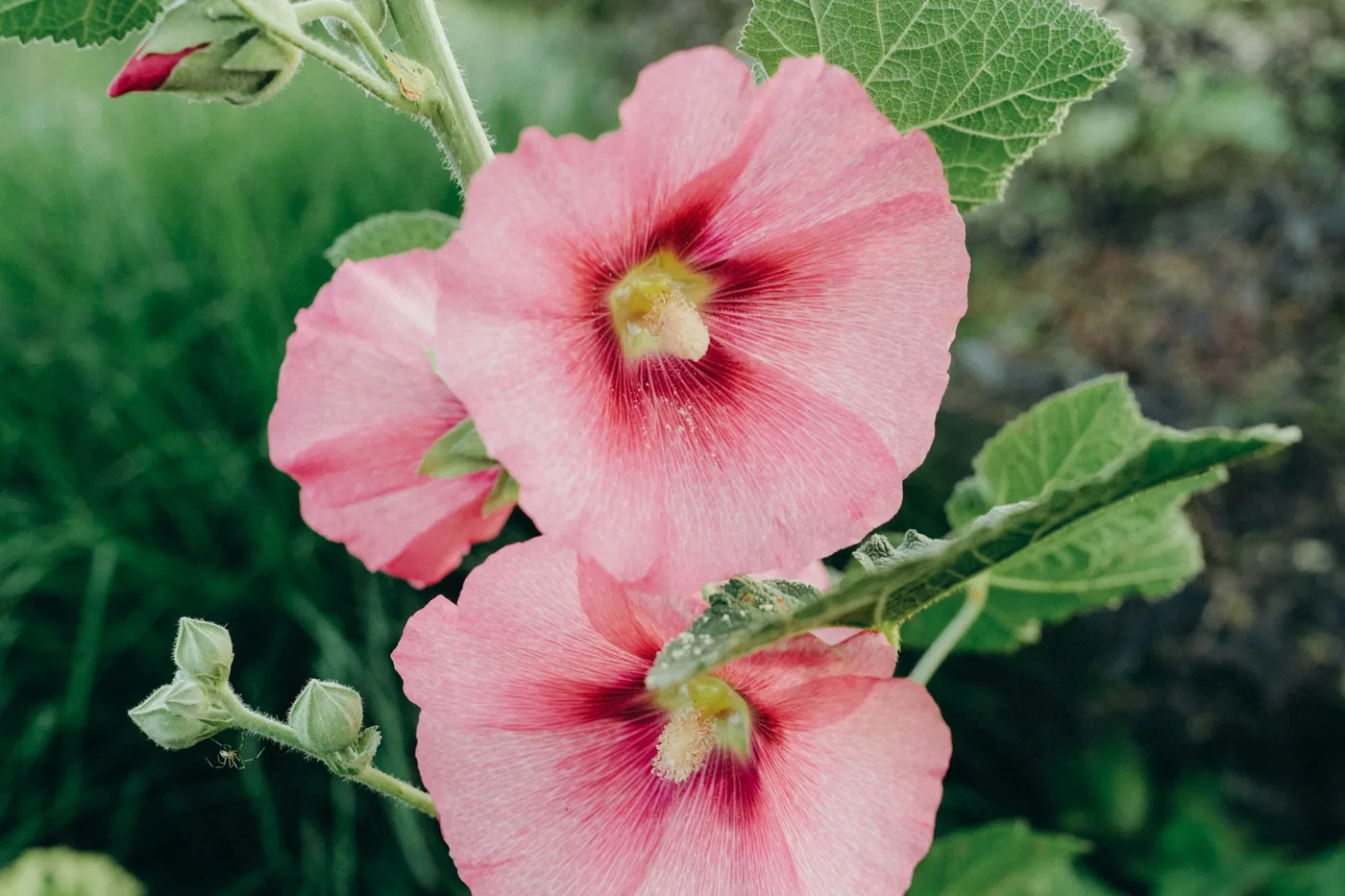
Hollyhock
Alcea rosea
Non-toxic to cats and dogs
A short-lived perennial usually grown as a biennial, and rust is a near-certainty rather than bad luck — plan for it, pick off the worst leaves, and let the plant seed itself for replacements.
Sabz turns the interval below into a reminder, and the Check-up reads your care history when a leaf turns. Free on the App Store →
Toxicity
Safe
Not known to be toxic to cats.
Safe
Not known to be toxic to dogs.
Source — ASPCA Animal Poison Control Center, toxic and non-toxic plant list; read from this species' own page
Is Hollyhock poisonous to cats?
No. Hollyhock (Alcea rosea) is not known to be toxic to cats. That verdict is read from the ASPCA's own entry for this species.
Is Hollyhock safe for dogs?
Yes. Hollyhock (Alcea rosea) is not known to be toxic to dogs. That verdict is read from the ASPCA's own entry for this species.
Is Hollyhock pet safe?
Yes, for both. Hollyhock is not known to be toxic to cats or to dogs. Sabz judges cats and dogs separately, and publishes the full list.
Pet-safety information is a general guide from the ASPCA's toxic-plant database and covers cats and dogs only. "If eaten" summarises the symptoms ASPCA lists for that plant; how an animal actually reacts depends on how much it ate and on the animal. It isn't exhaustive, isn't veterinary advice, and individual animals vary — never rely on it as the sole basis for a decision about your pet. If you think your pet has eaten a harmful plant, contact a vet immediately.
Care
- WaterEvery 5–9 days
- LightDirect sun
- HumidityLow humidity
- Temperature2–28 °C
The same interval the Sabz app schedules reminders from. In autumn and winter the app stretches it; see houseplants in autumn.
Common problems
- Orange pustules under the leaves — hollyhock rust; remove affected leaves, expect it annually
- Spires snapping in wind — stake them early, against a wall if you can
- Dies after flowering — normal; it is effectively biennial, so let it set seed
Propagation
- MethodSeed
- Best timeJune to July, for the following year
Biennial or short-lived: sow every year to keep a succession. It self-seeds where the soil is bare.
Deadheading
Cut the spike down once two thirds of it has gone over, leaving the basal leaves.
Similar plants
- Autumn Crocus toxicColchicum autumnale
- Baby's Breath safeGypsophila elegans
- Cornflower safeCentaurea cyanus
- Larkspur toxicDelphinium species
In the app
Add a hollyhock to Sabz and the watering interval above becomes a reminder, the toxicity verdict sits on the plant's own page, and when a leaf turns, the Check-up reads what you have actually logged to say why.
 Free. No account, no analytics.