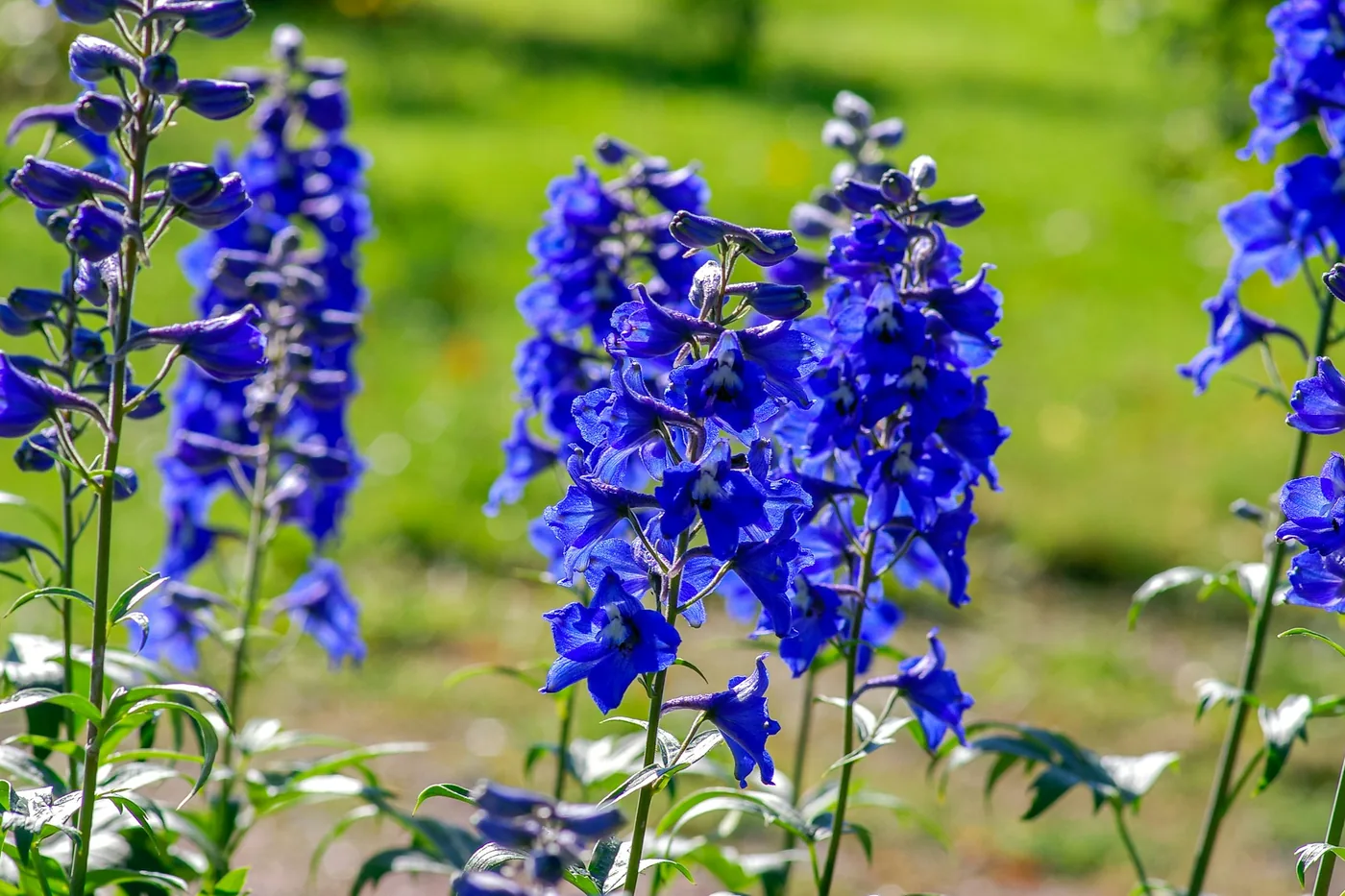
Larkspur
Delphinium species
Toxic to cats and dogs
Sow it where it is to flower — it resents being moved — and give the tall spires something to lean on before they need it. All parts carry diterpene alkaloids, the seed most of all.
Sabz turns the interval below into a reminder, and the Check-up reads your care history when a leaf turns. Free on the App Store →
Toxicity
Toxic Can be serious
Signs, in the ASPCA's words
Unless there is a lack of suitable forage, horses typically do not consume toxic amounts of larkspur. The toxicity of the plant may vary depending on seasonal changes and field conditions; as the plant matures, it generally becomes less toxic. The alkaloids in the plant cause neuromuscular paralysis; clinical effects include constipation, colic, increased salivation, muscle tremors, stiffness, weakness, recumbency, and convulsions. Cardiac failure may occur, as can death from respiratory paralysis.
Source — ASPCA Animal Poison Control Center, toxic and non-toxic plant list; read from this species' own page
Safe alternatives to Larkspur →The 149 plants in this library recorded non-toxic to both cats and dogs.
Is Larkspur poisonous to cats?
Yes. Larkspur (Delphinium species) is toxic to cats. That verdict is read from the ASPCA's own entry for this species.
Is Larkspur safe for dogs?
No. Larkspur (Delphinium species) is toxic to dogs. That verdict is read from the ASPCA's own entry for this species.
Is Larkspur pet safe?
No. Toxic to cats and dogs. Sabz judges cats and dogs separately, and publishes the full list.
Pet-safety information is a general guide from the ASPCA's toxic-plant database and covers cats and dogs only. "If eaten" summarises the symptoms ASPCA lists for that plant; how an animal actually reacts depends on how much it ate and on the animal. It isn't exhaustive, isn't veterinary advice, and individual animals vary — never rely on it as the sole basis for a decision about your pet. If you think your pet has eaten a harmful plant, contact a vet immediately.
Care
- WaterEvery 4–7 days
- LightDirect sun
- HumidityLow humidity
- Temperature2–24 °C
The same interval the Sabz app schedules reminders from. In autumn and winter the app stretches it; see houseplants in autumn.
Common problems
- Spires snapped after wind or rain — staked too late; support before they reach half height
- Leaves and buds shredded overnight — slugs, which find seedlings first
- Powdery white film on the leaves — mildew in a dry season; water at the root
Propagation
- MethodSeed
- Best timeMarch to May, sown direct
It resents transplanting, and it needs a cold spell to germinate well, so an autumn sowing often beats a spring one.
Deadheading
Cut the spent spike back to a side shoot; every part of the plant is poisonous, so wear gloves.
Similar plants
- Baby's Breath safeGypsophila elegans
- Cornflower safeCentaurea cyanus
- Autumn Crocus toxicColchicum autumnale
- Gladiolus toxicGladiolus species
In the app
Add a larkspur to Sabz and the watering interval above becomes a reminder, the toxicity verdict sits on the plant's own page, and when a leaf turns, the Check-up reads what you have actually logged to say why.
 Free. No account, no analytics.