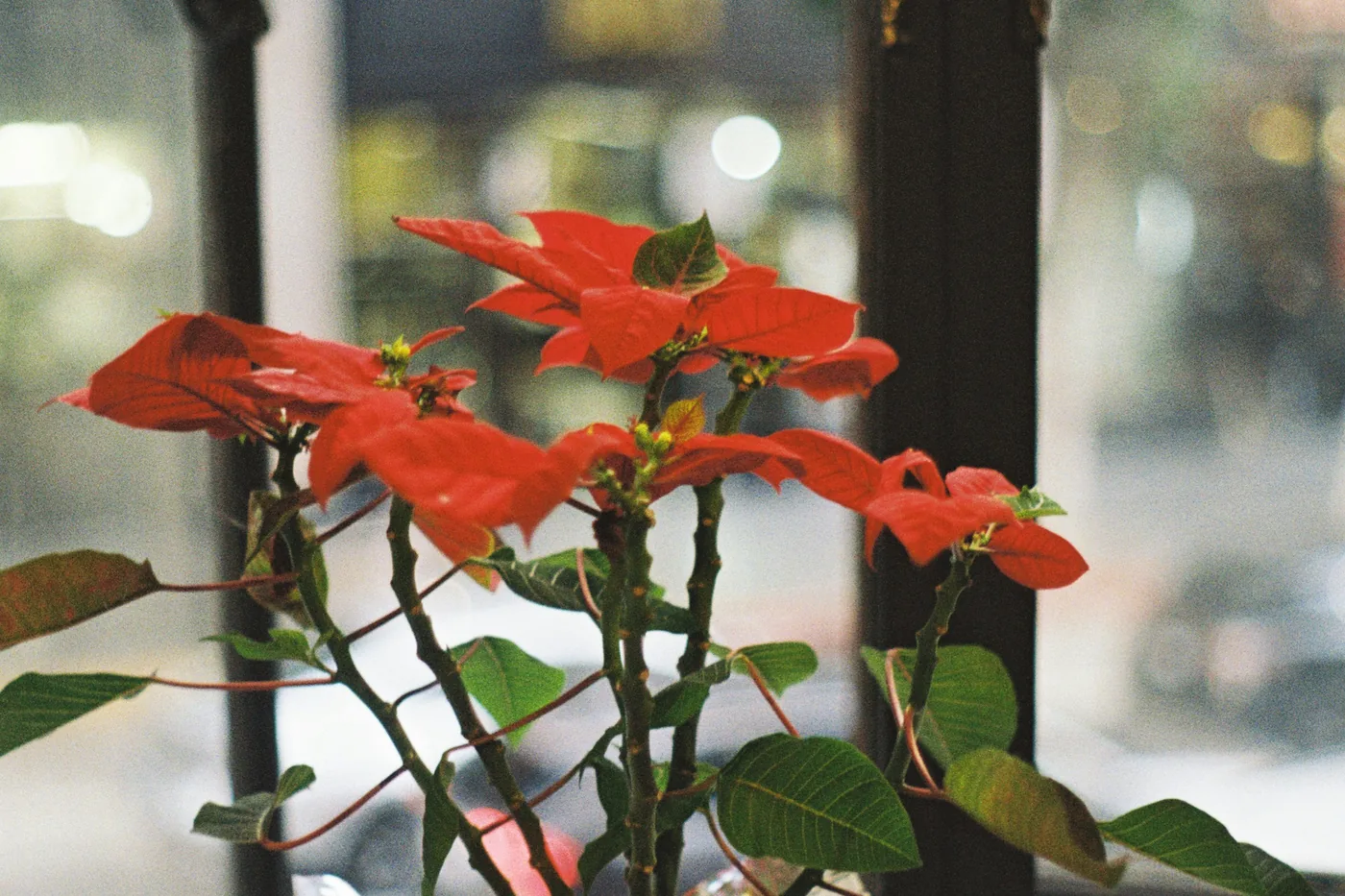
Poinsettia
Euphorbia pulcherrima
Toxic to cats and dogs
A winter flowerer that hates cold draughts. Keep lightly moist and warm; the milky sap irritates skin and pets, though its toxicity is milder than its reputation.
Sabz turns the interval below into a reminder, and the Check-up reads your care history when a leaf turns. Free on the App Store →
Toxicity
Toxic Usually mild
Signs, in the ASPCA's words
Irritating to the mouth and stomach, sometimes causing vomiting, but generally over-rated in toxicity.
Toxic Usually mild
Signs, in the ASPCA's words
Irritating to the mouth and stomach, sometimes causing vomiting, but generally over-rated in toxicity.
Source — ASPCA Animal Poison Control Center, toxic and non-toxic plant list; read from this species' own page
Safe alternatives to Poinsettia →The 149 plants in this library recorded non-toxic to both cats and dogs.
Is Poinsettia poisonous to cats?
Yes. Poinsettia (Euphorbia pulcherrima) is toxic to cats. That verdict is read from the ASPCA's own entry for this species.
Is Poinsettia safe for dogs?
No. Poinsettia (Euphorbia pulcherrima) is toxic to dogs. That verdict is read from the ASPCA's own entry for this species.
Is Poinsettia pet safe?
No. Toxic to cats and dogs. Sabz judges cats and dogs separately, and publishes the full list.
Pet-safety information is a general guide from the ASPCA's toxic-plant database and covers cats and dogs only. "If eaten" summarises the symptoms ASPCA lists for that plant; how an animal actually reacts depends on how much it ate and on the animal. It isn't exhaustive, isn't veterinary advice, and individual animals vary — never rely on it as the sole basis for a decision about your pet. If you think your pet has eaten a harmful plant, contact a vet immediately.
Care
- WaterEvery 7–10 days
- LightBright, indirect
- HumidityAverage humidity
- Temperature15–22 °C
The same interval the Sabz app schedules reminders from. In autumn and winter the app stretches it; see houseplants in autumn.
Common problems
- Dropping leaves — cold draughts or a sudden move — Dropping leaves →
- Wilting — over- or under-watered; check the soil
- Faded bracts — the colour naturally fades after the season
Propagation
- MethodStem cutting
- Best timeLate spring, after cutting back
Dip the cut in water to stop the sap flowing before you pot it.
Similar plants
- African Violet safeSaintpaulia ionantha
- Cape Primrose safeStreptocarpus
- Amaryllis toxicHippeastrum hybrid
- Clivia toxicClivia miniata
In the app
Add a poinsettia to Sabz and the watering interval above becomes a reminder, the toxicity verdict sits on the plant's own page, and when a leaf turns, the Check-up reads what you have actually logged to say why.
 Free. No account, no analytics.