Dumb Cane
Dieffenbachia seguine
Toxic to cats and dogs
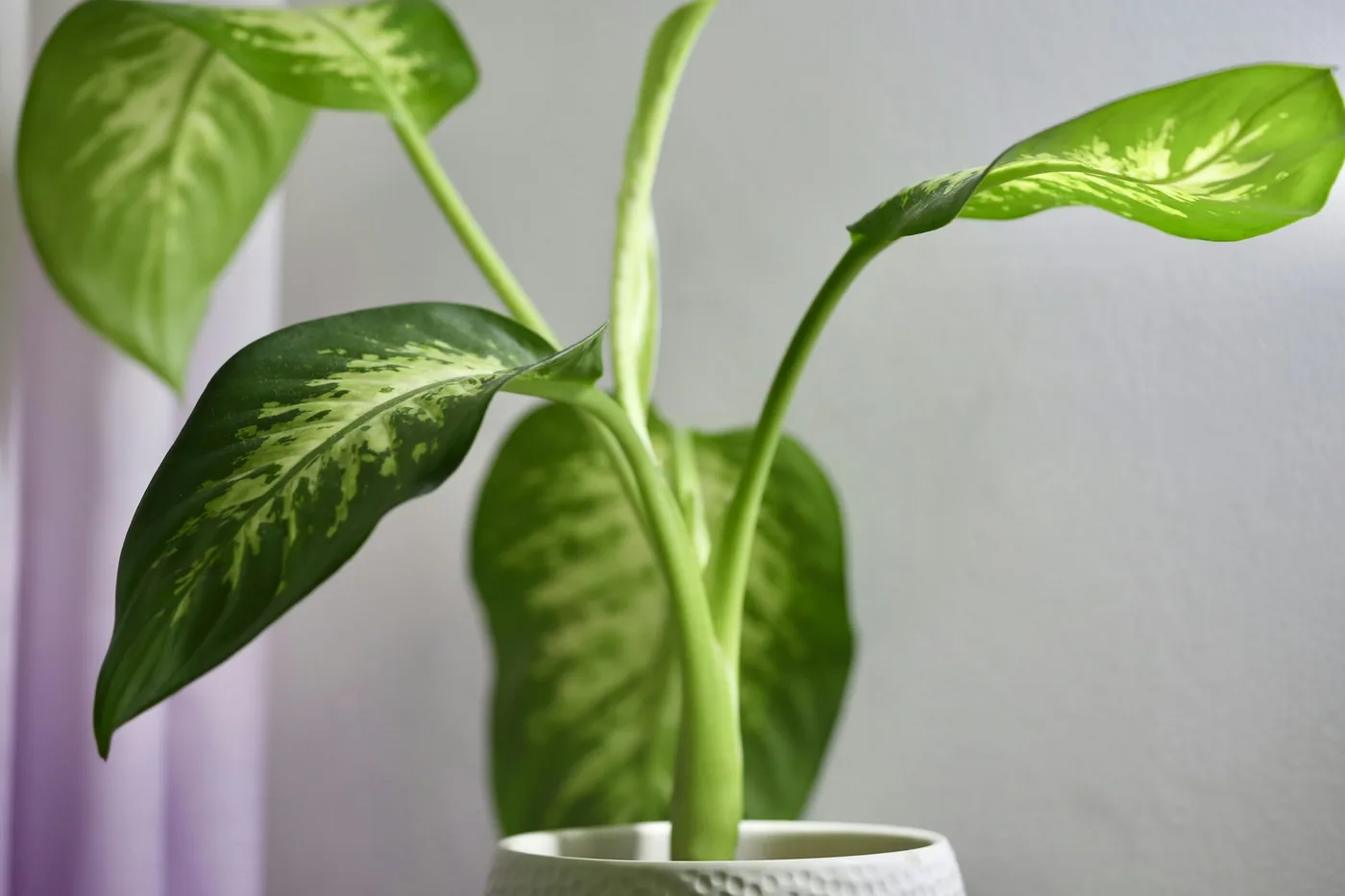
Large patterned leaves, tolerant of medium light. Let the top few centimetres dry between waterings. Sap irritates — wash hands after pruning.
Toxicity
Toxic Usually mild
Signs, in the ASPCA's words
Oral irritation, intense burning and irritation of mouth , tongue and lips, excessive drooling, vomiting, difficulty swallowing
Toxic Usually mild
Signs, in the ASPCA's words
Oral irritation, intense burning and irritation of mouth , tongue and lips, excessive drooling, vomiting, difficulty swallowing
Source — ASPCA Animal Poison Control Center, toxic and non-toxic plant list; read from this species' own page
Pet-safety information is a general guide from the ASPCA's toxic-plant database and covers cats and dogs only. "If eaten" summarises the symptoms ASPCA lists for that plant; how an animal actually reacts depends on how much it ate and on the animal. It isn't exhaustive, isn't veterinary advice, and individual animals vary — never rely on it as the sole basis for a decision about your pet. If you think your pet has eaten a harmful plant, contact a vet immediately.
Care
- WaterEvery 7–10 days
- LightMedium light
- HumidityAverage humidity
- Temperature18–27 °C
The same interval the Sabz app schedules reminders from. In autumn and winter the app stretches it; see houseplants in autumn.
Common problems
Dumb cane yellow lower leaves
Lower leaves yellowing and dropping is the compost staying wet — a dieffenbachia wants to dry out a few centimetres down between waterings, every seven to ten days in summer. One old lower leaf shed occasionally is normal; several at once with damp compost is overwatering. Wear gloves when you handle it; the sap irritates skin.
Dumb cane brown edges
Brown edges on the leaves are dry air or salts from tap water building up in the compost. Keep it away from radiators, water with rainwater or cooled boiled water if you are in a hard-water area, and flush the compost through every couple of months.
Dumb cane bare stem
A tall cane with leaves only at the top has been reaching for light and shedding below. Move it to bright, indirect light, and if the bare stem bothers you, cut it back in spring to a few centimetres above a node — it sprouts again from below the cut, and the cut top roots in water. Gloves, again.
Similar plants
- Baby Rubber Plant safePeperomia obtusifolia
- Corn Plant toxicDracaena fragrans
- Dragon Tree toxicDracaena marginata
- Grape Ivy safeCissus rhombifolia
In the app
Add a dumb cane to Sabz and the watering interval above becomes a reminder, the toxicity verdict sits on the plant's own page, and when a leaf turns, the Check-up reads what you have actually logged to say why.
 Free. No account, no analytics.