Plant library / Safe for cats & dogs
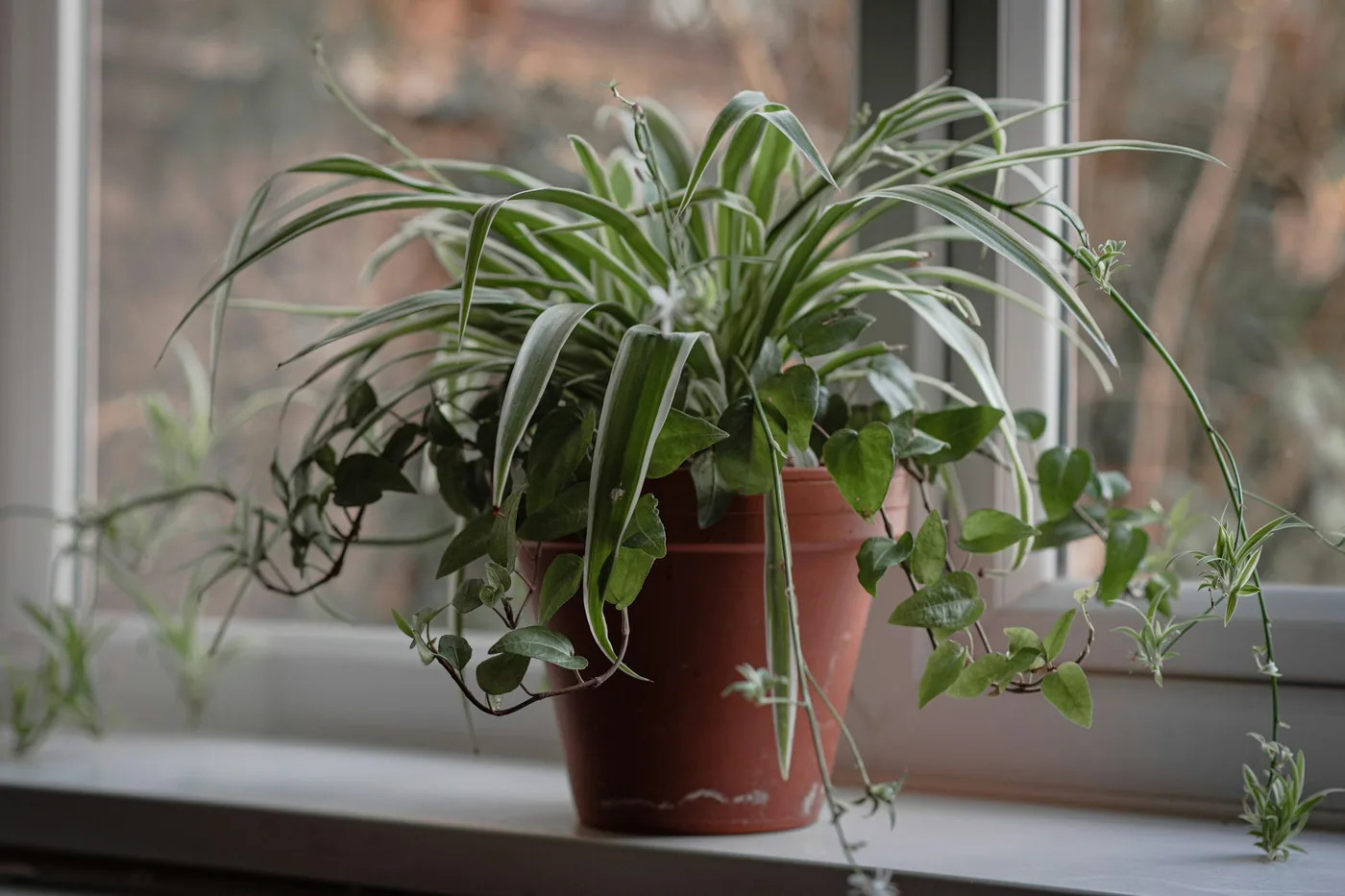
Spider Plant
Chlorophytum comosum
Non-toxic to cats and dogs
Fast, forgiving and pet-safe. Produces baby plantlets you can pot up. Keep lightly moist in growth.
Toxicity
Safe
Not known to be toxic to cats.
Safe
Not known to be toxic to dogs.
Source — ASPCA Animal Poison Control Center, toxic and non-toxic plant list; read from this species' own page
Pet-safety information is a general guide from the ASPCA's toxic-plant database and covers cats and dogs only. "If eaten" summarises the symptoms ASPCA lists for that plant; how an animal actually reacts depends on how much it ate and on the animal. It isn't exhaustive, isn't veterinary advice, and individual animals vary — never rely on it as the sole basis for a decision about your pet. If you think your pet has eaten a harmful plant, contact a vet immediately.
Care
- WaterEvery 7–10 days
- LightBright, indirect
- HumidityAverage humidity
- Temperature13–27 °C
The same interval the Sabz app schedules reminders from. In autumn and winter the app stretches it; see houseplants in autumn.
Common problems
Spider plant brown tips
The brown tips almost every spider plant has come from fluoride and chlorine in tap water, and from dry air. Switch to rainwater or filtered water, flush the compost through every couple of months, and keep it away from radiators. Trim the tips at an angle for looks; the new leaves will come in clean.
Spider plant leaves pale and washed out
Pale, bleached leaves that have lost their contrast are sun scorch — a spider plant wants bright light but not direct midday sun through glass. Move it back from the window or behind a sheer curtain. Very dark green, floppy leaves are the opposite: too little light.
Spider plant not producing babies
The plantlets come with maturity and light. A young plant, or one in a dim spot, will not produce them; a mature plant in a bright window, slightly pot-bound, produces them freely from late summer. Feed lightly through the growing season and be patient — it is rarely a fault.
Similar plants
- Coleus toxicPlectranthus scutellarioides
- English Ivy toxicHedera helix
- Inch Plant toxicTradescantia zebrina
- Sago Palm toxicCycas revoluta
In the app
Add a spider plant to Sabz and the watering interval above becomes a reminder, the toxicity verdict sits on the plant's own page, and when a leaf turns, the Check-up reads what you have actually logged to say why.
 Free. No account, no analytics.