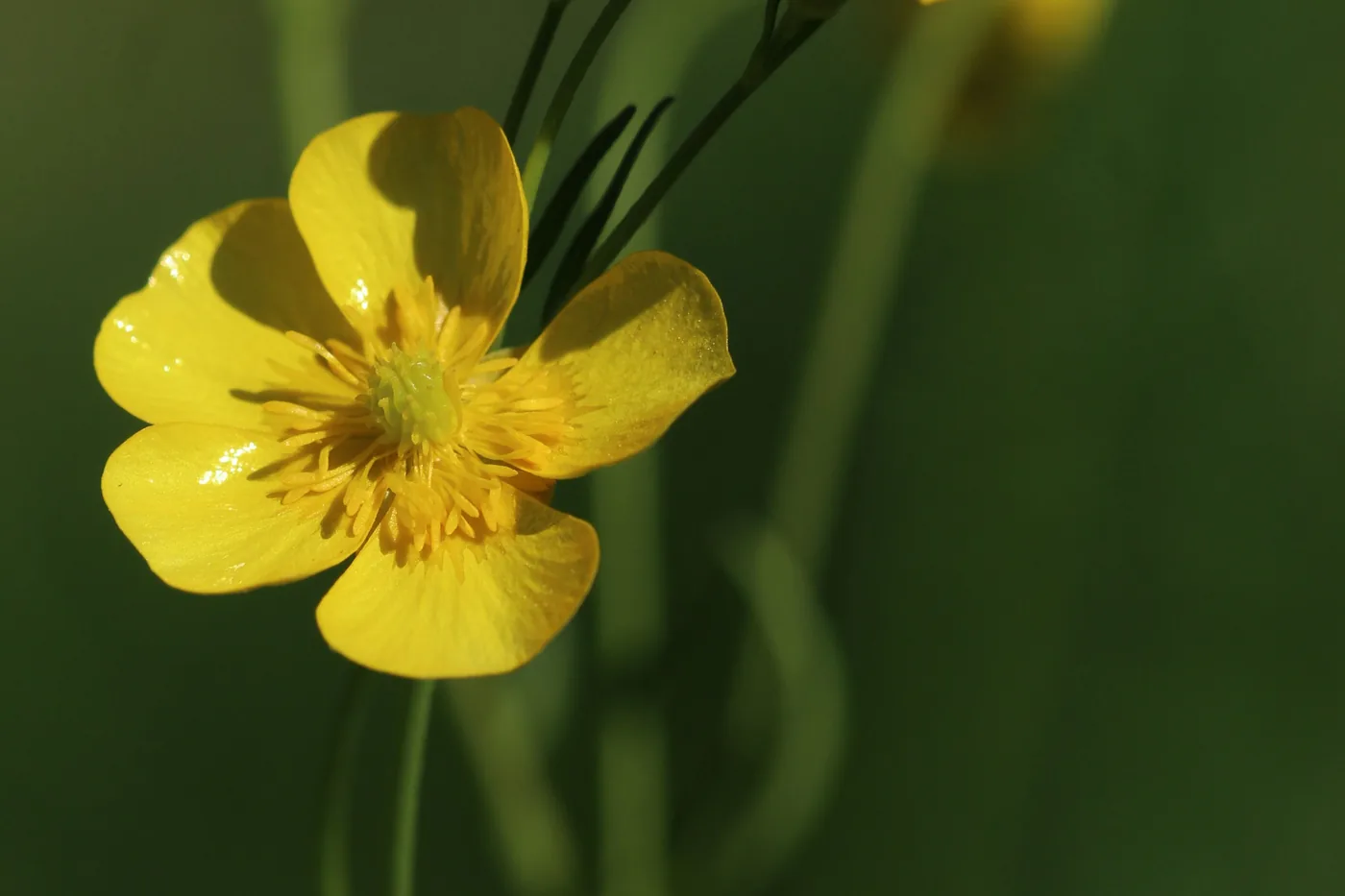
Buttercup
Ranunculus spp.
Toxic to cats and dogs
Far more often a weed of damp lawns and borders than a plant anyone chooses, and creeping buttercup roots at every node, so pulling the top off achieves nothing. The sap blisters skin on contact — wear gloves.
Sabz turns the interval below into a reminder, and the Check-up reads your care history when a leaf turns. Free on the App Store →
Toxicity
Toxic Usually mild
Signs, in the ASPCA's words
Vomiting, diarrhea, depression, anorexia, hypersalivation, oral ulcers and wobbly gait.
Toxic Usually mild
Signs, in the ASPCA's words
Vomiting, diarrhea, depression, anorexia, hypersalivation, oral ulcers and wobbly gait.
Source — ASPCA Animal Poison Control Center, toxic and non-toxic plant list; read from this species' own page
Safe alternatives to Buttercup →The 149 plants in this library recorded non-toxic to both cats and dogs.
Is Buttercup poisonous to cats?
Yes. Buttercup (Ranunculus spp.) is toxic to cats. That verdict is read from the ASPCA's own entry for this species.
Is Buttercup safe for dogs?
No. Buttercup (Ranunculus spp.) is toxic to dogs. That verdict is read from the ASPCA's own entry for this species.
Is Buttercup pet safe?
No. Toxic to cats and dogs. Sabz judges cats and dogs separately, and publishes the full list.
Pet-safety information is a general guide from the ASPCA's toxic-plant database and covers cats and dogs only. "If eaten" summarises the symptoms ASPCA lists for that plant; how an animal actually reacts depends on how much it ate and on the animal. It isn't exhaustive, isn't veterinary advice, and individual animals vary — never rely on it as the sole basis for a decision about your pet. If you think your pet has eaten a harmful plant, contact a vet immediately.
Care
- WaterEvery 3–5 days
- LightDirect sun
- HumidityAverage humidity
- Temperature2–24 °C
The same interval the Sabz app schedules reminders from. In autumn and winter the app stretches it; see houseplants in autumn.
Common problems
- Spreading flat across a lawn — creeping buttercup rooting at each node; lift the runners whole
- Thriving where nothing else will — the soil is wet and compacted; drainage is the fix
- Returning every year after weeding — fragments of root left behind
Propagation
- MethodDivision
- Best timeSpring or autumn
It divides readily and runs by itself, which is the problem with it rather than the achievement.
Deadheading
Deadhead to stop it seeding across the lawn, which is how it spreads fastest.
Similar plants
- Hawthorn safeCrataegus species
- China Aster safeCallistephus chinensis
- Sweet Pea unconfirmedLathyrus latifolius
- Butterfly Iris toxicIris spuria
In the app
Add a buttercup to Sabz and the watering interval above becomes a reminder, the toxicity verdict sits on the plant's own page, and when a leaf turns, the Check-up reads what you have actually logged to say why.
 Free. No account, no analytics.