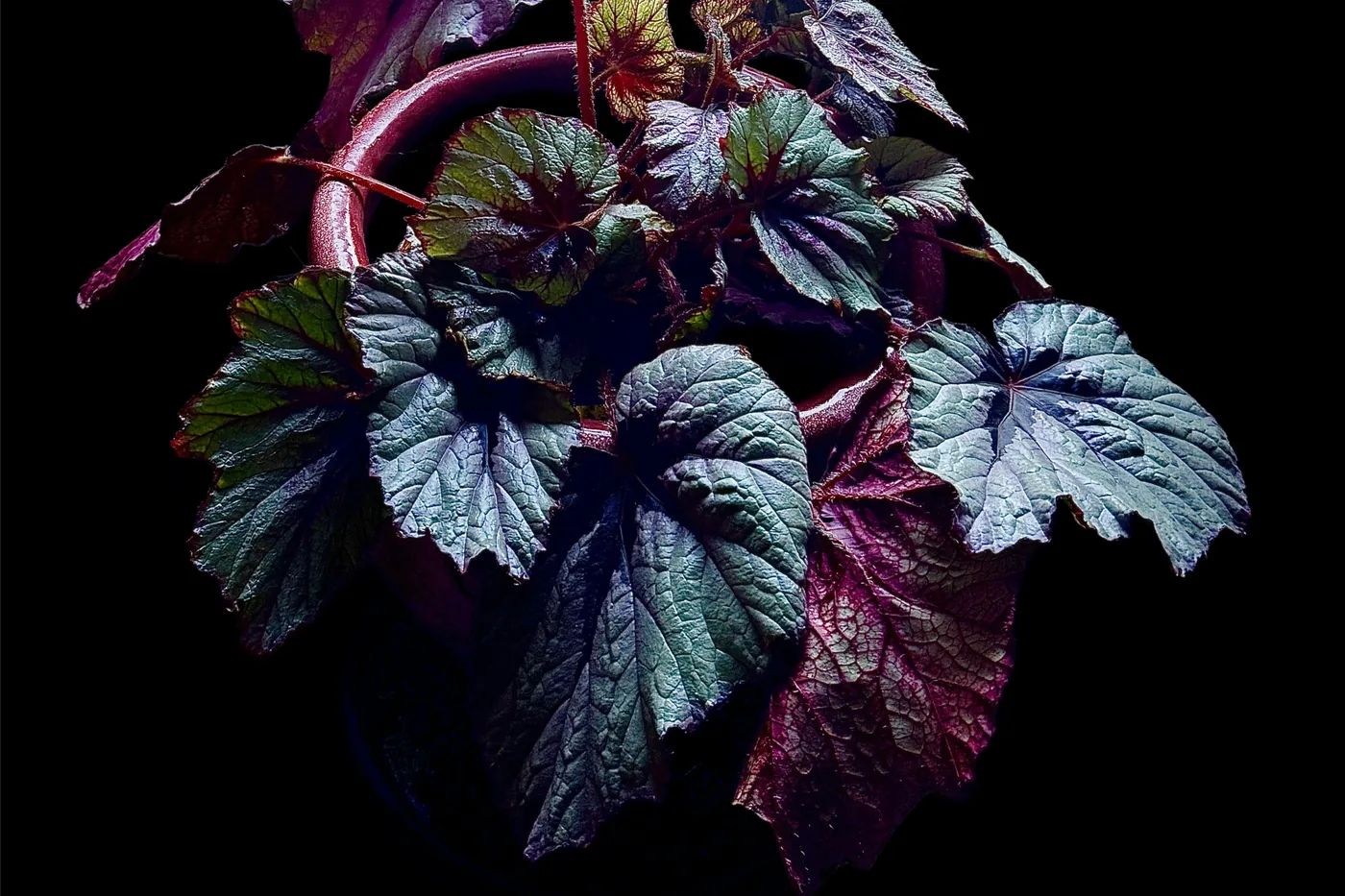
Rex Begonia
Begonia rex
Toxic to cats and dogs
Grown for spectacularly patterned leaves. Keep lightly moist but never soggy, water the soil not the foliage, and give it humidity and bright indirect light. Toxic to pets.
Toxicity
Toxic Usually mild
Signs, in the ASPCA's words
Kidney failure (in grazing animals), vomiting, salivation in dogs/cats. Most toxic part is underground.
Toxic Usually mild
Signs, in the ASPCA's words
Kidney failure (in grazing animals), vomiting, salivation in dogs/cats. Most toxic part is underground.
Source — ASPCA Animal Poison Control Center, toxic and non-toxic plant list; read from this species' own page
Pet-safety information is a general guide from the ASPCA's toxic-plant database and covers cats and dogs only. "If eaten" summarises the symptoms ASPCA lists for that plant; how an animal actually reacts depends on how much it ate and on the animal. It isn't exhaustive, isn't veterinary advice, and individual animals vary — never rely on it as the sole basis for a decision about your pet. If you think your pet has eaten a harmful plant, contact a vet immediately.
Care
- WaterEvery 5–7 days
- LightBright, indirect
- HumidityHigh humidity
- Temperature16–24 °C
The same interval the Sabz app schedules reminders from. In autumn and winter the app stretches it; see houseplants in autumn.
Common problems
- Powdery mildew on leaves — wet foliage or poor airflow
- Crispy edges — dry air
- Rotting stems — overwatering — Overwatering →
Similar plants
- Polka Dot Begonia toxicBegonia maculata
- Iron Cross Begonia toxicBegonia masoniana
- Metallic-Leaf Begonia toxicBegonia metallica
- Mapleleaf Begonia toxicBegonia cleopatra
In the app
Add a rex begonia to Sabz and the watering interval above becomes a reminder, the toxicity verdict sits on the plant's own page, and when a leaf turns, the Check-up reads what you have actually logged to say why.
 Free. No account, no analytics.