Guides · Peace lily · Autumn
Why is my peace lily getting brown leaf tips?
Peace lily brown tips are almost always dry air — and in a British autumn that usually means the heating has come on. A peace lily wants humidity; a radiator under a windowsill strips it out of the room faster than the plant can replace it. The tips go first because they are the furthest point from the roots and the last to be supplied. For brown tips on a different plant — a dracaena, spider plant or calathea — the general brown leaf tips guide covers all four causes.
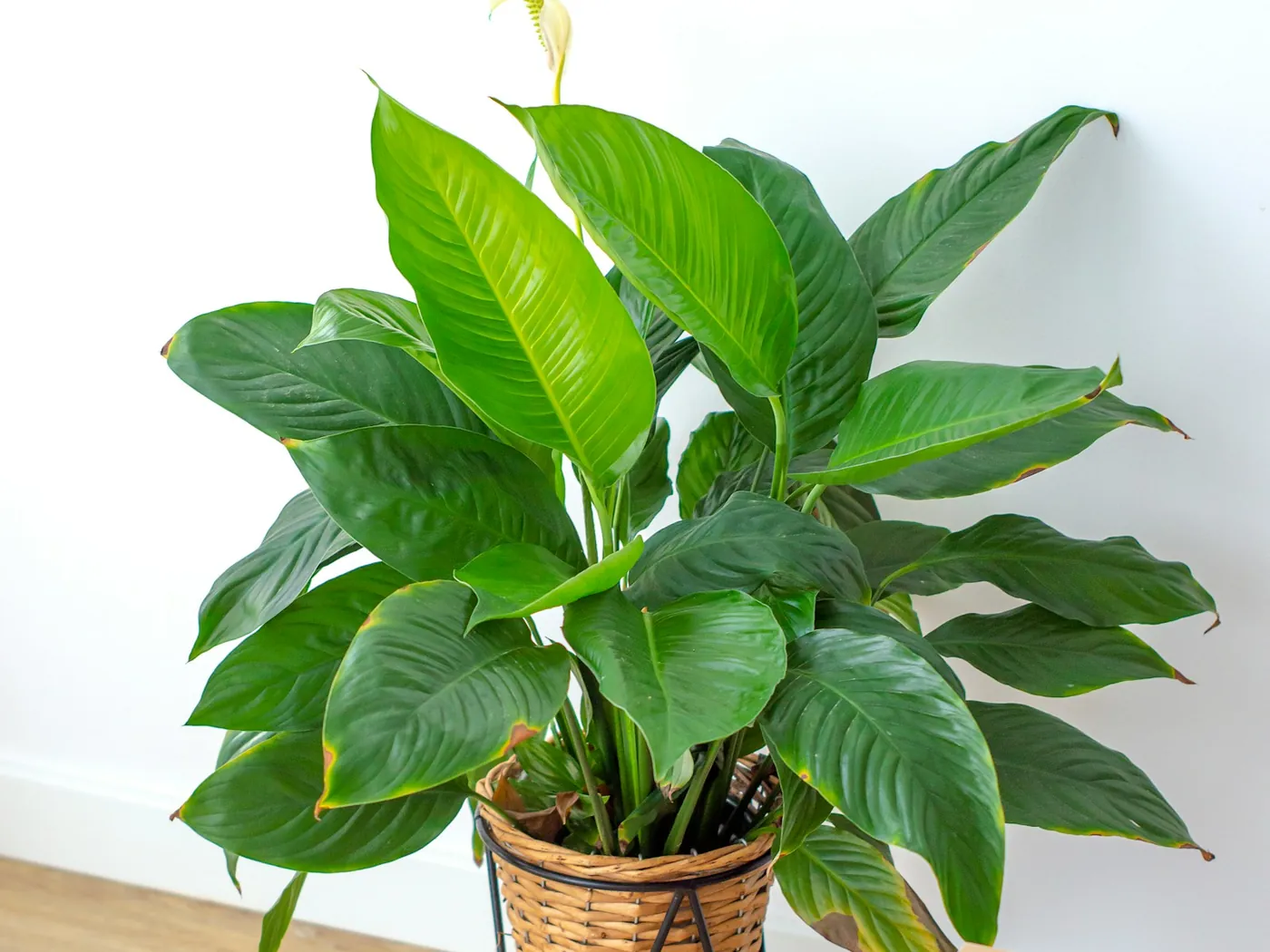
- Most likely
- Dry air — the heating has come on
- Also possible
- Minerals in hard tap water
- Urgency
- None. Neither means you have killed it
The two causes
Dry air comes first because the timing gives it away: in most British homes the tips start going within a few weeks of the heating season, and a peace lily is one of the plants that shows it soonest.
The second most likely cause is minerals in tap water building up in the compost. If you are in a hard-water area — most of the south and east of England — that alone will brown the tips over a few months, heating or no heating.
Telling them apart
You can usually settle it without guessing.
Probably dry air if
- the browning started within a few weeks of the heating going on
- the plant sits above, beside, or across from a radiator
- other humidity-loving plants in the same room have gone the same way
- the brown is a thin, even rim right at the tip and edge
Probably tap water if
- the browning has crept up slowly over months, through summer as well
- there is a whitish crust on the compost surface or around the pot rim
- you live in a hard-water area
- the brown patches are broader and more irregular than a neat rim
Probably neither — and worth looking harder — if
- the leaf is yellowing before it browns, and the browning starts low down. That is more likely watering, and a peace lily will tell you it is thirsty by drooping dramatically first.
- the whole plant has collapsed. That is thirst, and it recovers within hours of a proper watering — dramatically enough that people photograph it.
- the brown is soft or mushy rather than dry and papery. That is not this problem.
What to do
- For dry air
- Move it off the radiator shelf. Group it with other plants so they share the moisture they transpire. A pebble tray under the pot helps; misting does very little, because the effect lasts minutes. A bathroom with a window is the single best room in most British houses for a peace lily in winter.
- For tap water
- Water with rainwater or filtered water where you can, and flush the pot through with a large volume of water every couple of months to carry the accumulated salts out of the bottom. Repotting into fresh compost resets it completely.
- For the tips already brown
- They will not turn green again. You can trim them with clean scissors, following the natural leaf shape rather than cutting straight across — a squared-off tip reads as damage from across the room, a shaped one does not.
What not to do
- Do not increase watering to fix brown tips. Dry air is not dry soil, and a peace lily that is already drooping-then-recovering on schedule is being watered correctly.
- Do not move it somewhere brighter to compensate. It is a medium-light plant; scorch is a different and worse problem.
- Do not cut off whole leaves unless most of the leaf has gone. The plant is still drawing energy from the green part.
Common questions
Why are the tips of my peace lily turning brown?
Most often dry air — the tips start going within a few weeks of the heating coming on, and a peace lily is one of the first plants to show it. The other common cause is minerals in hard tap water building up in the compost over months. Neither means you are killing it; both are about the room and the water rather than how much you water.
Should I cut the brown tips off a peace lily?
You can, for looks: trim just inside the brown with clean scissors, following the leaf's shape, and leave a hair of brown so you do not open a fresh wound. It does not fix the cause, and the next tips will brown until the air or the water changes. A leaf that is more than a third brown is better removed at the base.
Does a peace lily need distilled water?
Not necessarily, but in a hard-water area it helps. Rainwater, filtered water or tap water left to stand overnight all reduce the build-up; boiled and cooled tap water drops some of the lime too. If you keep using tap water, flush the compost through with plenty of water every couple of months so the minerals do not accumulate.
How do I raise the humidity for a peace lily?
Move it away from radiators and out of the draught from a door or a cold window; group it with other plants; stand the pot on a tray of wet gravel with the base above the water. A bathroom or kitchen window often suits it better than a living room in winter. Misting gives a few minutes of humidity and is not worth the habit.
Will the brown tips turn green again?
No. Brown tissue is dead and stays brown; the plant's recovery shows in the new leaves, which come in clean once the air or the water is right. Judge the fix by the next few leaves, not by the ones already marked.
The plant
Peace Lily at a glance
| Botanical name | Spathiphyllum wallisii |
|---|---|
| Light | Medium |
| Water | Every 5–7 days |
| Humidity | High |
| Comfortable range | 18–27 °C |
Tells you when it's thirsty by drooping dramatically, then recovers within hours of watering. Likes humidity.
Common problems: Dramatic drooping — thirsty, but recovers quickly once watered · Brown leaf tips — dry air, or minerals in tap water · No flowers — too little light
Toxic to cats and dogs
Severity: irritant
If eaten: Oral irritation, intense burning and irritation of mouth, tongue and lips, excessive drooling, vomiting, difficulty swallowing.
Source: ASPCA, unedited.
Pet-safety information is a general guide from the ASPCA's toxic-plant database and covers cats and dogs only. "If eaten" summarises the symptoms ASPCA lists for that plant; how an animal actually reacts depends on how much it ate and on the animal. It isn't exhaustive, isn't veterinary advice, and individual animals vary — never rely on it as the sole basis for a decision about your pet. If you think your pet has eaten a harmful plant, contact a vet immediately.
Still not sure?
If the leaves are going yellow rather than brown at the tips, that is a different story — yellow leaves or overwatering. And a peace lily is toxic to cats and dogs, an irritant: the full list says what that means. The RHS's leaf damage on houseplants covers the rarer causes.
Brown tips are one of the few houseplant problems with a short list of causes. Most are not. Sabz reads the care you have actually logged — how often you have watered, how long the gaps were, what you have already tried — and works out the likely cause from your plant's own history rather than from a photograph alone.
 Free to start. No account, no analytics.